








Why Shared Experiences Are Replacing Shared Beliefs as the New Social Glue
A generation ago, people often built communities around shared beliefs. Religion, political affiliation, professional identity, cultural traditions, and even geographic roots served as powerful forces that connected individuals. Today, something different appears to be happening. Increasingly, people are forming meaningful connections not because they think alike, but because they have experienced something together.
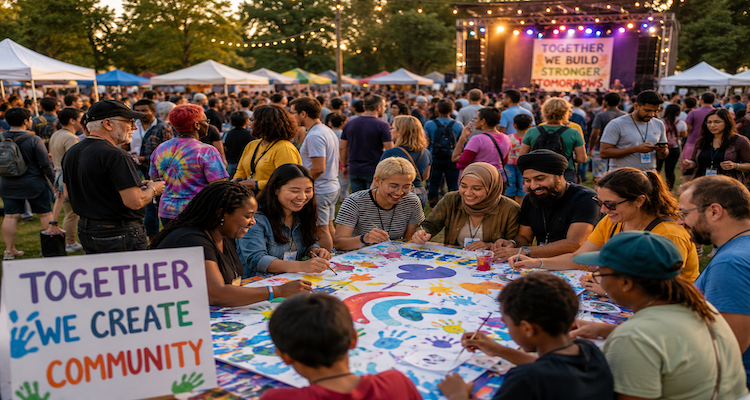
Whether it is attending a music festival, participating in an online gaming community, traveling with strangers, joining a fitness challenge, or collaborating on a digital project, shared experiences are becoming a stronger source of belonging than shared ideology. This shift is subtle, but its effects are visible across culture, business, education, entertainment, and even politics.
The growing value of shared experiences reveals an important change in how people build trust, identity, and community in a world that is more connected and more divided, than ever before.
The Decline of Traditional Sources of Belonging
Many of the institutions that once provided a common social framework have weakened in influence. People move more frequently, consume media from countless sources, and interact with diverse groups beyond their immediate communities.
As a result, shared belief systems no longer create the same broad social cohesion they once did. In many cases, beliefs have become more personalized, fragmented, and subject to constant reinterpretation.
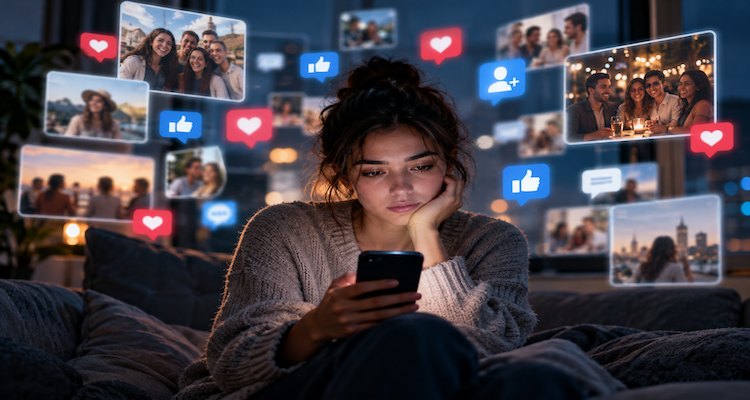
At the same time, public discussions increasingly highlight disagreement. Social media platforms often amplify differences rather than similarities. Political debates, cultural disputes, and ideological conflicts can make common ground feel difficult to find.
In this environment, experiences offer something beliefs often cannot: immediate connection without requiring complete agreement.
Two people may have very different worldviews, yet feel a genuine bond because they completed a marathon together, attended the same concert, worked on a startup project, or navigated a challenging journey.
The experience itself becomes the shared language.
Why Experiences Create Stronger Emotional Connections
Beliefs are often intellectual. Experiences are emotional.
When people go through an event together, they create memories linked to feelings, challenges, excitement, uncertainty, or achievement. Those emotional associations tend to be more durable than abstract agreement.
This helps explain why people frequently remain connected to former classmates, teammates, travel companions, or coworkers long after their shared goals have ended.
The memory of what happened together carries social value.
Psychologists have long recognized that shared experiences contribute to trust and group identity. While beliefs can unite people conceptually, experiences create personal narratives that individuals can revisit and retell.
A person may forget the details of a discussion, but they rarely forget a meaningful experience.
That distinction is becoming increasingly important in a world overloaded with information and opinions.
The Experience Economy Is Expanding Beyond Entertainment
Businesses have recognized this shift as well.
Consumers are no longer purchasing products solely for utility. Increasingly, they seek participation, immersion, and memorable moments.
Restaurants host interactive events. Retail brands create pop-up experiences. Technology companies build communities around user participation. Travel providers emphasize unique local encounters rather than simple sightseeing.
The goal is not merely to sell something.
It is to create a story customers can share afterward.
This trend reflects a broader cultural reality: experiences often carry more social currency than possessions.
A photo from a memorable trip, a shared event, or a collaborative achievement can generate far more engagement and conversation than ownership alone.
People increasingly define themselves through what they have experienced rather than what they own or even what they believe.
Digital Communities Are Reinventing Human Connection
One of the most surprising aspects of this shift is that many meaningful shared experiences now occur online.
Traditional assumptions suggested that digital interaction would weaken social bonds. Instead, online environments have become powerful spaces for collective participation.
Millions of people watch live streams together, contribute to open-source projects, participate in online learning communities, join multiplayer games, attend virtual events, and collaborate across continents.
These interactions create shared moments despite physical distance.
Someone may feel closer to members of a niche online community than to neighbors living next door.
The reason is not necessarily agreement on every issue. It is the accumulation of experiences, conversations, challenges, and achievements shared over time.
Digital platforms have made experience-based communities easier to build than belief-based communities.
The Hidden Cultural Shift Behind the Trend
A deeper cultural change may be driving this phenomenon.
Modern identity is becoming increasingly flexible.
Previous generations often inherited identities through family, religion, location, or profession. Today’s individuals are more likely to construct identity through interests, activities, and personal choices.
Experiences fit naturally into this model.
They allow people to express who they are without requiring permanent commitment to a single ideology or institution.
A person can be part of multiple communities simultaneously a hiking group, an online creator network, a fitness challenge, a gaming community, and a volunteer organization.
The common thread is participation rather than belief.
This flexibility reflects a broader desire for connection without rigid boundaries.
Why This Matters for Workplaces and Organizations
The rise of shared experiences has important implications for employers, educators, and community leaders.
Organizations often focus heavily on communicating values and mission statements. While these remain important, they may not be sufficient to create genuine engagement.
People are more likely to feel connected when they participate in meaningful experiences together.
Team projects, collaborative problem-solving, mentoring programs, workshops, retreats, and shared achievements often strengthen organizational culture more effectively than messaging alone.
The same principle applies in education.
Students frequently remember projects, field experiences, group activities, and real-world applications more vividly than lectures or theoretical discussions.
Experience creates memory, and memory creates connection.
Organizations that understand this dynamic may be better positioned to build loyalty and engagement in an increasingly fragmented world.
The Limits of Experience-Based Communities
Shared experiences are not a complete replacement for shared beliefs.
Beliefs still matter. They shape institutions, laws, ethics, and long-term social direction.
Communities built solely around experiences may sometimes struggle with purpose or continuity once the experience ends.
However, the growing emphasis on experiences suggests that people are searching for practical ways to connect across differences.
In a society where consensus can be difficult to achieve, shared experiences offer an alternative path to understanding.
They create opportunities for people to see one another as collaborators, participants, and fellow human beings rather than simply representatives of competing viewpoints.
That may be one reason experiences feel increasingly valuable today.
What Happens Next?
The trend toward experience-driven connection is likely to continue as technology, mobility, and digital participation expand.
Future communities may be defined less by geography and ideology and more by participation. Work, education, entertainment, travel, and social interaction are all evolving toward models that prioritize engagement and collective experience.
The most successful organizations, brands, and communities may be those that create meaningful moments rather than simply communicate messages.
For individuals, the lesson is equally significant.
Beliefs remain important, but the relationships that shape our lives are often built through what we do together rather than what we think separately.
In a world filled with competing opinions, shared experiences provide something increasingly rare: a common story.
And as social landscapes continue to change, that common story may become one of the most valuable forms of connection people can have.
This content is published for informational or entertainment purposes. Facts, opinions, or references may evolve over time, and readers are encouraged to verify details from reliable sources.