










How Obsession Became Horror’s Biggest Surprise and Why Its Netflix Debut Matters
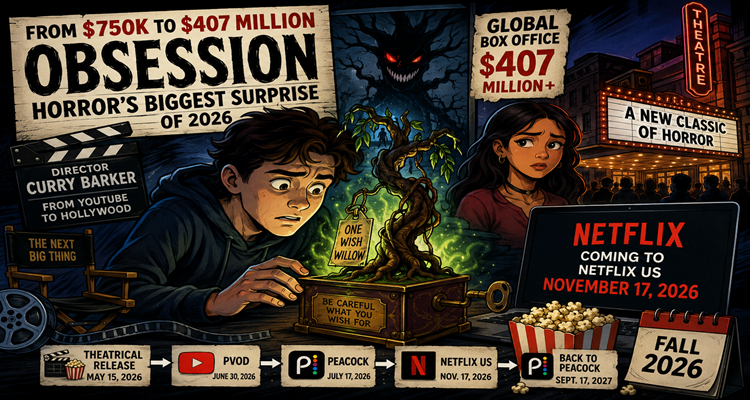
Key Takeaways
- Obsession transformed a modest $750,000 production into a global box-office phenomenon exceeding $400 million in revenue.
- The film’s streaming rollout highlights how studios increasingly use staggered platform releases to maximize audience reach and profitability.
- Director Curry Barker’s rise from YouTube creator to major Hollywood filmmaker reflects changing pathways into the entertainment industry.
- Netflix’s November 2026 release is expected to introduce the horror hit to millions who missed its theatrical run.
- The success of Obsession signals growing audience demand for original horror concepts over expensive franchise-driven productions.
Introduction
Every few years, a film arrives that disrupts conventional wisdom about what audiences want. In 2026, that film appears to be Obsession. What began as a modest horror project from a young filmmaker with roots in online content creation evolved into one of the most talked-about entertainment stories of the year.
The movie’s remarkable journey from festival acclaim to blockbuster box-office success has sparked conversations across Hollywood about the future of filmmaking, audience behavior, and the growing influence of digital-native creators. Now, with a Netflix US debut scheduled for November 2026 following an initial streaming window elsewhere, the film is preparing for a second life that could expand its cultural footprint even further.
Beyond the headlines and revenue figures, Obsession represents something larger. It reflects shifting industry economics, changing audience tastes, and the increasing power of original storytelling in a market often dominated by sequels and established intellectual property.
Understanding the Rise of Obsession
A Story Built on Desire and Consequences
At its core, Obsession centers on a lonely music store employee named Bear, whose longing for connection leads him to make a wish using a mysterious object known as the “One Wish Willow.” What follows is a psychological descent into increasingly disturbing consequences as his desires begin to materialize in unexpected ways.
The premise taps into one of horror’s most enduring themes: the hidden cost of getting exactly what you want. Rather than relying solely on jump scares or spectacle, the story explores human vulnerability, loneliness, and the dangers of unchecked desire.
This emotional foundation may help explain why the film resonated so strongly with audiences. Horror often succeeds when it transforms universal fears into compelling narratives, and Obsession appears to have found that balance.
From Internet Creator to Hollywood Director
One of the most fascinating aspects of the film’s success is the background of its creator.
Curry Barker did not emerge through traditional studio systems. Instead, he built an audience online before transitioning into horror filmmaking. His trajectory mirrors a broader trend in entertainment, where creators increasingly develop storytelling skills, fan communities, and creative identities outside conventional industry pathways.
For decades, aspiring filmmakers needed access to studios, networks, or industry gatekeepers. Today, digital platforms allow creators to experiment, build audiences, and prove demand before entering mainstream entertainment.
Barker’s success demonstrates how talent discovery is evolving. Studios are paying closer attention to creators who already understand audience engagement because they arrive with both creative experience and built-in communities.
Why This Matters Beyond One Movie
The Economics Are Impossible to Ignore
The financial performance of Obsession stands out not merely because it succeeded but because of the scale of that success relative to its budget.
Hollywood has spent years pursuing increasingly expensive productions. Many major releases now require hundreds of millions of dollars in production and marketing costs before reaching profitability. Against that backdrop, a low-budget horror film generating hundreds of millions in box-office revenue becomes impossible to overlook.
For studios, this creates an attractive equation:
- Lower financial risk
- Higher profit potential
- Greater creative flexibility
- Faster production timelines
This does not mean blockbuster franchises will disappear. However, it reinforces the value of maintaining a diverse content strategy that includes lower-cost, high-concept films capable of delivering outsized returns.
Horror Continues to Defy Industry Expectations
The genre has repeatedly demonstrated resilience during periods of industry uncertainty.
Unlike many entertainment categories, horror attracts audiences seeking communal experiences. Viewers often prefer watching frightening stories with others, making theatrical releases particularly effective.
Additionally, horror fans frequently reward originality. While franchise films remain important, audiences are often willing to embrace unfamiliar concepts if the premise feels compelling.
Obsession appears to fit this pattern perfectly. It offered a fresh concept while maintaining recognizable genre themes, creating an experience that felt both familiar and new.
What Is Changing in the Streaming Landscape
The New Reality of Windowed Releases
The journey of Obsession from theaters to streaming illustrates how distribution strategies have evolved.
Not long ago, studios were racing to shorten theatrical windows and move films online as quickly as possible. Today, many companies are taking a more measured approach.
The release sequence typically follows several stages:
- Theatrical exhibition
- Premium digital purchase and rental
- Initial subscription streaming window
- Secondary streaming distribution
This approach allows studios to generate revenue from multiple audience segments rather than relying on a single release channel.
For consumers, it can sometimes feel frustrating to wait. For studios, however, staggered releases maximize earnings while extending a film’s cultural relevance over a longer period.
Why Netflix Remains a Critical Destination
Even in an increasingly fragmented streaming market, Netflix continues to play a unique role.
A theatrical hit may reach millions of viewers. Netflix can expose that same film to an even broader global audience. The platform’s recommendation systems, international reach, and subscriber scale often give successful movies renewed visibility months after their original release.
For Obsession, the Netflix launch is not simply another distribution step. It represents an opportunity to introduce the film to viewers who may have heard about its success but never experienced it firsthand.
That second wave of discovery can be powerful. Many films achieve lasting cultural status only after reaching streaming audiences.
The Bigger Picture Behind the Phenomenon
Audiences Are Rewarding Original Ideas
One lesson emerging from the success of Obsession is that viewers remain eager for fresh concepts.
For years, entertainment discussions have focused heavily on sequels, remakes, reboots, and cinematic universes. While those projects continue to generate significant revenue, audience enthusiasm for original stories has not disappeared.
In fact, originality may become even more valuable as viewers face growing content saturation.
When consumers encounter hundreds of entertainment options every month, distinctive concepts become easier to notice and discuss.
A mysterious wish-granting object with terrifying consequences offers a clearer identity than many formula-driven productions.
Social Media Amplifies Discovery
Modern hits often spread differently than blockbuster films did a decade ago.
Word-of-mouth still matters, but social platforms accelerate that process dramatically. Audience reactions, fan theories, scene discussions, and recommendation videos can collectively create momentum that traditional marketing campaigns struggle to replicate.
This dynamic particularly benefits horror films.
Fear, surprise, and emotional intensity naturally encourage conversation. When viewers feel compelled to share reactions without revealing spoilers, curiosity spreads organically.
The result can be a self-sustaining cycle of attention that extends well beyond opening weekend.
Opportunities and Challenges Ahead
Opportunities for Emerging Filmmakers
The success of Obsession sends a powerful message to aspiring creators.
Studios increasingly care about audience connection, storytelling ability, and distinctive vision. Traditional industry credentials remain valuable, but they are no longer the only route to recognition.
Digital platforms have become proving grounds where filmmakers can demonstrate their skills before securing larger opportunities.
This could lead to greater diversity in storytelling voices and creative approaches over the coming decade.
The Challenge of Replicating Success
At the same time, lightning rarely strikes twice in exactly the same way.
Hollywood has a long history of attempting to replicate unexpected hits. The danger is assuming success came from a formula rather than a unique combination of timing, creativity, execution, and audience response.
Not every low-budget horror film will become a cultural phenomenon.
The lesson should not be to copy Obsession but to understand why audiences connected with it in the first place.
What Comes Next
A Larger Audience Awaits
When Obsession arrives on Netflix in November 2026, it will enter a different phase of its lifecycle.
The conversation will likely shift from box-office performance to cultural impact. Streaming audiences often evaluate films differently than theatrical viewers, focusing more on long-term relevance and rewatchability.
If the film maintains its momentum, it could become one of those rare horror titles that continue attracting new viewers years after its initial release.
The Industry Will Be Watching Closely
Studios are constantly searching for signals about future audience behavior.
The performance of Obsession across streaming platforms could influence decisions about investment strategies, creator partnerships, and genre development.
Executives may increasingly look toward unconventional talent sources. More digital creators could receive opportunities to develop major projects. Independent horror may attract additional funding. Original concepts could gain stronger support in development pipelines.
Whether those shifts become permanent remains uncertain, but the conversation has already begun.
Conclusion
The story of Obsession is about far more than a successful horror movie. It represents a convergence of several powerful trends reshaping modern entertainment: the rise of creator-driven filmmaking, the enduring strength of original storytelling, the economics of low-budget innovation, and the growing importance of streaming ecosystems.
Its upcoming Netflix debut will likely introduce the film to an entirely new audience, extending a journey that has already exceeded most industry expectations. More importantly, it offers a reminder that compelling ideas can still break through in an era dominated by massive franchises and endless content choices.
For viewers, the appeal may simply be a memorable horror experience. For Hollywood, Obsession may become a case study in how the next generation of breakout successes is created.
This content is published for informational or entertainment purposes. Facts, opinions, or references may evolve over time, and readers are encouraged to verify details from reliable sources.
Related News
- Netflix’s 2026 Book Options Reveal What Stories It May Be Betting On Next
- Why Video Game Adaptations Are Finally Winning Over Audiences
- From Fan Fiction to Blockbusters: How Online Communities Are Changing Storytelling
- The Death of Channel Surfing: How Streaming Changed the Way We Discover Entertainment