








Why Personal Life Archives Are Becoming a Modern Necessity
Some of the most meaningful moments in life never make it into a photo album. A voice message from a grandparent, a screenshot of an important conversation, a playlist that defined a difficult year, or a digital notebook filled with personal reflections can all carry emotional weight that traditional keepsakes rarely capture.
As more of life unfolds across smartphones, cloud storage, messaging apps, and social media, people are beginning to realize that their memories are scattered across dozens of digital spaces. Rather than relying on algorithms to remind them of the past, many are taking control by creating personal archives organized collections of memories, experiences, and milestones designed to preserve their lives on their own terms.
This growing habit reflects more than nostalgia. It signals a broader cultural shift toward intentional memory-keeping in an age where digital content is abundant but surprisingly fragile.
More Than a Digital Photo Collection
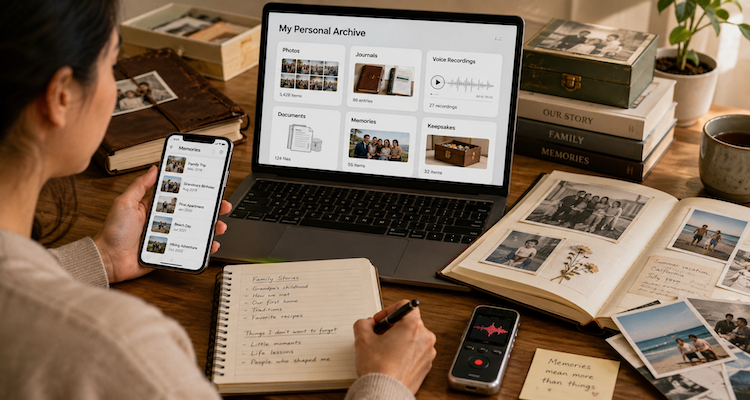
Personal archives extend far beyond folders of photographs. They can include journals, emails, scanned letters, travel itineraries, artwork, recorded interviews with family members, medical milestones, financial documents, recipes, and even everyday observations that may become meaningful over time.
Unlike social media profiles, which are built for public sharing and constant engagement, personal archives are private by design. Their purpose is preservation rather than performance.
Many people now combine physical memorabilia with digital records, creating collections that tell a fuller story of their lives. A ticket stub from a memorable concert might sit alongside photos, videos, journal entries, and a playlist from that same day, offering future generations richer context than any single item could provide.
Why Interest Is Growing Now
Several cultural and technological changes have converged to make personal archiving increasingly attractive.
First, people are producing more digital content than ever before. Smartphones document birthdays, vacations, meals, conversations, fitness journeys, and daily routines almost automatically. While this creates an extraordinary historical record, it also generates overwhelming amounts of information that can easily become disorganized or forgotten.
Second, awareness of digital permanence has changed. Many users now recognize that online platforms are not permanent memory banks. Social media accounts can disappear, cloud subscriptions may lapse, devices fail, and platforms evolve or shut down.
This realization has encouraged people to maintain independent copies of their personal histories instead of assuming technology companies will preserve them indefinitely.
Finally, life disruptions from global events to personal losses have reminded many individuals how quickly circumstances can change. Preserving memories has become less about sentimentality and more about protecting identity and family history.
The Rise of Intentional Memory Keeping
An important difference separates today’s personal archives from traditional scrapbooks.
Older generations often documented life’s highlights. Today’s archives increasingly include ordinary moments.
People are saving screenshots of encouraging messages, daily journal entries, audio recordings of children’s laughter, unfinished creative projects, and reflections on difficult experiences. These seemingly small details often become the most emotionally significant memories years later because they capture everyday life rather than carefully staged milestones.
This shift reflects a changing understanding of memory itself. Instead of preserving only achievements, many people want to document growth, relationships, routines, and personal evolution.
Technology Is Making Archiving Easier and More Complex
Modern technology offers powerful tools for organizing personal histories.
Cloud storage services, note-taking applications, digital journals, password managers, AI-assisted photo organization, and document scanners allow individuals to collect materials that would once have required filing cabinets and photo albums.
Some people even record regular video diaries or create digital family histories that combine interviews, photographs, maps, and timelines into interactive collections.
At the same time, technology introduces new challenges.
File formats become obsolete. Devices break. Passwords are forgotten. Data spreads across multiple services. Organizing years of digital material requires consistent habits rather than simply accumulating files.
As a result, personal archiving is becoming less about storage capacity and more about thoughtful curation.
A New Way of Thinking About Legacy
One of the most interesting aspects of personal archives is that many creators are not building them for themselves.
Parents preserve childhood memories for future generations. Families digitize aging photographs before they deteriorate. Individuals record interviews with elderly relatives whose stories might otherwise disappear forever.
Increasingly, people recognize that family history is often lost not because it lacks importance, but because no one intentionally preserves it.
Digital archives allow future generations to experience not just names and dates but personalities, voices, traditions, and everyday experiences that define a family’s identity.
In this sense, personal archiving is becoming a form of cultural preservation at the household level.
The Hidden Insight: People Want Ownership of Their Memories Again
Perhaps the most significant trend is psychological rather than technological.
For years, social platforms have influenced how memories are presented, resurfaced, and shared. Algorithms decide which photos appear as “memories,” which moments receive attention, and what remains visible.
Personal archives reverse that relationship.
Instead of allowing platforms to curate personal history, individuals are increasingly choosing what deserves long-term preservation. The emphasis shifts from collecting likes to documenting meaning.
This reflects a broader movement toward digital independence, where people seek greater control over their data, identities, and personal narratives.
The archive becomes less about the past and more about deciding what future versions of ourselves—and future generations—will understand about our lives.
Who Benefits Most?
While anyone can create a personal archive, several groups may find particular value in the practice.
Families gain a structured way to preserve traditions, photographs, recipes, and stories across generations.
Creative professionals can document projects, inspirations, and career development over time.
Students and researchers often build knowledge archives that capture learning journeys beyond formal education.
Entrepreneurs may preserve business milestones, early ideas, and decision-making processes that later become valuable historical records.
Even individuals simply navigating major life transitions moving cities, changing careers, becoming parents, or retiring—often find that documenting experiences helps them reflect on personal growth.
Privacy Matters More Than Ever
As personal archives expand, privacy becomes an important consideration.
Unlike public social media posts, archives frequently contain sensitive documents, family conversations, financial records, and personal reflections. Secure backups, strong passwords, encryption where appropriate, and clear organization become essential parts of responsible archiving.
Experts generally recommend maintaining multiple backups across different storage locations while periodically reviewing collections to remove unnecessary duplication and outdated files.
The goal is preservation without sacrificing security.
Looking Ahead
Personal archives are likely to become increasingly sophisticated as technology evolves. Artificial intelligence may help organize decades of photos, identify recurring themes in journals, transcribe handwritten notes, or connect memories across different formats.
Yet the most valuable aspect of a personal archive will probably remain deeply human.
Technology can organize memories, but only people decide which experiences define a meaningful life.
As digital experiences continue to shape everyday existence, personal archives represent a quiet but significant cultural shift. They acknowledge that memories deserve more than temporary attention on social feeds, they deserve thoughtful preservation. In doing so, people are not simply saving files; they are creating enduring records of identity, relationships, and the ordinary moments that often become life’s most extraordinary memories.
This content is published for informational or entertainment purposes. Facts, opinions, or references may evolve over time, and readers are encouraged to verify details from reliable sources.
Related News
- Why Communities Are Rediscovering Their Forgotten Local Legends
- When Language Becomes Invisible: How Translation Technology Is Reshaping Cultural Identity
- When Convenience Replaces Effort: The Hidden Cultural Costs of a Frictionless World
- Why Shared Experiences Are Replacing Shared Beliefs as the New Social Glue