










Apple and OpenAI Enter a New Era of Competition Over Consumer Technology
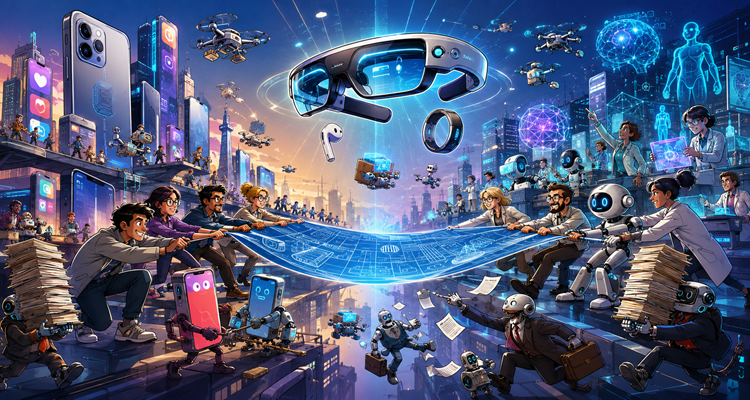
Key Takeaways
- Apple has accused OpenAI of misusing confidential hardware information through former employees and supplier relationships.
- The dispute highlights growing competition over future AI-powered devices that could challenge traditional smartphones.
- Beyond legal claims, the case reflects a broader struggle for talent, intellectual property, and consumer attention.
- Hardware is emerging as the next major battleground in artificial intelligence, expanding competition beyond software.
- The outcome could influence how technology companies recruit talent, protect trade secrets, and build AI ecosystems.
Introduction
For years, Apple and OpenAI occupied different corners of the technology industry. Apple dominated consumer hardware through products such as the iPhone, while OpenAI became synonymous with advances in artificial intelligence software. Their relationship even evolved into a partnership, with ChatGPT integrations appearing across Apple’s ecosystem.
That relationship now appears increasingly strained.
Apple has filed a lawsuit accusing OpenAI and former Apple employees of improperly benefiting from confidential information connected to Apple’s hardware development efforts. While the legal allegations will ultimately be tested in court, the dispute represents something larger than a trade secrets case. It reveals a fundamental shift in the technology landscape as artificial intelligence companies move beyond software and into physical products designed for everyday consumers.
The lawsuit arrives at a pivotal moment when the future of personal computing is being reimagined. At stake is not only intellectual property but also who will shape the next generation of consumer technology in an AI-first world.
Understanding the Development
A Legal Dispute Rooted in Technology Competition
Apple’s complaint alleges that OpenAI gained access to confidential hardware-related information through former employees and industry relationships. The company claims that proprietary knowledge may have been used to accelerate OpenAI’s ambitions in consumer hardware.
OpenAI has denied any interest in acquiring or using competitors’ trade secrets and maintains that its focus remains on building innovative products and services.
The legal process will determine whether Apple’s allegations can be substantiated. However, the significance of the lawsuit extends well beyond the courtroom.
At its core, the dispute reflects a growing collision between two technology giants pursuing increasingly overlapping goals.
From Collaboration to Competition
Not long ago, Apple and OpenAI appeared aligned.
Apple integrated ChatGPT capabilities into its ecosystem, allowing users to access OpenAI’s technology through Siri and other services. The arrangement benefited both companies. Apple gained access to a leading AI platform, while OpenAI expanded its reach to millions of users.
But partnerships in technology often evolve as markets change.
As OpenAI explores consumer hardware opportunities, the company is moving closer to Apple’s traditional domain. What began as cooperation is increasingly becoming competition.
Why This Matters
The Fight Is About the Next Computing Platform
The smartphone transformed how people communicate, shop, work, and consume information. For nearly two decades, Apple has been one of the primary beneficiaries of that shift.
The next major question facing the industry is what comes after the smartphone.
Many technology leaders believe future computing experiences will rely heavily on AI assistants that understand context, automate tasks, and interact naturally through voice, vision, and personalization.
If these AI systems become the primary interface between users and digital services, the importance of traditional operating systems and app stores could decline.
That possibility directly affects Apple’s business model.
Consumer Attention Is the Real Prize
Technology battles are often framed around products, patents, or market share. Yet the most valuable resource is frequently consumer attention.
Companies that control the user experience influence purchasing decisions, service subscriptions, advertising opportunities, and ecosystem loyalty.
An AI device capable of handling tasks without requiring users to navigate apps could fundamentally alter how people interact with technology.
For Apple, protecting its ecosystem means maintaining its role as the primary gateway to digital experiences. For OpenAI, building hardware could provide direct access to consumers without relying on platforms controlled by others.
What Is Changing
AI Companies Are Becoming Hardware Companies
For years, artificial intelligence innovation centered primarily on software models and cloud infrastructure.
That dynamic is changing.
Leading AI firms increasingly recognize that software alone may not provide sufficient control over user experiences. Hardware offers a direct relationship with consumers and creates opportunities to design products specifically around AI capabilities.
The acquisition of hardware-focused ventures and the recruitment of experienced product designers suggest that AI companies are exploring a future where intelligence is embedded into dedicated consumer devices.
The Talent War Is Intensifying
Another important dimension of the dispute involves talent mobility.
The technology industry has long thrived on the movement of engineers, designers, and executives between companies. Such movement often accelerates innovation and spreads expertise throughout the ecosystem.
However, as AI becomes more strategically important, companies are becoming increasingly protective of intellectual property.
Organizations now face a difficult balancing act:
- Encouraging innovation through talent mobility.
- Protecting proprietary knowledge.
- Competing aggressively for specialized expertise.
The Apple-OpenAI dispute highlights how these competing priorities can create legal and ethical tensions.
The Bigger Picture
The Rise of AI-Native Consumer Devices
Throughout technology history, major platform shifts have often emerged when hardware and software evolved together.
Personal computers, smartphones, and wearable devices all succeeded because they combined physical products with powerful software ecosystems.
The AI era may follow a similar pattern.
Rather than treating AI as a feature inside existing products, some companies are exploring entirely new categories of devices built around intelligent assistance from the ground up.
These products could include:
- Advanced voice-first assistants.
- Context-aware wearable devices.
- AI-enhanced personal computing tools.
- Ambient computing systems are integrated into daily life.
The companies that successfully define these categories could become the next generation of technology leaders.
Why Hardware Matters Again
In recent years, much of the technology conversation focused on software platforms and cloud services.
Yet hardware remains a powerful strategic asset.
Owning the device creates advantages in design, performance optimization, privacy controls, customer relationships, and ecosystem integration.
This is one reason companies are investing heavily in custom chips, specialized AI processors, and new device categories.
The Apple lawsuit underscores a reality that many industry observers already recognize: the AI race is no longer solely about algorithms.
It is increasingly about who controls the entire user experience.
Opportunities and Challenges
Potential Benefits for Consumers
Intensified competition often produces innovation.
If major companies compete to create better AI-powered devices, consumers could benefit from:
- More personalized technology experiences.
- Improved productivity tools.
- Faster hardware innovation.
- Greater choice across platforms.
- New forms of human-computer interaction.
Competition frequently pushes companies to improve products faster than they otherwise would.
The Risks Ahead
At the same time, the transition creates challenges.
Intellectual Property Disputes
As competition intensifies, legal conflicts over trade secrets, patents, and proprietary technology may become more common.
Ecosystem Fragmentation
Consumers may face increasing fragmentation as companies build closed AI ecosystems designed to retain users.
Regulatory Scrutiny
Governments are paying closer attention to artificial intelligence, market concentration, and competitive behavior. High-profile disputes may attract additional regulatory interest.
Rising Development Costs
Building advanced AI hardware requires enormous investments in engineering, manufacturing, supply chains, and research.
Not every company pursuing AI devices will succeed.
What Comes Next
A Case That Could Influence the Industry
The lawsuit is likely to unfold over an extended period, with additional facts emerging through court proceedings, discovery processes, and legal arguments.
The eventual outcome may provide important guidance on how trade secret protections apply in an increasingly AI-driven technology landscape.
Companies across Silicon Valley will be watching closely.
The Future Battle Is Larger Than This Lawsuit
Regardless of how the legal dispute is resolved, the broader competitive trend appears clear.
Artificial intelligence is evolving from a software layer into a foundational technology that shapes entire consumer experiences.
As a result, companies that once operated in separate markets are finding themselves on a collision course.
Apple seeks to strengthen its position in AI while preserving the value of its hardware ecosystem. OpenAI appears focused on expanding beyond software and establishing a more direct relationship with consumers.
Those objectives inevitably create overlap.
And where strategic overlap exists, competition follows.
Conclusion
Apple’s lawsuit against OpenAI may be remembered for more than its legal claims. It represents a visible sign of a deeper transformation occurring across the technology industry.
The next chapter of artificial intelligence will not be determined solely by who builds the most advanced models. It will also depend on who creates the devices, ecosystems, and experiences through which people interact with those models every day.
As AI moves from the cloud into consumers’ hands, the competition between technology companies is entering a new phase, one where hardware, software, talent, and trust become inseparable. The courtroom battle may capture headlines today, but the larger story is the race to define the future of personal technology itself.
This content is published for informational or entertainment purposes. Facts, opinions, or references may evolve over time, and readers are encouraged to verify details from reliable sources.