









Why Electricity Is Becoming the Backbone of Everyday Life and a New Source of Household Risk
Electricity has quietly moved from being a basic household service to becoming the foundation of modern living. A home today depends on electricity not only for lights and appliances but increasingly for transportation, heating, communication, entertainment, security, and even personal health technologies.
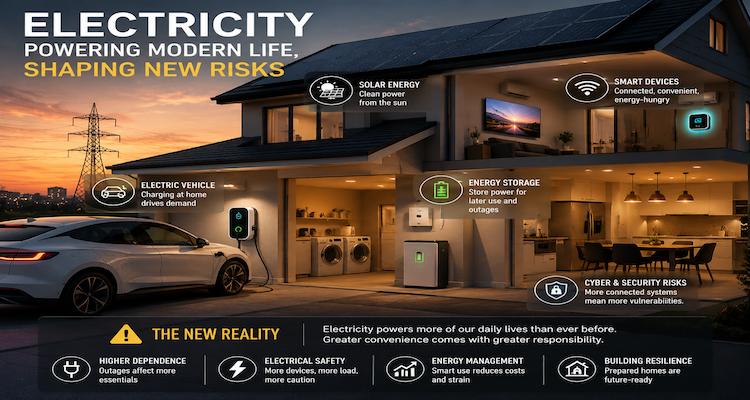
The shift is part of a broader global trend known as electrification: replacing systems that traditionally relied on fossil fuels with electric alternatives. Electric vehicles are replacing some gasoline-powered cars, heat pumps are replacing some gas-based heating systems, and homes are adding technologies such as solar panels, battery storage, smart devices, and connected security systems.
This transition promises cleaner energy use, greater efficiency, and new consumer choices. But it also changes the nature of household risk. The more essential electricity becomes, the more households must consider issues that were once mainly concerns for utilities and engineers: electrical safety, grid reliability, rising demand, cybersecurity, and energy resilience.
Key Takeaways
- Electricity is becoming the central energy source for transport, heating, communication, and household technology.
- Home electrification can improve efficiency but may increase dependence on reliable power systems.
- More connected devices create new cybersecurity and privacy considerations.
- Electrical safety remains important as homes add higher-powered equipment.
- Energy storage and smart technologies may help households manage future power challenges.
The Home Is Becoming an Electrified Ecosystem
For much of the 20th century, electricity mainly powered lighting, refrigeration, televisions, and basic household appliances. Energy systems were relatively simple: electricity entered the home, powered devices, and left little visible complexity behind.
That model is changing.
A growing number of households are becoming energy systems themselves. Homes may now include:
- Electric vehicle charging equipment
- Heat pumps for heating and cooling
- Solar photovoltaic panels
- Home battery storage
- Smart thermostats
- Connected appliances
- Energy monitoring systems
The International Energy Agency (IEA) has identified electrification as a key pathway in global energy transitions, particularly in sectors such as transport and heating where fossil fuels have historically dominated.
The result is that electricity is no longer just something households consume. Increasingly, households are managing electricity production, storage, timing, and efficiency.
Why Electrification Is Accelerating
Several forces are pushing electricity into more areas of daily life.
Transportation Is Moving Toward Electric Power
Transportation has traditionally depended heavily on liquid fuels. Electric vehicles change that relationship by moving energy demand from fuel stations to electrical networks.
This creates benefits such as improved energy efficiency and reduced dependence on gasoline and diesel. However, it also means households that own electric vehicles must consider charging capacity, electrical upgrades, and how charging patterns interact with electricity demand.
A vehicle parked at home is no longer only a transportation asset—it can become one of the largest electricity-consuming devices in a household.
Heating Is Becoming More Electrical
Heating is another major area of change. Heat pumps, which transfer heat rather than generate it through combustion, have gained attention as an efficient alternative in many climates.
However, replacing traditional heating systems with electric alternatives requires planning. Homes may need improved insulation, upgraded electrical systems, and appropriate equipment sizing.
Electrification does not simply mean replacing one device with another. It often requires redesigning how a home uses energy.
More Electricity Dependence Creates New Vulnerabilities
The benefits of electrification come with a trade-off: greater dependence on electricity availability.
A power outage that once affected lighting and entertainment may increasingly affect:
- Vehicle charging
- Home heating or cooling
- Internet-connected systems
- Medical devices
- Home security equipment
- Remote work capabilities
As more essential functions depend on electricity, resilience becomes more important.
Energy researchers and policymakers increasingly discuss concepts such as grid flexibility, distributed energy resources, and storage because future electricity systems must handle changing patterns of demand.
Household Electrical Safety Becomes More Important
Modern homes often contain more electronic equipment than previous generations. At the same time, some new technologies require significant electrical capacity.
High-demand devices, improper installations, outdated wiring, and overloaded circuits can create safety concerns.
Organizations such as the U.S. Consumer Product Safety Commission (CPSC) and electrical safety organizations regularly highlight the importance of proper installation, maintenance, and safe use of electrical products.
Homeowners adding technologies such as electric vehicle chargers, solar systems, or battery storage should rely on qualified professionals and follow applicable electrical standards.
The challenge is not that electricity itself has become unsafe. Rather, the electrical complexity inside homes has increased.
Connected Homes Introduce Cybersecurity Questions
The modern electrical home is also becoming a digital environment.
Smart thermostats, energy management systems, connected appliances, and home batteries often communicate through networks. This creates convenience but also introduces cybersecurity considerations.
A compromised smart device may not only create a privacy issue; in some cases, poorly secured connected energy devices could affect household operations.
The U.S. National Institute of Standards and Technology (NIST) and other cybersecurity organizations have emphasized the importance of security practices for connected devices, including strong passwords, software updates, and careful device management.
The future home will require both electrical safety and digital safety.
The Rising Importance of Household Energy Management
As electricity becomes more valuable and demand patterns become more complex, households may increasingly manage when and how they use power.
Smart energy systems can help consumers:
- Monitor electricity consumption
- Reduce unnecessary usage
- Shift some energy use to lower-cost periods
- Coordinate solar generation and battery storage
This reflects a broader change: consumers are becoming active participants in energy systems rather than passive users.
However, access to these technologies is not equal. Installation costs, housing conditions, and local infrastructure can influence who benefits from electrification.
The Grid Challenge Behind Household Electrification
The household transition toward electricity also creates challenges beyond individual homes.
Electricity grids must balance supply and demand every moment. As more homes adopt electric vehicles, heat pumps, and other technologies, electricity demand patterns may change.
The issue is not simply producing more electricity. Grid operators must also manage:
- Peak demand periods
- Renewable energy variability
- Infrastructure upgrades
- Distribution network capacity
A successful electrified future depends not only on household technology but also on investments in energy infrastructure.
Electricity’s Future Role: Essential Infrastructure Inside Every Home
The growing importance of electricity represents a major transformation in how people live.
Homes are becoming more connected, more efficient, and potentially more independent through technologies such as solar generation and storage. At the same time, greater dependence on electricity means households must think differently about preparation, maintenance, and security.
The question is no longer whether electricity will play a larger role in daily life. That transition is already underway.
The more important question is whether homes, communities, and energy systems can adapt quickly enough to make electrification reliable, affordable, and safe.
Conclusion
Electricity is becoming the central operating system of modern households. It powers not only traditional appliances but also emerging technologies that shape transportation, climate control, communication, and energy independence.
That shift brings significant opportunities, but it also changes household responsibilities. Future-ready homes will need more than efficient devices they will need safer electrical systems, stronger digital protections, and better awareness of how energy is produced and consumed.
As everyday life becomes increasingly electric, managing electricity wisely may become as important as having access to it.
The information presented in this article is based on publicly available sources, reports, and factual material available at the time of publication. While efforts are made to ensure accuracy, details may change as new information emerges. The content is provided for general informational purposes only, and readers are advised to verify facts independently where necessary.
Related News
- The Energy Paradox of Efficiency: Why Using Less Electricity Does Not Always Mean Using Less Energy
- Why Extreme Weather Is Turning Electricity Resilience Into an Everyday Consumer Issue
- Why Energy Independence Is Becoming a Household Decision, Not Just a National Strategy
- The Hidden Energy Cost of Keeping Everything Available Instantly