







The Overlooked Health Effect of Constant Background Noise
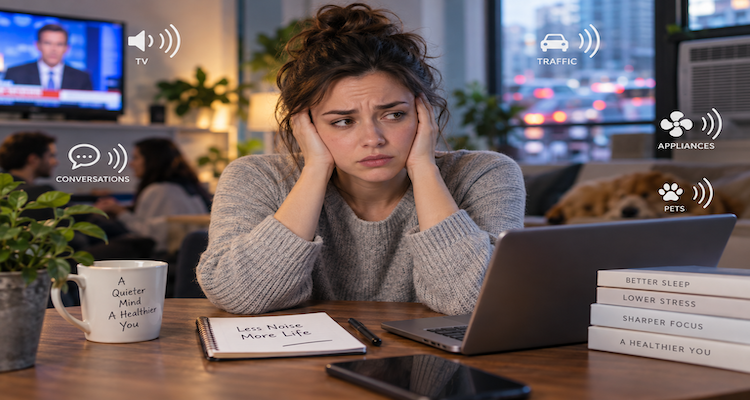
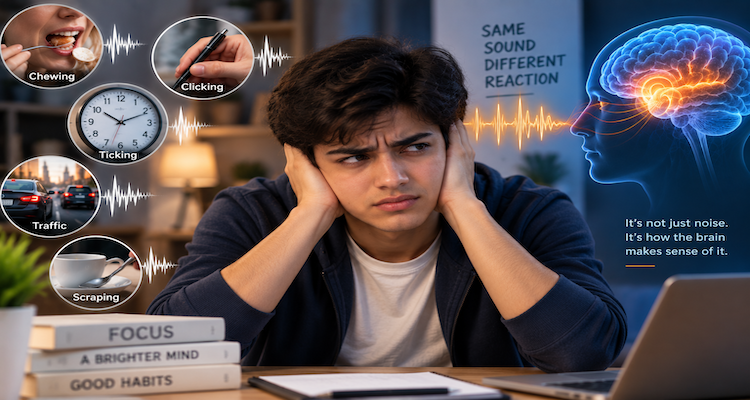
A refrigerator humming, traffic passing outside, conversations drifting through an office, construction in the distance, or television audio playing in another room may seem too ordinary to matter. Yet when sound is present for much of the day or repeatedly interrupts sleep the body and brain may not experience it as neutral background.
The health science around environmental noise is broader than hearing damage. Research reviewed by the World Health Organization links excessive environmental noise with sleep disturbance, cardiovascular effects, cognitive impairment, annoyance and other health outcomes.
The overlooked issue is that noise does not have to be painfully loud to become relevant to health. Its timing, persistence, predictability, meaning and ability to interfere with sleep or concentration can all matter. At the same time, the evidence does not support treating every quiet hum or every form of background sound as inherently harmful.
Key Takeaways
- Persistent environmental noise can interfere with sleep even when people do not fully wake up.
- The brain can remain responsive to sound during sleep, making repeated nighttime disturbances particularly relevant.
- Noise-related stress involves more than hearing; physiological responses can affect cardiovascular health over time.
- Background speech can interfere with memory and concentration even at relatively modest sound levels.
- Evidence for mental-health effects is growing, but researchers still identify important limitations and uncertainty.
- Reducing unnecessary noise exposure especially during sleep and demanding mental work is a practical health measure.
The Health Problem Is Bigger Than Hearing
Noise is often treated as a hearing issue: if a sound is loud enough to damage the ears, it is considered dangerous.
Environmental-health research uses a broader framework.
The WHO identifies environmental noise as a public-health risk associated with sleep disturbance, cardiovascular and metabolic effects, cognitive impairment, annoyance and other outcomes. Its guidance covers noise from roads, railways, aircraft, wind turbines and leisure activities.
That distinction matters because the pathway from noise to health is not always direct damage to the ear.
A person may hear a sound without suffering hearing loss while still experiencing disrupted sleep, distraction or annoyance. Over longer periods, repeated physiological responses to unwanted sound are one proposed pathway connecting environmental noise with cardiovascular and other health effects. WHO’s review of the biological mechanisms specifically discusses stress-related pathways and cardiovascular and metabolic outcomes.
This does not mean that every background sound causes disease. Exposure levels, duration, timing and individual circumstances matter.
Sleep May Be the First Place the Effects Become Visible
One of the most important reasons to pay attention to background noise is that sleep is not a state in which the brain becomes completely disconnected from its surroundings.
Traffic, aircraft, trains and other environmental sounds can produce physiological changes during sleep. A WHO evidence review found that a 10-dBA increase in indoor maximum noise level was associated with a higher probability of awakening in pooled analyses of transportation-noise studies.
Even when a person does not remember waking up, repeated disturbances can affect the continuity and quality of sleep.
This creates an important distinction between sleeping through noise and sleeping undisturbed by noise. Feeling that you slept through the night does not necessarily establish that your sleep architecture was unaffected.
WHO’s environmental-noise guidance therefore places particular importance on nighttime exposure. For road traffic, the 2018 European guidelines strongly recommend reducing average exposure below 53 dB Lden and nighttime exposure below 45 dB Lnight because higher exposure is associated with adverse health effects and sleep effects, respectively. These measures describe environmental exposure metrics and should not be interpreted as a universal “safe/unsafe” threshold for every individual sound.
The Brain Does Not Treat All Background Noise Equally
There is another overlooked effect: background sound can compete for attention.
This becomes especially relevant in offices, homes, classrooms and other environments where people need to read, remember information or perform cognitively demanding work.
Research on open-plan offices has found that irrelevant speech can disrupt certain tasks, particularly those involving short-term memory and rehearsal.
The important variable is not simply volume. Intelligibility can matter.
A voice that can be understood even partially may be more distracting than a less meaningful continuous sound at a similar level because the brain automatically processes aspects of speech.
Another experiment found that low-level background speech produced less disturbance when its intelligibility was reduced, while highly intelligible speech remained disruptive.
This helps explain why a quiet conversation in the next room can sometimes be more distracting than a steady mechanical hum.
Why Noise Can Affect the Body
The connection between sound and cardiovascular health is one of the more important findings in environmental-noise research.
The proposed mechanism is not simply “loud noise damages the heart.” Instead, unwanted sound can act as a stressor, particularly when exposure is persistent or occurs during sleep. Researchers have investigated pathways involving stress responses, endocrine activity, vascular function and sleep disruption.
A WHO systematic review examining cardiovascular and metabolic effects found the strongest evidence among the reviewed outcomes for an association between road-traffic noise and ischemic heart disease. The review also emphasized that evidence quality varied considerably across different outcomes.
That qualification is important.
Environmental-health research often observes associations across populations rather than proving that a particular noise exposure directly caused an individual’s illness. Factors such as air pollution, socioeconomic conditions, housing and lifestyle can overlap with noise exposure.
A 2023 umbrella review of systematic reviews found associations between environmental noise and several adverse health outcomes but also concluded that much of the underlying evidence was low or very low quality.
The scientifically responsible message is therefore not that background noise automatically causes cardiovascular disease. It is that long-term environmental noise is sufficiently associated with health risks that reducing unnecessary exposure is a legitimate public-health objective.
Mental Health: A Signal Worth Watching, Not a Simple Diagnosis
Noise can also affect psychological well-being.
Annoyance is more than an expression of dislike. Repeated exposure to unwanted sound can contribute to stress and interfere with daily activities, relaxation and sleep.
A 2022 systematic review and meta-analysis found associations between high noise annoyance and depression, anxiety and poorer general mental-health measures. However, the authors emphasized that the number of studies was limited and that heterogeneity and publication bias affected the evidence.
More recently, a 2025 systematic review specifically examining environmental noise at home identified noise annoyance and sleep disturbance as possible pathways linking household noise exposure with poorer mental health. The researchers also stressed that the evidence remains limited because of small numbers of studies and methodological concerns.
That makes an important distinction:
Noise should not be presented as a standalone explanation for anxiety or depression.
Mental health is influenced by many biological, social and environmental factors. Noise may be one contributor for some people rather than a single cause.
Who May Be More Vulnerable?
Noise does not affect everyone identically.
WHO identifies children, older people, people with chronic illnesses and shift workers among groups that can be particularly vulnerable to noise-related disturbance. Children may be especially affected when environmental noise interferes with sleep or learning.
People working from home can also face a less obvious problem: the home may have become both a living environment and a workplace.
A person might spend the morning in a room with traffic noise, conduct meetings with intermittent household sounds, work through the afternoon with background television or conversations, and then sleep in the same environment at night.
The issue is therefore not necessarily one dramatic noise event. It can be the accumulation of small interruptions across the entire day.
Should You Try to Eliminate All Background Sound?
No.
The research does not justify turning ordinary life into an artificially silent environment.
Some people deliberately use steady background sound to mask unpredictable noises, particularly while working or sleeping. Experimental research has found that masking background speech can reduce some of its disruptive effects on short-term memory performance.
The more useful question is therefore:
Is the sound helping create a stable acoustic environment, or is it repeatedly demanding attention?
A predictable, unobtrusive sound may be less disruptive than intermittent speech, sudden traffic events or other meaningful sounds. But individual responses differ, and evidence about deliberately using continuous sound for sleep is not strong enough to claim that everyone should do so.
What People Can Do About Everyday Noise
The most practical approach is to identify the periods when noise is most disruptive rather than trying to eliminate every sound.
For example:
- Protect sleep first. Close windows when practical, use quieter room placement, improve seals or insulation where feasible, and reduce unnecessary nighttime audio.
- Control speech during concentrated work. If conversations are the main distraction, physical separation, headphones or appropriate sound masking may help.
- Identify intermittent sounds. Sudden or intelligible sounds can be more disruptive than a steady low-level hum.
- Create quiet periods. Even if complete silence is impossible, deliberately reducing unnecessary sound gives the brain fewer competing signals.
- Pay attention to persistent sleep disruption. If environmental noise repeatedly interferes with sleep, the problem deserves attention rather than simply being accepted as normal.
- Avoid assuming a decibel number tells the whole story. Timing, duration, frequency, source and personal sensitivity also influence how sound is experienced.
For people experiencing persistent sleep problems or other health symptoms, environmental noise may be one factor worth discussing with an appropriate healthcare professional rather than assuming it is the sole cause.
The Bigger Issue: We Have Normalized Noise
The most interesting lesson from the evidence is not that every background sound is dangerous.
It is that constant noise has become so ordinary that people can stop noticing it while their environment continues to expose them to an avoidable stressor.
WHO estimates that about 100 million people in the European Union are exposed to unhealthy levels of road-traffic noise, and its current environmental-noise work continues to treat noise as an important population-health issue.
Noise is also unusual because its effects can be difficult to see. Air pollution can be measured as a pollutant concentration. A broken bone can be seen on an image. Noise-related sleep fragmentation, distraction or annoyance may leave no obvious physical mark.
That invisibility can make the problem easier to dismiss.
The evidence does not support fearing every sound. It does support taking persistent, unwanted environmental noise seriously particularly when it interferes with sleep, concentration or daily well-being.
For many people, the first useful health intervention may be surprisingly simple: notice the soundscape around you.
If a sound is present almost continuously, interrupts sleep, repeatedly captures your attention or makes relaxation difficult, it may be worth asking whether that background has become more than background.
Conclusion
Constant background noise is not automatically a health hazard, and the strength of evidence varies substantially depending on the type, intensity and duration of exposure and the health outcome being studied.
But the broader evidence is clear enough to challenge the assumption that noise matters only when it is loud enough to damage hearing.
Environmental noise can disturb sleep, interfere with cognitive performance and contribute to physiological and psychological stress. The strongest practical case for reducing exposure is often not a fear of one particular disease, but the cumulative value of protecting sleep, concentration and recovery.
The overlooked health effect may therefore be less about how loud a sound is and more about how often the brain is asked to respond to it.
This article is intended for general awareness and educational purposes only. It should not be considered medical advice. Readers are encouraged to consult qualified healthcare professionals for personal health decisions.