










How Ordinary Household Objects Became Historical Time Capsules
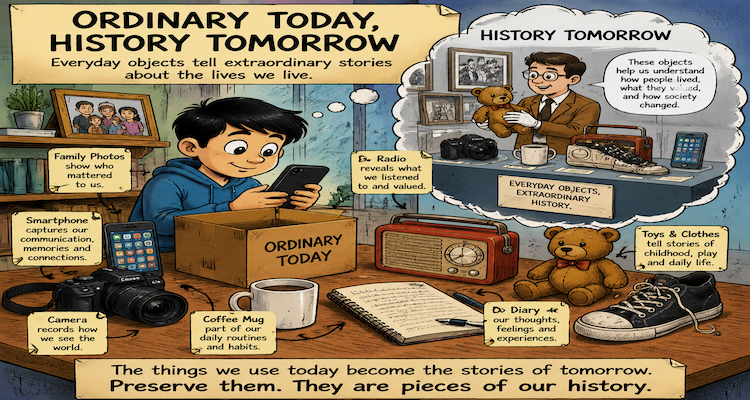
A cracked teacup, an old family photograph, a handwritten recipe book, a worn-out suitcase, or a decades-old radio may appear insignificant when sitting on a shelf. Yet historians often discover that these ordinary objects reveal something rare: how people actually lived.
Grand monuments and official documents usually preserve the stories of powerful institutions, governments, and famous individuals. Household objects preserve a different kind of history the routines, choices, habits, emotions, and technologies of everyday people. This approach is known as material culture, a field that studies how physical objects reflect the societies that created and used them.
The growing interest in everyday possessions is changing how historians understand the past. A kitchen tool can reveal changing food practices. A child’s toy can reveal ideas about childhood. A telephone, computer, or television can show how technology reshaped family relationships.
The objects people once considered disposable often become the strongest evidence of ordinary life.
Key Takeaways
- Everyday objects preserve evidence of personal habits, social values, and technological change.
- Historians use household possessions to understand lives missing from official records.
- Simple items such as cups, clothing, and tools can reveal economic and cultural shifts.
- Digital devices are creating new challenges for preserving modern everyday history.
- The objects people ignore today may become important historical evidence tomorrow.
Why Ordinary Objects Matter to Historians
Traditional history often focuses on major events wars, political decisions, economic crises, and famous leaders. But these records rarely explain how ordinary families experienced those events.
A household object fills that gap.
A worn cooking pot may show what foods a family prepared. A repaired jacket may reveal economic conditions and attitudes toward reuse. A child’s school notebook can show teaching methods, handwriting styles, and social expectations from another era.
Researchers studying material culture examine objects not simply as things, but as evidence of relationships between people and their environment. Objects can reveal how communities worked, what people valued, and how daily routines changed over time.
The importance of these objects is that they capture human behaviour rather than only human decisions.
A government document might record that a new technology was introduced. A household object can show how people actually adapted to it.
The Hidden Stories Inside Familiar Household Items
Many objects become historically valuable because they contain personal stories.
A family photograph album, for example, is not only a collection of images. It can reveal clothing styles, home interiors, family structures, migration patterns, and social customs.
A handwritten recipe book can show how ingredients changed, how families preserved traditions, and how communities exchanged knowledge.
Even ordinary packaging can become evidence. Product labels, advertisements, and containers can reveal changing consumer habits, manufacturing methods, and cultural preferences.
Museums increasingly collect these everyday items because they provide insight into social history. Collections dedicated to domestic life often include furniture, household tools, clothing, toys, and personal belongings because they represent experiences that larger historical records may overlook.
From Kitchen Tables to Museum Collections
Some of the most fascinating historical discoveries come from objects that were never designed to become important.
A preserved piece of clothing can reveal craftsmanship, trade networks, and personal identity. A simple tool can show how people worked before industrial automation transformed everyday tasks.
The study of ordinary objects also helps historians understand communities that traditionally received less attention in written records, including workers, women, children, and ordinary families.
For example, domestic objects often provide evidence about household labour who cooked, who cleaned, who repaired items, and how responsibilities were divided.
These details may seem small, but together they create a picture of social life that written records alone cannot provide.
Technology Turned Everyday Objects Into Historical Evidence
Modern technology has expanded the value of household objects.
A twentieth-century radio, camera, television, or computer is not only a machine. It represents changes in communication, entertainment, work, and relationships.
Consider the telephone. Early household telephones changed how families maintained relationships and interacted with businesses. Later, mobile phones transformed personal communication by making digital connectivity constant.
Personal computers and smartphones have created another layer of historical evidence. They contain photographs, messages, documents, and digital memories that record everyday life.
However, they also create a preservation challenge.
A paper letter can survive for centuries under suitable conditions. A digital photograph may disappear because of damaged storage devices, outdated formats, lost passwords, or discontinued services.
Future historians may have access to enormous amounts of digital information, but preserving and interpreting that information presents new problems.
The Problem of Preserving Today’s Digital History
Previous generations left behind physical objects because they naturally accumulated around homes.
Modern life produces fewer physical records.
A family vacation that once created printed photographs may now exist only on a cloud account. A personal diary may have become private messages stored on a platform that may not exist decades later.
This creates an unusual historical situation: society is producing more information than ever, but some forms of personal history may be more fragile.
Digital preservation specialists increasingly focus on maintaining access to files, formats, and metadata so future generations can understand today’s experiences.
The challenge is not simply saving data. It is preserving context.
A photograph without information about who appears in it, where it was taken, or why it mattered may lose much of its historical meaning.
Why Personal Objects Connect Us With the Past
The power of ordinary objects is emotional as much as historical.
A museum visitor may not feel an immediate connection with a political document from centuries ago. But seeing an everyday object — a shoe, a cup, a letter, or a child’s toy can create recognition.
These objects remind people that history was lived by individuals with ordinary routines, concerns, and relationships.
Museums often use personal objects because they create a connection between past and present. Collections of everyday items allow visitors to explore history through familiar experiences rather than distant events.
The significance of an object is not always determined by its price, rarity, or beauty. Sometimes its value comes from the life that surrounded it.
What Today’s Homes Are Leaving Behind
Future historians may study objects that currently seem ordinary:
- smartphones that changed communication,
- smart speakers that introduced voice technology into homes,
- fitness trackers that recorded personal health trends,
- gaming devices that created new forms of social interaction,
- electronic appliances that transformed domestic work.
The challenge will be deciding what deserves preservation.
Not every object can become a museum artifact. Historians and archivists must choose items that represent broader social changes while also preserving individual experiences.
A mass-produced object may sometimes tell a more complete story than a rare luxury item because millions of people used it.
Conclusion
The history of humanity is not written only in castles, monuments, and official documents. It is also hidden in kitchens, bedrooms, garages, and drawers.
Ordinary objects become historical time capsules because they preserve the details that large historical records often miss: how people lived, worked, communicated, and remembered.
The objects surrounding us today may appear temporary and replaceable. Yet decades or centuries from now, they may help future generations understand the everyday reality of our time.
The most important historical artifacts are not always the ones people deliberately preserve. Sometimes they are the objects people simply kept because they mattered.
This content is published for informational or entertainment purposes. Facts, opinions, or references may evolve over time, and readers are encouraged to verify details from reliable sources.