










How Everyday Noise Is Quietly Reshaping Plant Growth and Pollination
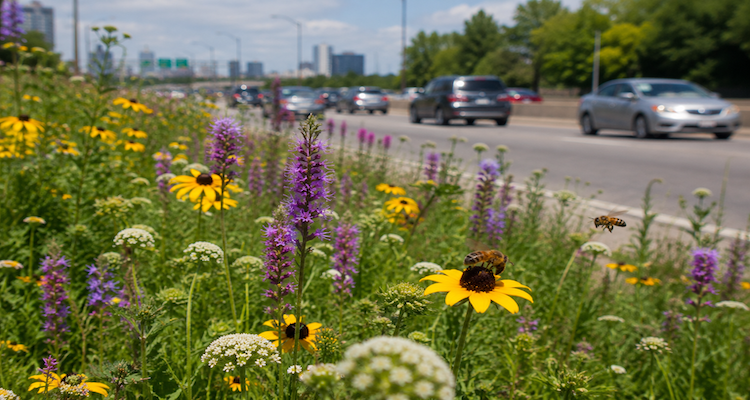
The sounds that surround us rarely command attention. Traffic hums in the distance, air conditioners drone through the night, construction equipment starts before sunrise, and aircraft pass overhead without much thought. For people, this constant soundtrack has become part of daily life. For plants and the creatures that help them reproduce, however, the story may be more complicated.
Scientists have long studied how noise affects animals, from birds altering their songs to mammals changing migration routes. More recently, researchers have begun asking a quieter but equally fascinating question: if pollinators and wildlife respond to sound pollution, what happens to the plants that depend on them?
The answer is opening a new window into how human activity influences ecosystems in ways that often go unnoticed. While plants do not hear in the same way animals do, they exist within living networks where sound can indirectly and sometimes directly shape growth, flowering, and pollination.
The Hidden Reach of Sound Pollution
Environmental pollution is often associated with smoke, chemicals, or plastic waste. Noise pollution rarely receives the same attention because it leaves no visible trace. Yet it can alter entire ecosystems.
Road traffic, industrial machinery, urban development, railways, and airports generate continuous low-frequency sounds that travel considerable distances. In natural habitats, these sounds can interfere with the behavior of insects, birds, and mammals that perform essential ecological roles.
Pollination depends on movement. Bees, butterflies, moths, hummingbirds, bats, and other species travel between flowers, carrying pollen that enables many plants to reproduce. If their routines change because of persistent noise, plants may experience fewer successful pollination events, even when the flowers themselves remain healthy.
The impact is often indirect, but indirect changes can accumulate over time.
Pollinators Don’t Experience a Noisy World the Way We Do
Many pollinating insects rely on more than sight when searching for flowers. Vibrations, scent, sunlight, temperature, and environmental cues all contribute to their behavior.
Continuous background noise may mask important signals or make habitats less attractive to certain species. Birds that also assist in pollination can avoid noisy locations altogether. Bats, which pollinate numerous flowering plants in tropical and desert regions, depend heavily on sound-based navigation, making excessive environmental noise particularly disruptive.
The result is not necessarily a dramatic disappearance of pollinators. Instead, subtle shifts may occur. Some areas receive fewer visits, while others become unexpectedly busy. Flowering plants that evolved alongside predictable pollinator behavior may find those patterns becoming increasingly unpredictable.
These changes may seem small individually, but ecosystems often depend on countless small interactions happening reliably over long periods.
Can Plants Respond to Sound Themselves?
An intriguing area of research explores whether plants can detect mechanical vibrations.
Plants do not possess ears or nervous systems, but they are remarkably sensitive to physical stimuli. They respond to touch, wind, gravity, light, moisture, and temperature. Some experiments suggest that certain sound frequencies or vibrations may influence seed germination, root development, or flowering under controlled conditions.
Researchers continue investigating these findings, and many questions remain unanswered. Laboratory experiments do not always reflect complex outdoor environments where multiple factors interact simultaneously.
Rather than concluding that music or city noise directly controls plant growth, scientists generally approach the topic cautiously. Current evidence suggests plants can respond to certain vibrations, but understanding how these responses translate into natural ecosystems requires much more study.
That distinction matters because it separates scientific curiosity from popular myths.
Cities Are Becoming Unexpected Ecological Laboratories
Urban environments have become ideal places to study how sound affects nature.
Cities combine constant traffic, dense infrastructure, artificial lighting, altered temperatures, and fragmented green spaces. Parks, gardens, rooftop habitats, and roadside vegetation all exist within this changing sensory landscape.
Some plant species appear remarkably adaptable. Others may struggle if the insects they depend upon reduce their visits or shift their feeding schedules.
Interestingly, urban planners increasingly recognize that creating greener cities involves more than planting additional trees. The surrounding environment including light, heat, air quality, and noise can influence whether urban biodiversity truly thrives.
This broader perspective is encouraging city designers to think beyond aesthetics and consider how entire ecological systems function together.
Agriculture May Eventually Feel the Effects
Pollination supports many fruits, vegetables, nuts, and flowering crops grown around the world.
If persistent environmental noise influences pollinator movement, agricultural systems located near highways, industrial areas, or expanding urban developments may eventually require closer observation.
This does not mean farms are suddenly facing widespread pollination failure because of nearby traffic. Agriculture is shaped by numerous variables, including weather, habitat availability, pesticide use, soil health, and pollinator populations.
However, as precision agriculture becomes more sophisticated, farmers and researchers may begin considering sound as one environmental factor worth monitoring alongside others.
Understanding every influence on pollination helps build more resilient food systems.
A Bigger Lesson About Invisible Environmental Change
Perhaps the most valuable insight from this growing field is not simply that noise affects plants. It is that ecosystems respond to cumulative pressures rather than isolated events.
A single passing truck is unlikely to transform a landscape. Years of continuous traffic, expanding infrastructure, habitat fragmentation, changing temperatures, and declining biodiversity together may gradually reshape how ecosystems function.
This reflects a broader shift in environmental science. Researchers increasingly examine relationships instead of individual species. Plants, insects, birds, mammals, fungi, soil microbes, and even sound form interconnected networks where small disturbances can ripple outward in unexpected ways.
The health of a flowering plant may ultimately depend as much on its ecological neighborhood as on the nutrients beneath its roots.
What This Means for Everyday Life
Most people rarely connect everyday noise with gardens, parks, or food production.
Yet simple actions that create quieter, healthier habitats can support biodiversity. Preserving green corridors, protecting flowering landscapes, planting pollinator-friendly gardens, and designing urban spaces that reduce unnecessary noise all contribute to more resilient ecosystems.
These measures benefit wildlife while also improving human well-being. Quieter parks tend to attract more birds, encourage outdoor recreation, and create environments where both people and nature flourish.
The conversation is gradually shifting from reducing environmental harm to designing places that actively support ecological balance.
Looking Ahead
The relationship between sound, plants, and pollination remains an evolving area of scientific research. Many mechanisms are still being explored, and scientists continue testing how different species respond under real-world conditions.
What is already becoming clear is that noise should no longer be viewed solely as a human inconvenience. It is an environmental factor capable of influencing living systems in subtle but meaningful ways.
As cities continue expanding and infrastructure grows, understanding these quieter ecological connections may help shape smarter conservation strategies, more sustainable agriculture, and healthier urban environments.
Sometimes the greatest environmental changes are not the ones we can see. They are the ones we hear every day without truly listening.
This content is published for informational or entertainment purposes. Facts, opinions, or references may evolve over time, and readers are encouraged to verify details from reliable sources.