










Are We Losing Our Sense of Direction in the Age of GPS?
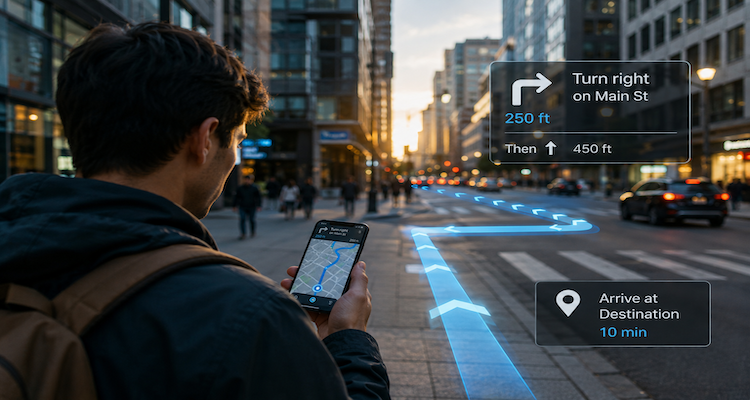
A generation ago, getting lost was a normal part of travel. People studied paper maps before leaving home, memorized landmarks, and learned routes through repetition. Today, a calm voice from a smartphone tells us exactly when to turn, where to go, and how long it will take to arrive. Navigation has become effortless, but that convenience raises an intriguing question: are we gradually losing the ability to find our way without technology?
The answer is more complex than simple nostalgia for paper maps. GPS navigation has transformed transportation, improved efficiency, and made unfamiliar places far more accessible. Yet as digital navigation becomes deeply embedded in daily life, researchers, educators, and technology observers are increasingly examining what happens when a skill once considered essential becomes optional.
This shift is not just about directions. It reflects a broader change in how humans interact with knowledge, memory, and decision-making in a world where digital tools increasingly think alongside us.
From Map Readers to Route Followers
Navigation once required active participation. Whether driving across a city or exploring a new neighborhood, people often developed mental maps of their surroundings. Streets, landmarks, and spatial relationships became part of memory through repeated use.
Modern navigation apps have changed that process. Instead of understanding the overall geography of an area, many users simply follow turn-by-turn instructions. The technology handles route planning, recalculations, and traffic adjustments automatically.
The result is remarkable convenience. Travelers can confidently explore unfamiliar cities, delivery services can optimize routes, and drivers can avoid congestion in real time. Yet the experience of navigation has shifted from understanding a route to following instructions.
Some cognitive scientists have suggested that these two activities engage the brain differently. Building a mental map requires spatial reasoning and active observation, while following navigation prompts can reduce the need for those processes.
The distinction may seem subtle, but it reflects a significant behavioral change.
The Hidden Cost of Frictionless Navigation
Technology often succeeds by removing friction. Navigation apps eliminate uncertainty, reduce stress, and save time. However, friction sometimes plays an important role in learning.
When people make wrong turns, study maps, or navigate using landmarks, they actively engage with their environment. These experiences help create stronger spatial awareness and geographic understanding.
By contrast, users who rely exclusively on GPS may arrive at their destination without developing much knowledge of the route itself. Many people have experienced the strange realization that they could repeat a journey multiple times yet struggle to describe how to reach the destination without digital assistance.
This phenomenon highlights an important insight: navigation tools are not merely replacing old methods; they are changing how humans process location-based information.
The issue resembles other technology-driven shifts. Few people memorize phone numbers today because smartphones store them. Search engines have reduced the need to remember certain facts. Navigation apps may be producing a similar effect in spatial memory.
Why Interest in This Question Is Growing
Concerns about navigation skills are emerging at a time when society is increasingly dependent on digital assistance.
Artificial intelligence can summarize information, recommend actions, and answer questions instantly. Smart devices manage schedules, reminders, and communications. Navigation technology fits naturally into this larger ecosystem of digital delegation.
As a result, people are beginning to ask a broader question: when technology handles more cognitive tasks, which human abilities become weaker through lack of use?
Navigation offers one of the most visible examples because it affects daily life. Nearly everyone uses digital maps, making the change easy to observe.
The growing discussion is not necessarily about rejecting technology. Instead, it reflects curiosity about how convenience influences human capability over time.
The Generational Difference
Perhaps the most interesting aspect of the navigation debate is the contrast between generations.
Many older adults learned to navigate before smartphones existed. They developed habits centered on memorization, observation, and route planning. Younger generations often encountered digital navigation from an early age and may have fewer opportunities to practice traditional wayfinding skills.
This does not mean younger people are less capable. In many cases, they excel at leveraging technology efficiently. The skill set has changed rather than disappeared.
However, there is a meaningful distinction between knowing how to use a navigation system and knowing how to navigate independently when that system is unavailable.
The difference becomes apparent during power outages, network disruptions, battery failures, or travel in remote locations where digital connectivity may be limited.
Navigation Is Becoming an Invisible Service
One underreported trend is that navigation is increasingly disappearing into the background of daily life.
Modern vehicles integrate route guidance directly into dashboards. Smartwatches provide subtle directional cues. Augmented reality navigation overlays directions onto real-world views. Future systems may become even more seamless, requiring less active attention from users.
As navigation becomes more automated, people may think about routes less frequently than ever before.
This reflects a larger technological pattern. Successful technologies often become invisible. Electricity, internet connectivity, and cloud computing operate largely behind the scenes. Navigation may be following the same path.
The consequence is that wayfinding evolves from a personal skill into a service people consume.
What We May Be Gaining Instead
The conversation about navigation often focuses on what might be lost, but technology also creates new capabilities.
Modern navigation tools provide access to real-time traffic data, public transportation updates, accessibility information, and route optimization that would be impossible to calculate manually.
Businesses benefit from improved logistics. Emergency services can locate destinations more efficiently. Travelers can confidently explore regions they might otherwise avoid.
In many situations, technology expands human capability rather than simply replacing it.
The more relevant question may not be whether GPS is making people worse navigators. Instead, it may be changing which navigation skills matter most.
Knowing how to interpret information, evaluate routes, and adapt to changing conditions could become more valuable than memorizing street networks.
Finding the Right Balance
The future is unlikely to involve abandoning navigation technology. The benefits are simply too significant. Yet there may be value in preserving some independent wayfinding abilities.
Simple habits can help maintain spatial awareness. Paying attention to landmarks, understanding the general layout of a city, or occasionally navigating familiar routes without digital assistance can strengthen geographic understanding.
These practices are not about resisting innovation. They are about ensuring that convenience does not completely replace capability.
History suggests that humans adapt whenever technology changes how work is performed. Some skills decline while others emerge. Navigation is no exception.
The larger lesson extends beyond maps and directions. As artificial intelligence and digital tools become more integrated into everyday life, society will increasingly face choices about which abilities should be automated and which remain worth practicing.
Getting from one place to another may seem like a small task. Yet the way we navigate reveals something much bigger: how humans balance convenience, independence, and the evolving relationship between technology and cognition.
The question is not whether technology is changing the way we find our way. It clearly is. The more important question is whether we remain aware of what we gain, and what we may gradually stop exercising, along the journey.
The information presented in this article is based on publicly available sources, reports, and factual material available at the time of publication. While efforts are made to ensure accuracy, details may change as new information emerges. The content is provided for general informational purposes only, and readers are advised to verify facts independently where necessary.