






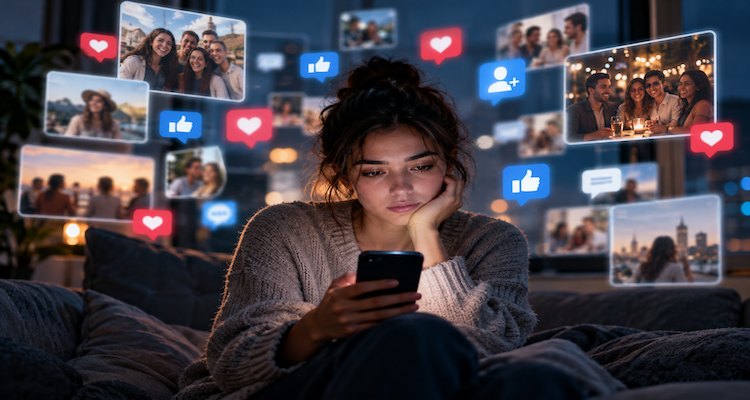



Why We Rewatch Old Movies: The Psychology Behind Comfort Entertainment
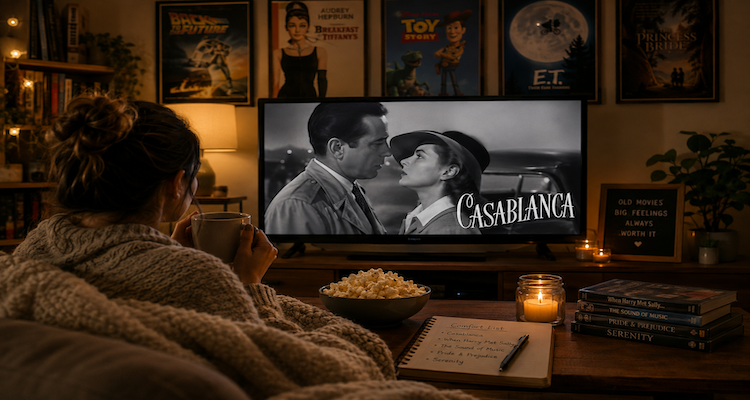
There is a peculiar kind of relief in pressing play on a film whose ending you already know.
You know when the hero will fail, which line will make you laugh, and whether the final scene will leave you hopeful or devastated. From a purely rational perspective, rewatching may seem inefficient: the story contains no surprises. Yet familiar films can offer something that new entertainment cannot predictability, emotional recognition, nostalgia, and the opportunity to notice what was missed the first time.
Psychological research suggests that repeated experiences are often more rewarding than people expect. In one series of seven studies involving 3,356 participants, people tended to underestimate how much they would enjoy repeating experiences, including rewatching a movie. One reason was that repeated exposure allowed people to discover details and nuances they had overlooked before.
The appeal of old movies, then, is not simply about refusing novelty. Sometimes the value of entertainment lies precisely in knowing where it is going. When the world outside the screen feels uncertain, a familiar story can offer a small, dependable emotional environment one in which the rules, characters and outcome are already known.
Key Takeaways
- Rewatching can remain enjoyable because familiar stories often reveal details and meanings missed during the first viewing.
- Predictability can make familiar entertainment appealing when people prefer certainty over another unknown choice.
- Nostalgic films may reconnect viewers with personal memories, identity and social relationships.
- The comfort of a familiar movie does not necessarily mean nostalgia; repetition and rediscovery can be rewarding on their own.
- Comfort entertainment can be useful escapism, but research suggests escapist media use can also have less helpful forms.
Rewatching Is Not the Opposite of Discovery
The common assumption is that novelty produces pleasure while repetition produces boredom. Research complicates that idea.
A 2019 study by University of Chicago researcher Ed O’Brien examined how people predicted and experienced repeated activities. Across seven studies, participants generally expected repeat experiences to be less enjoyable than they actually were. In experiments involving a museum exhibit, a movie and a video game, people who repeated an experience often found more to enjoy than those predicting the repeat anticipated.
The important insight is that a second viewing is not psychologically identical to the first.
During an initial viewing, attention is often occupied by a basic question: What happens next? Once that uncertainty disappears, attention can shift elsewhere. A viewer may notice visual details, foreshadowing, performances, music or narrative connections that were effectively hidden by the effort of following the plot.
This creates an overlooked reason why old movies endure. Rewatching is not always an attempt to recreate a first experience. Sometimes it is a different experience built from the same material.
That distinction matters. A familiar film can simultaneously offer certainty and discovery.
Research on repeated exposure also suggests that familiarity can influence liking, although the relationship is not endlessly positive: a large meta-analysis found a pattern consistent with an inverted-U relationship, meaning that repeated exposure does not guarantee ever-increasing enjoyment.
In other words, familiarity has value but too much repetition can still become dull.
The Comfort of Knowing What Happens Next
One of the clearest advantages of a familiar movie is that it reduces uncertainty.
A new film asks for decisions. Is it worth the time? Will the story become disappointing? Will the ending be satisfying? A movie you have already watched requires none of that calculation. Its emotional contract is already known.
Research published by the American Psychological Association in 2022 offers a broader clue about why familiarity can become attractive. Across eight experiments involving nearly 6,000 participants, researchers found that when people perceived time or opportunities as limited, they tended to favor familiar experiences over novel ones.
That research was not specifically about movie rewatching, and it would be an overreach to claim that it explains every decision to revisit an old film. But it supports a broader psychological point: novelty is not always the preferred form of pleasure.
Context matters.
At some moments, people may want surprise. At others, they may prefer an experience with a known emotional payoff. A comedy that has reliably made you laugh before carries less uncertainty than an unfamiliar recommendation selected from an endless streaming catalogue.
This may be one reason comfort entertainment feels particularly valuable in periods of change. The appeal is not necessarily that the past was objectively better. It may be that the familiar is easier to navigate.
Nostalgia Gives Old Movies Another Emotional Layer
Rewatching an old movie and watching a nostalgic movie are not always the same thing.
You might rewatch a recent thriller because you want to study its plot more closely. Nostalgia enters when a film becomes connected to a particular period of your own life, the people you watched it with, or the person you were when you first encountered it.
The American Psychological Association describes nostalgia as a complex emotion associated with longing for aspects of one’s personal past. Psychologist Krystine Batcho has argued that nostalgia can help connect a person’s sense of identity across time and can reinforce feelings of social connectedness.
This helps explain why the same movie can mean radically different things to different viewers.
For one person, an old film is simply a good film. For another, it may evoke a childhood home, a parent, a friendship, a relationship or a particular stage of life. The screen becomes a trigger for memories that extend beyond the story itself.
That emotional association can make the act of rewatching more powerful than the movie’s objective qualities alone would suggest.
There is also an important limitation here: nostalgia does not provide a perfectly accurate recording of the past. Memories are selective, and the emotional meaning attached to a film can change over time. What viewers revisit is often a combination of the movie itself and their memory of who they were when they first watched it.
Why Familiar Entertainment Became Especially Visible During Times of Stress
The relationship between nostalgia, entertainment and coping became particularly visible during the COVID-19 pandemic.
A study published in Psychology of Popular Media examined nostalgic media use during lockdowns in Germany in 2020. The researchers surveyed 534 participants and found that fear of isolation was positively associated with nostalgic media use. Movies and television series were among the media people commonly used to evoke nostalgia. The study also found relationships between nostalgic media use and both functional and dysfunctional forms of escapism.
That last finding deserves attention.
Comfort entertainment should not automatically be described as either healthy or unhealthy. Escaping into a familiar movie can be a harmless form of relaxation or emotional recovery. But media can also become a way of avoiding problems that require attention.
The distinction depends less on whether a person rewatches a movie and more on the role that behavior plays in their life.
A Friday-night return to a favorite comedy is different from a pattern in which entertainment consistently replaces responsibilities, relationships or necessary action. The research does not justify treating nostalgia itself as a cure for stress, nor does it justify treating escapism as inherently harmful. Its effects and functions are more complicated.
Streaming Changed the Economics of Familiarity
The psychology of rewatching also intersects with a technological change: familiar entertainment has become exceptionally easy to access.
Physical media once imposed friction. Finding a particular film might require owning it, borrowing it, renting it or waiting for it to be broadcast. Digital libraries and streaming platforms have made repeated viewing far more immediate.
That convenience changes the role of memory in entertainment. A favorite scene is no longer something viewers merely remember; it can often be revisited within seconds.
At the same time, the abundance of available content has created a paradox. More choice does not always make choosing feel easier. Faced with a seemingly endless catalogue, returning to something already known can reduce the effort of deciding.
This is an editorially important distinction: the popularity of rewatching should not automatically be interpreted as evidence that audiences are bored with new stories. It may instead reflect a media environment in which familiar content and unfamiliar content compete for the same limited resources time, attention and emotional energy.
The old movie has an advantage. It has already passed the viewer’s personal test.
The Second Viewing Can Change the Movie
A particularly interesting finding from research on repeated experiences is that people may underestimate the amount of novelty still available in something they already know. O’Brien’s research suggests that repeat experiences can reveal previously unnoticed elements, especially when the experience is sufficiently complex.
Movies are especially suited to this.
A film contains multiple layers operating at once:
- dialogue and subtext;
- visual composition and background details;
- music and sound;
- performance choices;
- foreshadowing;
- editing;
- narrative structure.
On a first viewing, plot uncertainty can dominate attention. On a second viewing, knowledge of the ending changes what earlier scenes mean.
The experience of a mystery is a simple example. The first viewing asks, Who did it? The second asks, How was the answer placed in front of me?
That shift may be one of the most underappreciated reasons people return to familiar stories. The reward is not merely comfort. It is reinterpretation.
A story can feel stable while the viewer’s understanding of it changes.
Comfort Entertainment Is Also About Control
Perhaps the strongest common thread connecting familiarity, repetition and nostalgia is a sense of control.
A familiar movie has known boundaries. You know approximately how long it will last. You know which emotions it will ask you to experience. You can stop it, replay it or skip directly to a favorite moment.
Life rarely offers that level of predictability.
This does not mean people rewatch old movies because they are unable to cope with uncertainty. That would be an unsupported psychological generalization. People rewatch for many reasons: pleasure, nostalgia, appreciation of craft, habit, family traditions and simple convenience.
But the evidence does support the broader idea that familiarity can become more attractive under certain psychological conditions. Research on approaching endings shows a preference for familiar experiences in some contexts, while research on nostalgic media demonstrates how entertainment can become connected with coping, escapism and social stress.
Together, these findings suggest that comfort entertainment is best understood not as one psychological mechanism but as several overlapping ones.
The Real Appeal of Rewatching
The question is not simply, “Why would anyone watch something twice?”
The better question is what changes between the first and second viewing.
The first experience may be driven by uncertainty. The next may be driven by recognition. The first may introduce a story; the second may deepen it. A movie can become attached to a particular period of life, turning a work of entertainment into a personal memory cue. Or it can remain valuable for a simpler reason: you already know that you like it.
That makes comfort entertainment more interesting than it first appears.
In a culture that often treats novelty as an unquestioned good, rewatching offers a useful counterpoint. New experiences can expand us, surprise us and challenge our assumptions. Familiar experiences can provide something different: reliability, emotional continuity and the chance to discover that repetition is not always repetition in the way we imagine it.
The old movie does not change. The viewer does. And sometimes, that is enough to make a familiar story feel new again.
This content is published for informational or entertainment purposes. Facts, opinions, or references may evolve over time, and readers are encouraged to verify details from reliable sources.
Related News
- Netflix’s 2026 Book Options Reveal What Stories It May Be Betting On Next
- Why Video Game Adaptations Are Finally Winning Over Audiences
- From Fan Fiction to Blockbusters: How Online Communities Are Changing Storytelling
- The Death of Channel Surfing: How Streaming Changed the Way We Discover Entertainment