










Why Micro-Retreats Are Becoming the New Escape From Everyday Stress
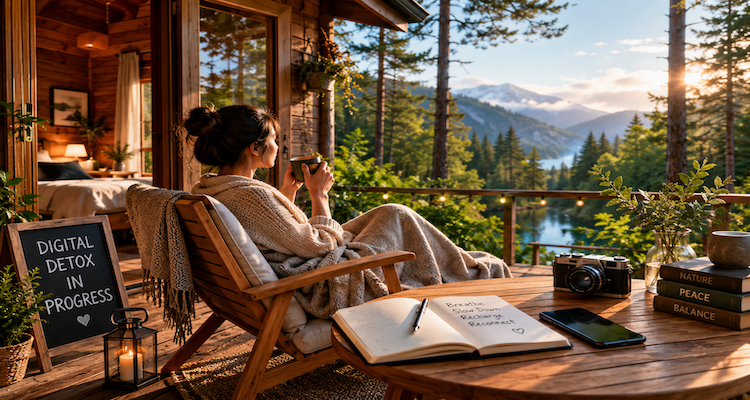
Not long ago, escaping stress usually meant planning a vacation, booking flights, requesting time off, and setting aside enough money to justify a week away. Today, a quieter shift is taking place. More people are discovering that meaningful rest doesn’t always require a passport, a lengthy itinerary, or even several days off work.
Instead, they’re embracing micro-retreats: short, intentional breaks designed to restore mental clarity without disrupting everyday life. Whether it’s spending a Saturday morning in a nearby forest, checking into a local wellness hotel for one night, or dedicating a few hours to complete digital disconnection, these small escapes are redefining what it means to recharge.
The growing popularity of micro-retreats reflects more than changing travel habits. It reveals a broader cultural shift in how people think about wellbeing, productivity, and the value of uninterrupted time.
A Different Kind of Escape
Unlike traditional vacations, micro-retreats are built around accessibility rather than distance. They’re typically brief, affordable, and close to home, making them easier to fit into busy schedules.
For many people, the appeal lies in simplicity. A carefully planned afternoon at a botanical garden, an overnight stay at a countryside cabin, or a weekend dedicated to reading instead of responding to notifications can provide a surprising sense of renewal.
The goal isn’t to see more places. It’s to create enough mental space to interrupt the constant cycle of work, responsibilities, and digital demands.
This distinction matters because modern stress often comes less from major life events and more from continuous cognitive overload.
Why Everyday Life Feels Harder to Escape
Many workplaces now operate across multiple time zones, remote work has blurred the boundaries between professional and personal life, and smartphones ensure that emails, messages, and news updates rarely stop.
Even leisure has become crowded. Streaming platforms, social media feeds, online shopping, and endless notifications compete for attention every waking hour.
As a result, people may finish a weekend feeling just as mentally exhausted as they were on Friday.
Micro-retreats offer an alternative by introducing intentional pauses instead of passive entertainment. Rather than filling free time with more digital stimulation, they encourage experiences that reduce decision-making and allow the brain to recover.
The Wellness Industry Is Adapting
Businesses have noticed the demand.
Hotels increasingly offer one-night wellness packages tailored to local residents instead of long-stay tourists. Day spas have expanded beyond luxury experiences to include shorter recovery sessions designed for busy professionals. Yoga studios, meditation centers, and nature-based experiences now frequently market half-day or weekend retreats rather than week-long programs.
Even coworking spaces have begun experimenting with “focus retreats,” where professionals spend a day working in calm, distraction-free environments designed to improve concentration.
This evolution reflects an important change: wellness is becoming less about occasional indulgence and more about sustainable routines.
The Hidden Appeal: Control
One overlooked reason micro-retreats resonate is that they restore something many people feel they’ve lost, control over their time.
Planning an international vacation often involves coordinating schedules, budgets, transportation, accommodation, and family commitments. Ironically, preparing for a relaxing holiday can become stressful itself.
A micro-retreat removes much of that complexity.
People can decide on Friday evening to spend Saturday hiking, visiting a quiet coastal town, booking a local spa, or simply turning off their devices for several hours.
That flexibility makes rest feel achievable instead of aspirational.
Small Breaks Can Change Long-Term Habits
Perhaps the most interesting aspect of the micro-retreat movement isn’t the retreats themselves, it’s the behavioral change they encourage.
Instead of viewing rest as something earned after months of hard work, people begin treating recovery as a regular part of maintaining performance.
This represents a subtle but meaningful shift.
Athletes have long understood that recovery improves results. Increasingly, knowledge workers, entrepreneurs, students, and creative professionals are adopting a similar mindset.
Rather than waiting for burnout before taking a vacation, they build smaller recovery periods into everyday life.
That change may prove more sustainable than relying on one or two annual holidays to offset months of continuous stress.
Technology Is Both the Problem and the Solution
Ironically, technology has contributed to the popularity of micro-retreats while also creating the conditions that make them necessary.
Remote work platforms allow employees greater flexibility, making short getaways easier to schedule. Booking apps simplify last-minute accommodation. Wellness apps introduce guided meditation, breathing exercises, and nature soundscapes that complement shorter breaks.
At the same time, constant connectivity is precisely what many people are trying to escape.
This paradox has created growing interest in digital detox experiences, where disconnecting from devices becomes part of the retreat itself.
For many participants, the absence of notifications is just as restorative as the physical environment.
The Rise of “Nearby Travel”
Another trend supporting micro-retreats is the growing appreciation for nearby destinations.
Rather than flying hundreds or thousands of miles, people are exploring places within driving distance that they previously overlooked.
Local vineyards, countryside cottages, lakeside cabins, national parks, historical towns, and boutique wellness hotels are attracting visitors seeking experiences that require less planning and produce less travel fatigue.
This approach also aligns with increasing awareness of environmental impact and travel costs, encouraging more thoughtful choices without eliminating the desire for exploration.
Employers Are Paying Attention
Organizations are also recognizing that employee wellbeing cannot depend solely on annual leave.
Some companies have introduced wellness days, flexible schedules, mental health initiatives, or “no-meeting” periods that allow workers to create their own forms of recovery.
While these approaches vary widely, they reflect a growing understanding that sustained productivity depends on regular restoration rather than continuous availability.
Micro-retreats fit naturally into this philosophy because they encourage manageable habits instead of rare escapes.
What This Trend Says About Modern Life
The popularity of micro-retreats highlights a larger cultural realization: people are redefining success.
For years, busy schedules were often seen as symbols of ambition. Today, many individuals place greater value on focus, presence, and emotional balance.
Choosing a quiet afternoon in nature over another packed itinerary isn’t necessarily about slowing down permanently. It’s about recognizing that meaningful rest can improve creativity, relationships, decision-making, and overall quality of life.
In that sense, micro-retreats are less about travel than about reclaiming attention.
Looking Ahead
Micro-retreats are unlikely to replace traditional vacations. Extended travel still offers experiences, cultural immersion, and memories that short breaks cannot replicate.
What is changing is the expectation that wellbeing must wait for the next holiday.
As work becomes increasingly flexible, cities become more crowded, and digital demands continue to grow, shorter intentional escapes are likely to become a regular part of modern lifestyles.
Their lasting appeal lies not in luxury or distance, but in a simple idea: restoration doesn’t always require leaving your life behind. Sometimes, it begins with stepping away from it for just long enough to return with a clearer mind.
This content is published for informational or entertainment purposes. Facts, opinions, or references may evolve over time, and readers are encouraged to verify details from reliable sources.