










Why More People Are Choosing to Own Less and Live Better
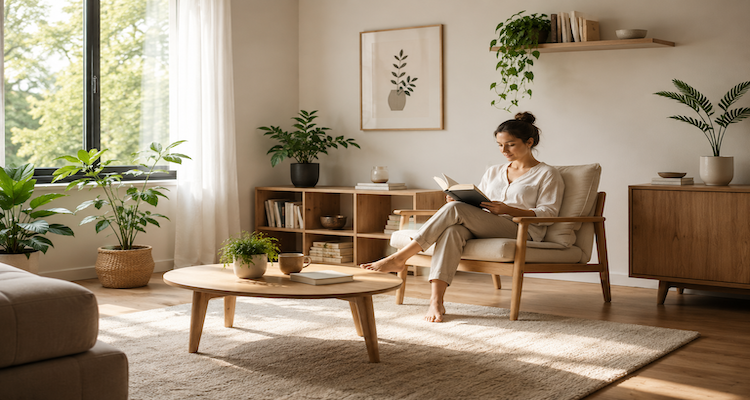
There was a time when success was measured by accumulation. Bigger homes, fuller closets, newer gadgets, and endless shopping lists often represented progress. Today, a quieter shift is taking place. Increasingly, people are questioning whether owning more actually leads to a better life or simply creates more responsibilities.
The growing appeal of living with less is no longer limited to minimalism enthusiasts or financial planners. It has become a broader lifestyle movement driven by changing priorities. Instead of asking, “What else can I buy?” many people are beginning to ask, “What truly adds value to my life?” That subtle change in mindset is reshaping everything from shopping habits to home design, work routines, and personal well-being.
The result isn’t necessarily a life of sacrifice. For many, it’s the opposite.
A Different Definition of Wealth
Owning fewer possessions doesn’t automatically mean spending less money. Instead, it often reflects a decision to spend more intentionally.
Rather than filling homes with inexpensive items that quickly lose their appeal, many consumers are choosing products that last longer, serve multiple purposes, or carry personal meaning. Quality is increasingly replacing quantity as the benchmark for value.
This shift can also be seen in industries that emphasize craftsmanship, repairability, and timeless design. Brands that focus on durable products, sustainable materials, or long-term customer relationships have found growing audiences among consumers who prefer thoughtful purchases over constant replacement.
The underlying philosophy is simple: every item owned requires space, maintenance, attention, or eventual disposal. Reducing unnecessary possessions creates room, not just physically, but mentally.
Why the Shift Is Happening Now
Several forces have converged to make this lifestyle more appealing than ever.
Remote and hybrid work changed how people experience their homes. Spending more time indoors made clutter harder to ignore and highlighted the importance of functional, calming spaces.
Economic uncertainty has also encouraged more deliberate spending. Rising living costs have prompted many households to distinguish between impulse purchases and meaningful investments. Rather than viewing restraint as deprivation, people increasingly see it as financial flexibility.
Digital life has played an unexpected role as well. Subscription services, cloud storage, streaming platforms, and digital books allow people to access experiences without accumulating physical belongings. Ownership itself is gradually becoming less central than convenient access.
Perhaps most importantly, people are reassessing how they want to spend their limited time. Maintaining, organizing, and replacing possessions consumes energy that could otherwise go toward relationships, learning, travel, or creative pursuits.
Living Better Doesn’t Mean Living Smaller
One of the biggest misconceptions about owning less is that it requires giving up comfort or ambition.
In reality, many people who embrace this lifestyle invest heavily in experiences that improve daily life. A well-designed workspace may matter more than an extra room filled with unused furniture. Comfortable walking shoes may become more valuable than multiple pairs rarely worn. A memorable vacation may leave a stronger impression than another household decoration.
The emphasis shifts from accumulation to usefulness.
This doesn’t mean everyone should follow the same formula. A photographer may own extensive equipment because it supports meaningful work. A passionate cook may value a well-equipped kitchen. Living better isn’t about reducing possessions to a specific number; it’s about ensuring that what remains genuinely serves a purpose.
The Hidden Cost of Constant Consumption
Consumer culture often focuses on the excitement of acquiring something new. Much less attention is paid to everything that follows.
Every purchase creates ongoing responsibilities. Items need cleaning, storing, organizing, insuring, repairing, updating, or eventually replacing. Even digital purchases contribute to information overload through apps, subscriptions, passwords, and notifications.
These hidden costs accumulate gradually, making life feel busier without necessarily becoming more fulfilling.
Owning less can reduce what behavioral experts sometimes describe as “decision fatigue.” Fewer choices about clothing, household items, or unnecessary commitments leave more mental energy for meaningful decisions throughout the day.
While the effect varies from person to person, many people report feeling greater clarity when their environments become simpler and more intentional.
Experiences Are Becoming a New Status Symbol
An interesting cultural change accompanies this movement.
For previous generations, visible ownership often communicated achievement. Today, experiences increasingly carry that role. Travel, hobbies, wellness, education, and personal development are frequently viewed as investments rather than luxuries.
Social media has contributed to this shift in complex ways. While it still encourages consumption in many cases, it has also exposed audiences to alternative lifestyles that prioritize freedom, flexibility, and personal fulfillment over material accumulation.
As a result, many younger professionals are directing discretionary income toward memorable experiences instead of expanding collections of physical possessions.
Sustainability Is Part of the Conversation
Environmental awareness has strengthened interest in thoughtful consumption, though it isn’t always the primary motivation.
Keeping products longer, repairing items instead of replacing them, and purchasing fewer disposable goods naturally reduce waste. Circular economy practices such as second-hand shopping, renting, refurbishing, and resale have become more mainstream across many markets.
Importantly, living with less doesn’t require perfection. Most people adopting this lifestyle are simply making more conscious choices rather than trying to eliminate consumption entirely.
Small changes repeated consistently often have a greater long-term impact than dramatic lifestyle overhauls.
Businesses Are Responding
Consumer preferences rarely shift without influencing markets.
Furniture companies increasingly promote modular designs that adapt to changing living spaces. Fashion brands highlight timeless collections instead of rapidly changing wardrobes. Technology companies emphasize device longevity, trade-in programs, and software support over constant upgrades.
Hospitality, wellness, education, and experience-based businesses also benefit as consumers allocate more spending toward activities instead of possessions.
The trend reflects a broader economic reality: value is increasingly measured by usefulness and experience rather than sheer volume of ownership.
The Future of Better Living
The movement toward owning less is unlikely to eliminate consumer culture. People will continue buying products, upgrading technology, and investing in their homes.
What’s changing is the intention behind those decisions.
Consumers are becoming more selective about what deserves space in their lives. They are asking whether a purchase solves a real problem, creates lasting value, or simply satisfies a temporary impulse.
That shift represents something larger than decluttering.
It signals a growing recognition that well-being depends less on the number of things we possess and more on how those things support the lives we want to lead.
The most valuable lifestyle upgrade may not be buying something new at all. It may be creating enough space, physically, financially, and mentally, for the experiences, relationships, and opportunities that matter most.
As this mindset continues to spread, owning less is becoming less about minimalism and more about intentional living. And for many people, that distinction makes all the difference.
This content is published for informational or entertainment purposes. Facts, opinions, or references may evolve over time, and readers are encouraged to verify details from reliable sources.