






Why Extreme Weather Can Change an Ecosystem Long After the Storm Is Gone
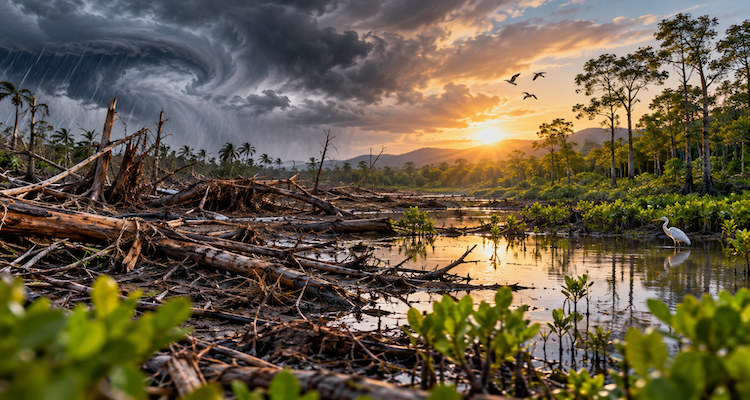
A hurricane can pass in a day. A heatwave may last a week. A flood can recede within hours. Yet the ecological consequences of such events can remain visible long after the weather has returned to normal.
That is because ecosystems do not simply recover when the immediate physical damage disappears. A storm can remove vegetation, reshape a river, alter soil and sediment, kill animals, change food availability or disrupt breeding. Those changes can then influence which species reproduce successfully, which ones return, and which relationships between organisms survive.
The important question, therefore, is not only how destructive an extreme-weather event is when it happens. It is what happens to the ecosystem afterward and whether it has enough time and ecological capacity to recover before another disturbance arrives.
Research summarized by the Intergovernmental Panel on Climate Change (IPCC) shows that extreme events can alter ecosystem structure, functioning and resilience, with repeated events potentially leaving insufficient time for recovery. In some circumstances, the resulting changes can become difficult or impossible to reverse.
Key Takeaways
- Ecosystem recovery can take years because species, soils, water systems and food webs do not recover at the same speed.
- A storm can change which species dominate an ecosystem even when vegetation eventually appears to return.
- Repeated droughts, fires, floods or heatwaves can prevent ecosystems from reaching their previous state.
- Extreme events can trigger secondary effects, including altered water flows, sediment movement, food shortages and invasive-species spread.
- Recent research shows that extreme events can leave ecological “legacy effects” involving reproduction, genetic diversity and species interactions.
- The greatest ecological risk can arise when extreme events occur before recovery from the previous disturbance is complete.
The Storm Is Short. The Ecological Recovery Is Not.
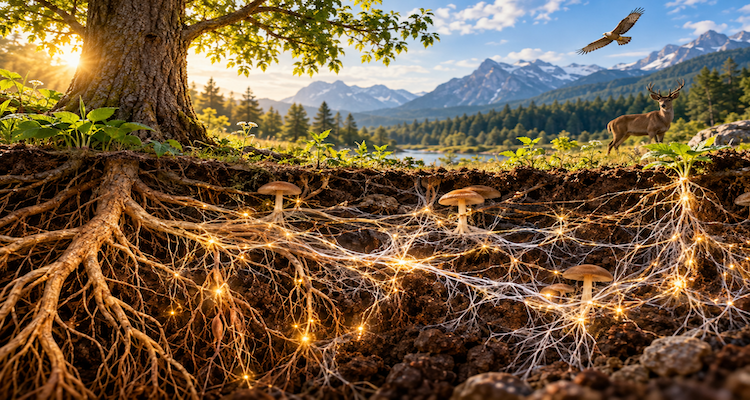
Ecosystems are networks rather than collections of independent species. Plants provide food and shelter; insects pollinate plants; predators regulate populations; fungi and microorganisms process nutrients; rivers transport sediment and nutrients between habitats.
When an extreme event disrupts one part of this network, the effects can propagate.
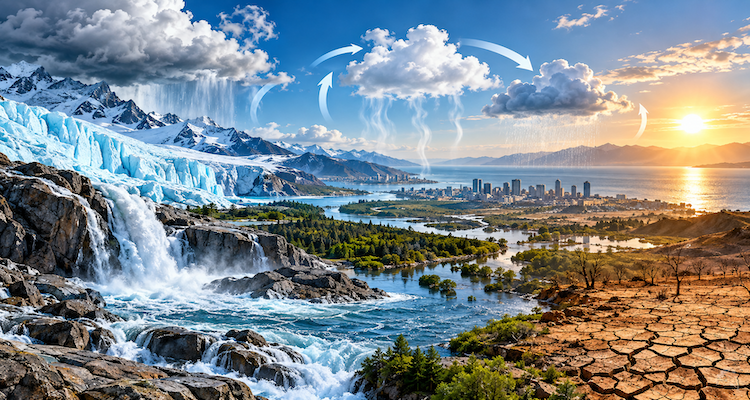
A flood, for example, can physically remove vegetation while also moving sediment and nutrients. Drought can reduce river connectivity and make it harder for aquatic species to move between habitats. Heat can cause mortality in organisms that cannot escape rapidly changing temperatures. Wildfire can remove vegetation and change the amount of water entering and leaving a landscape.
The IPCC notes that floods can mobilize nutrients and sediment and facilitate the dispersal of invasive species in rivers, while drought extremes can reduce river connectivity and threaten freshwater biodiversity.
This means that an ecosystem may look physically calmer after an event while its underlying biological relationships are still changing.
Recovery Does Not Necessarily Mean Returning to the Old Ecosystem
One of the most important distinctions in ecology is between recovery of appearance and recovery of ecological function.
A forest may become green again after a disturbance, but that does not necessarily mean the same species have returned. Some trees may regenerate more successfully than others. Certain insects or birds may lose nesting habitat. Soil conditions may have changed. A different plant community may gradually become dominant.
Research summarized by the IPCC indicates that extreme events can produce long-term changes in ecosystem composition when populations are lost and there is insufficient time for recolonization or recovery.
Research on Caribbean ecosystems provides an illustration of this distinction. U.S. Geological Survey researchers examining hurricanes, coral reefs and rainforests found that tropical forests can recover many aspects of their structure relatively quickly after hurricanes, while long-term changes in species composition can still occur.
In other words, green does not necessarily mean recovered.
The Hidden Effect: Who Reproduces After the Disaster?
An ecosystem can change not only because organisms die, but because the survivors reproduce under different conditions.
Imagine an extreme event that removes much of a plant population. If a small number of drought-tolerant individuals survive and produce most of the next generation, the composition of the population can gradually shift.
The same principle can affect animals. If food becomes scarce after a storm, species with flexible diets may cope better than specialists. If nesting sites disappear, reproductive success can fall even when adult animals survive.
A recent Nature Ecology & Evolution focus on extreme events highlights several possible long-term ecological “legacy effects,” including recruitment failures, loss of genetic diversity, habitat recovery and changes in interactions between species.
This is one reason why counting dead organisms immediately after a disaster may not reveal the full ecological cost.
When One Extreme Event Meets Another
An ecosystem under stress does not necessarily begin each disaster from a clean slate.
A wildfire followed by drought is different from a wildfire followed by adequate rainfall. A flood occurring after prolonged rainfall can have different ecological consequences from an isolated flood. A heatwave can become more damaging when organisms are already weakened by drought.
The IPCC describes these interactions as compound effects and notes that multiple stressors can substantially aggravate ecological impacts. The timing, magnitude, duration and geographic extent of an event also influence whether ecosystems can recover.
Research in the western United States provides a concrete example. A study examining 1,514 fires found that drought influenced post-fire water-balance recovery, with grassland and shrubland systems particularly sensitive to drought conditions. Severely burned forests, meanwhile, could recover slowly or incompletely.
The lesson is significant: the ecological consequences of an extreme event depend partly on what happened before it.
Rivers Can Be Changed Without Being Destroyed
Freshwater ecosystems demonstrate how subtle long-term effects can be.
A river does not have to disappear for its ecological structure to change. Drought can reduce connections between different parts of a river system. Floods can move sediment and nutrients. Changes in water temperature can favor some species over others.
A 2026 review in Nature Reviews Biodiversity describes floods, droughts and heatwaves as forces capable of fundamentally reshaping river ecosystems.
The effects can extend through food webs. If aquatic insects decline, fish that depend on them may have less food. If vegetation along a river is lost, shade and habitat conditions can change. If invasive species gain an advantage after a disturbance, the community that eventually develops may differ from the one that existed before.
The storm or flood may therefore be only the first event in a much longer ecological sequence.
Heatwaves Can Leave Ecological Fingerprints
Extreme heat is particularly revealing because its effects can differ dramatically between species.
During the 2021 western North American heatwave, researchers found substantial variation among affected organisms. A 2026 analysis published in Nature Ecology & Evolution synthesized meteorological, ecological, hydrological and wildfire information and reported that more than 75% of the taxa examined were negatively affected, while responses varied widely between organisms.
That variation matters.
Some species have behavioral or physiological mechanisms that help them cope with heat. Others have limited ability to move or find cooler conditions. Organisms living in different microclimates can also experience very different temperatures during the same regional heatwave.
The result is that an extreme event can change the balance between species without affecting every species equally.
The Bigger Problem Is Recovery Time
Historically, many ecosystems evolved with disturbance. Fire, floods, storms and droughts are not inherently unnatural ecological phenomena.
The critical issue is frequency, intensity and timing.
An ecosystem that experiences a major disturbance followed by decades of recovery may develop mechanisms that allow it to persist. An ecosystem repeatedly hit before populations, habitats and ecological relationships recover faces a different challenge.
The IPCC specifically identifies declining recovery time as a major concern as the magnitude and frequency of cumulative stressors and extreme events increase. It also warns that interactions between extreme events, long-term climate trends and other pressures can push climate-sensitive ecosystems beyond their natural regenerative capacity.
This creates a potentially important feedback: a disturbance reduces resilience, reduced resilience increases vulnerability to the next disturbance, and another extreme event arrives before recovery is complete.
Why the Future May Depend on Ecosystem Resilience
The ecological question is therefore larger than whether a forest regrows or a river returns to its normal water level.
The more important question is whether the ecosystem retains enough resilience to continue functioning when disturbances become more frequent, intense or closely spaced.
That resilience can be influenced by habitat fragmentation, pollution, land-use change, water extraction and other pressures. The IPCC emphasizes that climate-related risks interact with these non-climate pressures rather than operating independently.
This also explains why two ecosystems exposed to the same storm can experience very different outcomes.
One may have connected habitat, diverse species populations and relatively intact ecological processes. Another may already be fragmented or degraded. The physical event can be similar while the ecological consequences are very different.
A Storm Can Become a Turning Point
Extreme weather does not automatically permanently transform an ecosystem. Many ecosystems are remarkably resilient, and some disturbances can even create ecological opportunities for species adapted to disturbance.
But resilience has limits.
The evidence increasingly points toward a more nuanced understanding of extreme weather: the most consequential effects may not always be the ones visible during the event itself. They can emerge afterward through altered reproduction, competition, food availability, habitat structure, water movement and species interactions.
This is particularly important as ecosystems face multiple pressures simultaneously. A storm acting on an otherwise resilient ecosystem is one situation. A storm hitting an ecosystem already stressed by drought, habitat fragmentation, pollution or warming is another.
The difference can determine whether recovery restores the previous ecological community or begins a transition toward something different.
Conclusion
Extreme weather is often measured in hours, days or weeks. Ecosystems operate on much longer clocks.
The physical storm eventually passes, but its ecological consequences can continue through successive breeding seasons, vegetation cycles, food-web changes and hydrological shifts. In some cases, recovery can restore much of what existed before. In others, the disturbance can leave a lasting ecological signature.
That makes recovery time one of the most important pieces of the story.
A healthy ecosystem is not necessarily one that never changes. It is one with enough resilience and recovery capacity to absorb disturbance without losing the functions, relationships and biodiversity that hold it together.
As extreme events interact with longer-term environmental change, understanding what happens after the storm may become just as important as understanding the storm itself.
This content is published for informational or entertainment purposes. Facts, opinions, or references may evolve over time, and readers are encouraged to verify details from reliable sources.