






The School Subjects That May Become Less Important Than the Skills Behind Them
For generations, school has been organized around subjects: mathematics, history, biology, literature, geography and languages. Students learn them separately, are tested on what they remember, and often measure their progress through grades.
That model is increasingly being challenged not because these subjects are becoming useless, but because artificial intelligence and rapid technological change are altering the value of what students can do with knowledge.
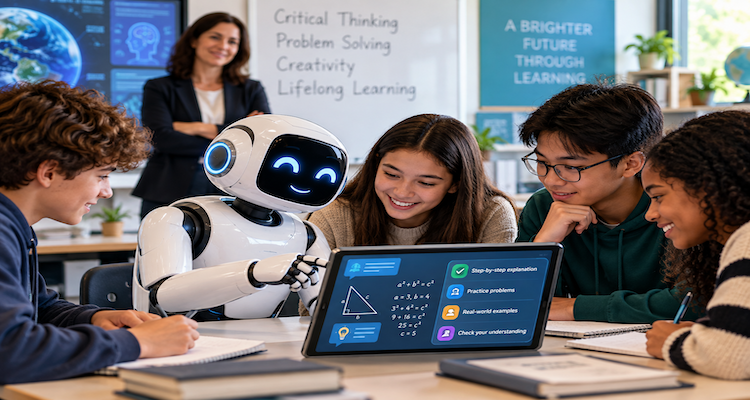
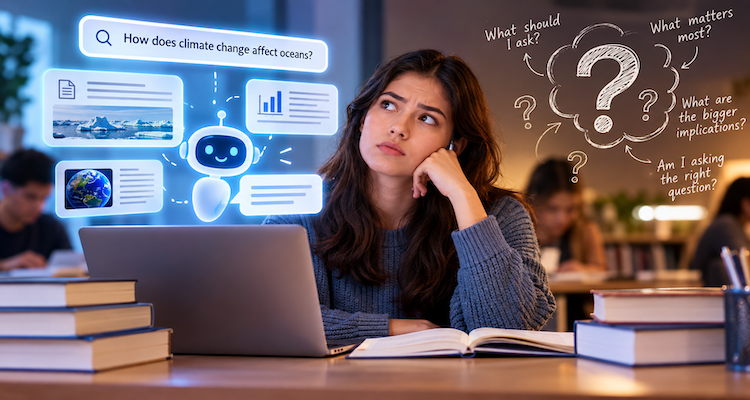
The distinction matters. A student who memorizes a large collection of facts may have an advantage in a traditional examination. But when AI systems can retrieve, summarize, translate, calculate and generate first drafts within seconds, the more difficult question becomes: Can the student judge whether the answer is correct? Can they ask a better question? Can they solve a new problem, explain their reasoning, collaborate with others and use technology responsibly?
That shift is already visible in education policy and workforce research. The OECD’s future-of-education work increasingly frames learning around a combination of knowledge, skills, attitudes and values, while its 2025 work on education in an AI-rich environment explicitly asks whether curricula should change as technology alters how tasks are performed. [1][2]
Key Takeaways
- School subjects are unlikely to disappear, but the skills developed through them may become more important than memorization alone.
- AI increases the value of critical thinking because students must evaluate information rather than simply retrieve it.
- Mathematics remains important because quantitative reasoning is different from performing calculations.
- Writing and history can become more valuable when they teach reasoning, evidence, communication and interpretation.
- Creativity, adaptability and technological literacy are increasingly relevant across both education and employment.
- The strongest future curriculum may combine subject knowledge with transferable skills instead of treating them as competing priorities.
The real shift is from knowledge collection to knowledge use
The debate about future education is sometimes framed too simply: schools should either continue teaching traditional subjects or replace them with coding, AI and other “future skills.”
That is a false choice.
A child cannot reason effectively about climate science without some scientific knowledge. A student cannot evaluate an economic argument without understanding basic economics. Someone who wants to use AI responsibly still needs enough subject knowledge to recognize when an AI-generated answer is incomplete or wrong.
The more meaningful change is therefore how knowledge is used.
The OECD Learning Compass 2030 describes future learning in terms of competencies that combine knowledge, skills, attitudes and values. Its framework emphasizes student agency the ability to navigate unfamiliar situations rather than simply follow predetermined instructions. [1]
That suggests a different way to think about school subjects.
Mathematics is not merely about performing calculations. It can develop quantitative reasoning.
History is not merely about remembering dates. It can develop evidence-based interpretation and an understanding of cause, context and competing perspectives.
Literature is not simply about identifying themes. It can develop language, interpretation, empathy and the ability to understand complex arguments.
Science is not only a collection of facts. It teaches students how evidence is gathered, hypotheses are tested and conclusions are limited by available evidence.
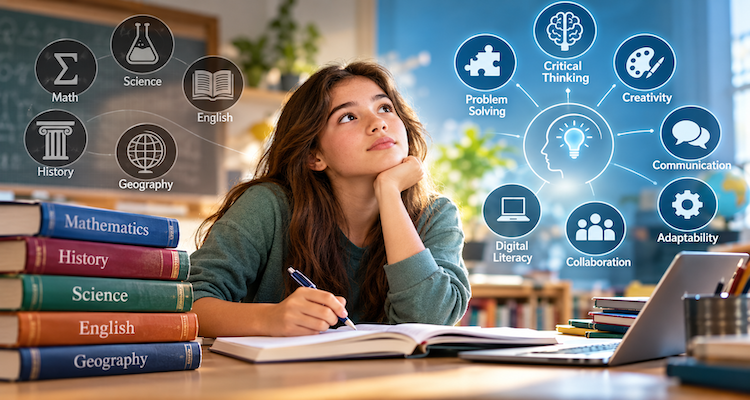
The subject remains the vehicle. The underlying capability becomes the transferable asset.
Mathematics may matter less as calculation and more as reasoning
Calculators did not make mathematics obsolete. AI is unlikely to do so either.
What may change is the educational value placed on certain mathematical tasks.
A computer can perform arithmetic almost instantly. Software can solve equations, generate graphs and manipulate large datasets. AI systems can also explain mathematical procedures, although their explanations still need verification.
That makes mathematical reasoning more important, not less.
Students need to understand whether a result is plausible, whether a model uses appropriate assumptions, whether a graph is misleading and whether a numerical comparison actually answers the question being asked.
This distinction becomes particularly important in an AI-assisted workplace. The person who can independently calculate every result may not always be the most valuable person. The person who understands what should be calculated, which assumptions matter and whether the result makes sense may have a more durable advantage.
The World Economic Forum’s Future of Jobs Report 2025 identifies analytical thinking among the important skills expected to remain critical while AI, big data and technological literacy are among the fastest-growing skill areas. [3]
The implication for schools is not “teach less mathematics.”
It is closer to: teach mathematics so that students understand what the numbers mean.
Writing could become more important in an age of AI-generated text
Writing is another subject area that is easy to misunderstand.
If AI can produce a polished paragraph in seconds, it may seem logical that students no longer need to spend as much time learning to write.
But producing words is only one part of writing.
A strong writer must decide what is worth saying, organize an argument, understand an audience, distinguish evidence from opinion and communicate ideas precisely. Those abilities become especially important when machines can generate large quantities of plausible-sounding text.
The skill may therefore move from simply producing text toward thinking clearly enough to produce, evaluate and improve text.
That changes the classroom task.
Instead of asking only, “Can the student write an essay?”, educators may increasingly need to ask:
- Can the student construct an original argument?
- Can they identify weak evidence?
- Can they revise an unclear explanation?
- Can they challenge an AI-generated claim?
- Can they communicate differently for a scientific, professional or public audience?
In this environment, writing becomes part of information judgment rather than merely handwriting or composition.
History may become a training ground for information judgment
History is particularly relevant to an AI-rich information environment because it requires students to work with evidence, perspective and incomplete records.
A historical source does not become trustworthy simply because it exists. Students must ask who created it, when, why, for whom and with what limitations.
Those habits have obvious relevance beyond history.
The internet contains enormous quantities of information, while generative AI can produce convincing explanations without guaranteeing that every statement is correct. The ability to examine evidence and identify context therefore has value far beyond an examination.
This is one reason future-oriented education should not be interpreted as abandoning traditional humanities.
A student who learns how to interrogate historical evidence is also learning a broader skill: how to avoid accepting information merely because it sounds convincing.
Science becomes more about investigation than memorization
Science education faces a similar transformation.
Remembering scientific terminology remains useful, but students also need to understand how scientific knowledge is produced.
That means learning how to distinguish observation from interpretation, evidence from assumption and correlation from causation.
It also means understanding uncertainty.
The OECD’s first international PISA assessment of creative thinking, conducted in 2022 and reported in 2024, assessed whether 15-year-old students could generate diverse and original ideas and evaluate and improve ideas across different contexts, including scientific and social problem-solving. [4]
That is significant because creativity is not confined to art.
Scientific inquiry often requires the ability to consider alternative explanations, design approaches to problems and improve an idea after testing it.
The future scientist therefore needs more than a strong memory. They need curiosity, reasoning and the ability to work with uncertainty.
AI itself is becoming part of the skill set
The emergence of AI does introduce something that previous generations did not face in quite the same way: students increasingly need to understand the technology that is becoming embedded in ordinary work.
UNESCO’s 2024 AI Competency Framework for Students identifies 12 competencies across four dimensions: a human-centred mindset, ethics of AI, AI techniques and applications, and AI system design. It organizes these competencies across progression levels from understanding to applying and creating. [5]
This is important because AI literacy is broader than learning how to write prompts.
A student should eventually understand questions such as:
- What can an AI system actually do?
- Where can it fail?
- What information should not be given to it?
- How should AI-generated material be checked?
- What are the ethical consequences of automated decisions?
- When should a human remain responsible for the final decision?
Those questions connect technology with ethics, communication, mathematics, science and social studies.
AI literacy is therefore unlikely to remain an isolated computer-class subject. It may increasingly become a cross-curricular capability.
The skills behind subjects may become the real curriculum
The emerging picture is not that traditional school subjects are becoming obsolete.
It is that the boundaries between them may become less important.
Consider a student researching whether a city should adopt a new public-transport system. The task could involve mathematics to analyze costs, science to understand environmental effects, geography to interpret spatial patterns, economics to consider incentives, history to understand previous infrastructure decisions, writing to present the argument, and digital literacy to evaluate information.
The real-world problem does not care which school timetable contains each skill.
This is consistent with the direction of the OECD’s future-education work, which examines curriculum redesign around knowledge, skills, attitudes and values rather than treating education simply as the accumulation of subject content. [1][2]
The workplace is moving in a similar direction. The World Economic Forum’s 2025 analysis identifies technological skills alongside creative thinking, resilience, flexibility, curiosity, analytical thinking and leadership as important areas of changing demand. [3]
The lesson for schools is not that every student needs to become a programmer.
It is that students need enough knowledge to understand the world and enough transferable capability to act within it.
What schools should not do
There is a danger in responding to technological change by declaring traditional education obsolete.
Replacing mathematics with “AI skills,” for example, could leave students unable to understand the quantitative assumptions behind AI-generated answers. Replacing history with generic “critical thinking” could remove the knowledge base from which historical reasoning develops.
Skills do not float independently of knowledge.
Critical thinking needs something to think about. Creativity needs a domain in which ideas can be developed. Communication depends partly on knowing the subject being communicated.
The strongest approach may therefore be a combination: deep subject knowledge plus increasingly deliberate practice in applying that knowledge.
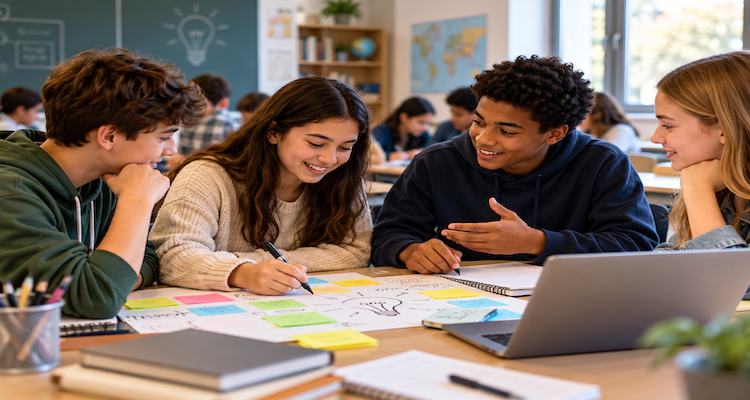
That could mean more interdisciplinary projects, open-ended problems, source evaluation, experimentation, collaboration and responsible technology use alongside conventional subject teaching.
It also means changing assessment carefully. If students are rewarded primarily for reproducing information, they have little incentive to develop capabilities that cannot be measured through simple recall.
The question is not which subjects survive
The more useful question for parents, teachers and students is not which school subjects will disappear.
It is: Which capabilities will remain valuable when the tools for producing answers become dramatically more powerful?
The answer is unlikely to be a single new subject.
It will be a combination of understanding, reasoning, creativity, communication, technological literacy, collaboration, adaptability and judgment.
Traditional subjects provide much of the knowledge required to develop those capabilities. The challenge is making sure students do not leave school knowing many answers but struggling when they encounter a question they have never seen before.
That may be the most important educational shift of the AI era: not moving from subjects to skills, but learning how to make subjects produce skills that remain useful when the technology around them changes.
Conclusion
The school subjects of the future may look surprisingly familiar. Mathematics, science, history, languages and literature are unlikely to lose their fundamental value simply because AI can perform some of their associated tasks.
What may change is what society expects students to gain from them.
Memorizing information has value, but understanding, questioning, applying and evaluating information can carry further. As technology takes over more routine cognitive tasks, the advantage may increasingly belong to people who can define problems, recognize weak answers, connect ideas, make judgments and take responsibility for decisions.
The future of education, therefore, may not be a choice between traditional subjects and “future skills.” It may be about teaching traditional knowledge in a way that produces capabilities students can carry into unfamiliar problems.
The subject may be what students learn.
The skill is what allows them to use it.
The information presented in this article is based on publicly available sources, reports, and factual material available at the time of publication. While efforts are made to ensure accuracy, details may change as new information emerges. The content is provided for general informational purposes only, and readers are advised to verify facts independently where necessary.