










Why Students Are Building Proof of Work Before They Earn Traditional Qualifications
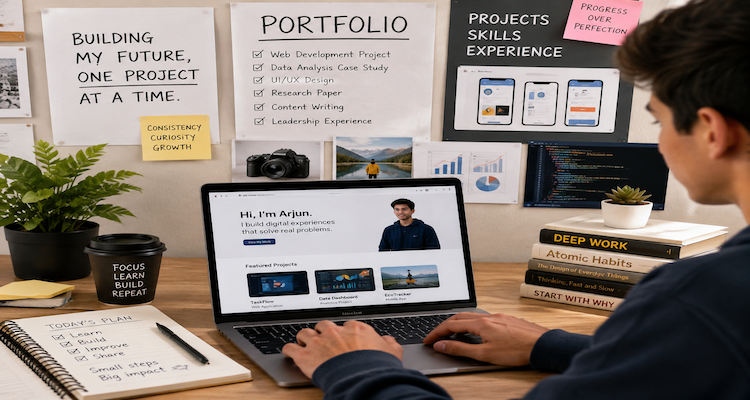
For generations, academic qualifications acted as the primary signal of ability. A degree, diploma, or certificate told employers that a person had completed a recognized course of study and acquired a certain level of knowledge. But a growing number of students are adding another layer to their professional identity much earlier: a portfolio that shows what they can actually create, solve, or contribute.
A computer science student may share software projects on GitHub before graduating. A design student may build an online portfolio of client work while still studying. A young researcher may publish articles, datasets, or experiments publicly. A business student may document startup projects, market research, or digital campaigns.
This shift does not mean traditional qualifications have disappeared. Degrees and formal education still provide structured learning, credibility, and access to many careers. Instead, portfolios are becoming a complementary form of evidence one that allows students to demonstrate practical ability before they have years of formal experience.
The change reflects a broader transformation in how skills are discovered, evaluated, and communicated in a digital economy.
Key Takeaways
- Students increasingly use portfolios to demonstrate practical skills before completing formal qualifications.
- Digital platforms have made it easier to publicly showcase projects, research, and creative work.
- Employers are placing greater attention on demonstrated abilities alongside traditional credentials.
- Portfolios can improve career opportunities but do not replace education or foundational knowledge.
- The strongest portfolios show problem-solving, learning progress, and real-world application.
The Shift From Credentials to Demonstrated Capability
For much of the 20th century, qualifications worked as a convenient screening tool. Employers often relied on degrees because they provided a standardized indication of education and discipline.
However, many modern roles especially in technology, design, media, entrepreneurship, and digital industries—require skills that are difficult to measure through credentials alone.
A degree can show that someone completed coursework. A portfolio can show how that person applies knowledge.
This difference has become increasingly important in fields where practical output is visible. A programmer’s ability can be demonstrated through applications or open-source contributions. A writer can show published work. A designer can present completed projects. A data analyst can share models or visualizations.
The portfolio becomes a record of action rather than only a record of attendance.
Organizations such as the World Economic Forum have highlighted the growing importance of skills development and changing workplace requirements as technology reshapes jobs. Employers increasingly need people who can adapt, learn, and apply knowledge in changing environments.
Digital Platforms Have Changed How Students Present Themselves
The rise of online platforms has lowered the barriers for students who want to build professional identities early.
A decade ago, many students needed institutional support, professional networks, or traditional internships to gain visibility. Today, students can publish work directly to global audiences.
Examples include:
- Developers sharing projects through GitHub
- Researchers uploading work through academic and open research platforms
- Designers using portfolio websites
- Writers publishing essays and analysis online
- Entrepreneurs documenting product experiments and business ideas
These platforms create opportunities, but they also introduce a new challenge: visibility does not automatically equal credibility.
A strong portfolio requires more than collecting projects. It needs explanation, context, and evidence of thinking.
A student who uploads a finished project without explaining the problem, process, decisions, and lessons learned may provide less value than someone who documents a smaller project with deeper insight.
Why Employers Are Paying Attention to Portfolios
Hiring has traditionally involved using qualifications, experience, interviews, and references to estimate whether someone can perform a role.
Portfolios add another source of information.
They allow employers to examine:
- How a person approaches problems
- Whether they can complete projects independently
- How they communicate ideas
- Whether they can learn new tools
- How they respond to challenges and improvements
This is particularly useful for students and early-career professionals who may not yet have extensive work histories.
A student with limited professional experience but a thoughtful collection of projects may provide employers with clearer evidence of potential than a resume listing only courses completed.
However, portfolios are not universally applicable. Many professions still require formal qualifications because of legal, safety, ethical, or regulatory requirements. Medicine, law, engineering, and other regulated fields depend heavily on accredited education and professional standards.
The trend is not about replacing qualifications. It is about adding more complete ways to understand ability.
The Rise of Project-Based Learning
Another factor behind portfolio growth is the increasing popularity of learning through projects.
Traditional education often separates learning and application. Students study concepts first and apply them later through assignments, internships, or employment.
Project-based approaches combine the two.
A student learning programming may build a website while studying web development. Someone studying environmental science may analyze public datasets. A marketing student may create campaigns for small organizations.
These projects create learning evidence.
They also help students discover their interests earlier. Instead of waiting until graduation to understand how knowledge connects to real-world problems, students can experiment during their education.
Portfolios Can Also Create New Inequalities
Although portfolios offer opportunities, they are not automatically accessible to everyone.
Building a strong online presence often requires:
- Reliable internet access
- Time outside formal coursework
- Access to technology
- Mentorship or guidance
- Confidence in sharing work publicly
Students with more resources may find it easier to create impressive portfolios, potentially widening existing gaps.
There is also a risk that portfolio culture encourages constant self-promotion rather than genuine learning. Students may feel pressure to produce visible achievements instead of developing deep understanding.
A collection of impressive-looking projects does not always represent meaningful expertise.
Quality, reflection, and substance matter more than volume.
What Makes a Student Portfolio Valuable?
A useful portfolio is not simply a collection of finished products. It tells a story about capability.
Strong portfolios often include:
Clear Purpose
Each project should explain what problem it addressed and why it mattered.
Evidence of Process
Showing research, experiments, failures, improvements, and decisions helps others understand how the student thinks.
Practical Application
Projects connected to real users, communities, organizations, or challenges often provide stronger evidence than purely theoretical work.
Continuous Development
A portfolio should evolve. Growth over time can demonstrate curiosity and adaptability.
For students, the goal should not be creating a perfect showcase. It should be creating evidence of learning and problem-solving.
The Future of Qualifications May Be a Combination, Not a Replacement
The debate is often framed as degrees versus skills, but the future is likely to involve both.
Formal education provides foundations: critical thinking, theory, structured knowledge, professional standards, and deeper understanding.
Portfolios provide evidence: application, creativity, experimentation, and practical ability.
Together, they create a more complete picture of a person’s capabilities.
For students entering a changing job market, the lesson is clear: learning should not remain invisible. Building, documenting, and explaining what they create can help them communicate their abilities before they receive traditional credentials.
Conclusion
The growth of student portfolios reflects a broader change in how society measures potential. Qualifications still matter, but they are increasingly becoming one part of a larger professional story.
Students who build meaningful portfolios are not simply collecting achievements for display. They are creating evidence of curiosity, skill development, and the ability to turn knowledge into action.
In a world where careers increasingly depend on continuous learning, the ability to show what you can do may become just as important as showing what you have studied.
The information presented in this article is based on publicly available sources, reports, and factual material available at the time of publication. While efforts are made to ensure accuracy, details may change as new information emerges. The content is provided for general informational purposes only, and readers are advised to verify facts independently where necessary.