








Why Career Education Is Reaching Students Earlier Than Ever
Career education is no longer something reserved for teenagers deciding on college majors or adults considering a career change. Increasingly, it begins in elementary and middle school, where students are introduced to professions, workplace skills, entrepreneurship, and emerging industries long before they enter high school. The shift reflects more than a change in school curricula, it signals a broader rethink of how young people prepare for a future that is becoming harder to predict.
Parents, educators, employers, and policymakers are asking a similar question: if the workplace is evolving faster than ever, should career preparation begin much earlier? While opinions differ on how much emphasis should be placed on career planning at a young age, there is growing agreement that helping children understand the world of work is no longer optional.
The conversation has moved beyond choosing a job. It is increasingly about helping students discover strengths, build adaptable skills, and make informed decisions in a rapidly changing economy.
Career education is becoming exploration rather than specialization
One common misconception is that early career education asks children to decide what they want to become before they are ready. In practice, many modern programs take a different approach.
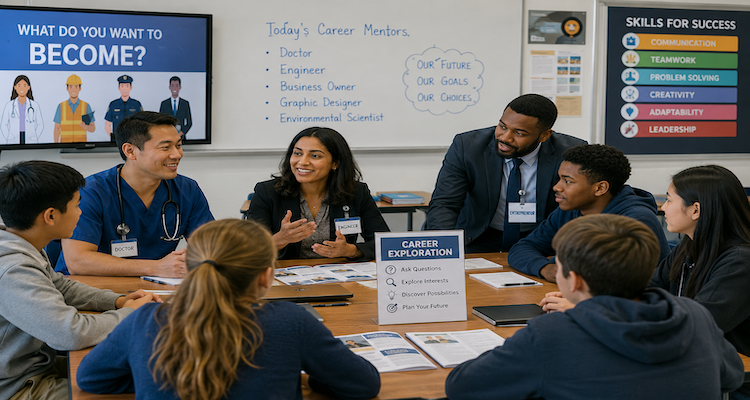
Rather than steering students toward a specific profession, schools are introducing broad exposure to different industries. Children might meet engineers, healthcare workers, artists, software developers, scientists, entrepreneurs, or environmental specialists through classroom visits, project-based learning, or local partnerships.
The objective is not early commitment but early awareness.
By encountering diverse career paths before reaching high school, students begin connecting classroom subjects with real-world applications. Mathematics becomes more meaningful when linked to architecture or finance. Writing gains relevance through journalism, marketing, or law. Science feels more engaging when connected to healthcare, sustainability, or space exploration.
This connection often improves motivation because students better understand why learning matters.
The future workplace rewards adaptability more than fixed career plans
One reason career education is moving earlier is that today’s students are likely to experience multiple careers over their lifetimes.
Automation, artificial intelligence, digital platforms, and shifting economic priorities continue reshaping industries. Many future occupations either do not yet exist or are still emerging. That uncertainty changes the purpose of career education.
Instead of preparing students for one lifelong profession, educators increasingly focus on transferable capabilities such as communication, collaboration, creativity, digital literacy, critical thinking, and problem-solving.
These skills remain valuable whether someone becomes a software engineer, healthcare professional, content creator, renewable energy technician, or entrepreneur.
The hidden shift is that career education is becoming less about predicting the future and more about preparing students to adapt to it.
Schools are responding to changing expectations from families and employers
Parents today have access to more information about education and employment than previous generations. They regularly encounter discussions about artificial intelligence, remote work, digital skills, freelancing, and emerging industries.
As a result, many families expect schools to prepare children not only academically but also practically.
Employers have voiced similar concerns. Across many industries, organizations increasingly value communication, teamwork, initiative, and adaptability alongside technical knowledge. Academic achievement remains important, but workplace readiness often involves skills that develop through experience rather than examinations alone.
This growing alignment between education and employment is encouraging schools to introduce career awareness earlier without replacing traditional academic learning.
Technology has expanded students’ understanding of careers
Children today are exposed to professions that barely existed a generation ago.
Content creators, cybersecurity specialists, drone operators, game designers, user experience researchers, data analysts, sustainability consultants, and AI specialists have become visible through digital media and online communities.
Young people no longer rely solely on family members or local communities to understand career possibilities. Videos, educational platforms, virtual workshops, and online competitions introduce students to industries across the world.
This broader exposure creates curiosity but also confusion.
Career education now helps students distinguish between online trends and sustainable career opportunities. Understanding how different industries operate becomes just as important as discovering that they exist.
Earlier career education may reduce future uncertainty
Many university students admit they entered higher education with limited understanding of the careers connected to their chosen degrees. Others discover new interests only after graduation, leading to expensive changes in direction.
While no educational approach can eliminate uncertainty, earlier exposure may help students make more informed choices later.
A student who participates in engineering projects during middle school may discover genuine interest—or realize engineering is not the right fit before investing years pursuing it.
Similarly, early experience in healthcare, creative industries, hospitality, environmental science, or business can help students explore possibilities with lower stakes.
The value lies not in making decisions earlier but in making better-informed decisions when the time eventually comes.
Career education is increasingly connected to real-world experiences
Traditional career guidance often relied on brochures, aptitude tests, or occasional counseling sessions.
Today’s programs are becoming far more interactive.
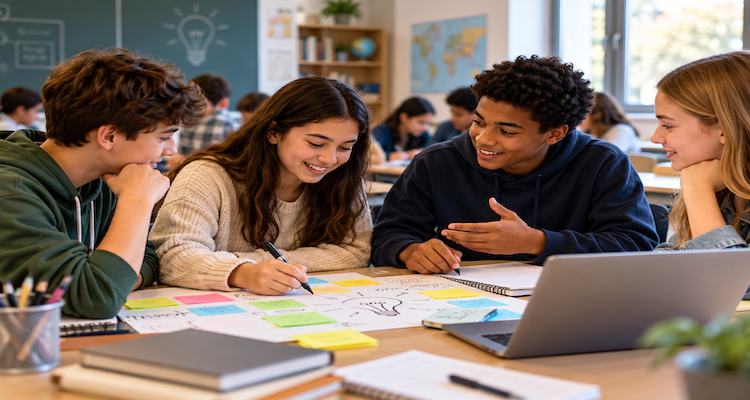
Schools increasingly incorporate project-based learning, workplace visits, mentoring, internships, entrepreneurship activities, innovation challenges, and collaborations with local businesses.
These experiences allow students to observe how professionals solve problems, communicate with colleagues, and adapt to changing situations.
Learning shifts from abstract discussion to practical understanding.
Even relatively simple classroom projects—designing products, managing budgets, presenting ideas, or solving community challenges—can introduce students to valuable workplace habits without turning childhood into job training.
An important insight: career identity is becoming more flexible
Perhaps the biggest cultural shift is not that career education starts earlier, but that career identity is becoming less fixed.
Previous generations often introduced themselves by a single profession for decades.
Future workers may combine multiple roles throughout their careers: employee, freelancer, entrepreneur, consultant, creator, educator, or investor. Many will continue learning new skills throughout adulthood as industries evolve.
This changes how schools think about preparation.
Instead of asking children, “What do you want to be when you grow up?” educators are increasingly encouraging questions like:
- What problems do you enjoy solving?
- Which environments help you do your best work?
- What skills are you excited to keep developing?
Those questions are more likely to remain relevant even as occupations continue changing.
Finding the right balance
Despite growing enthusiasm, early career education should not become excessive pressure.
Children need time to explore interests, develop socially, and experience learning without feeling every activity must determine their future.
The strongest programs balance career awareness with curiosity, creativity, and personal development rather than pushing students toward premature specialization.
Career education works best when it expands possibilities rather than narrowing them.
Looking ahead
Career education is starting earlier because the world students will enter is changing faster than traditional educational timelines. Schools are recognizing that preparing young people means more than delivering academic knowledge. It also involves helping them understand work, discover strengths, build adaptable skills, and develop confidence in navigating uncertainty.
The most valuable lesson may not be choosing the right career at age twelve. It may be learning how to keep learning, adapting, and exploring throughout life.
As technology, industries, and societies continue evolving, that mindset could become one of the most important career advantages any student can develop.
The information presented in this article is based on publicly available sources, reports, and factual material available at the time of publication. While efforts are made to ensure accuracy, details may change as new information emerges. The content is provided for general informational purposes only, and readers are advised to verify facts independently where necessary.