







When a Society Forgets Why a Tradition Began, What Gets Lost?
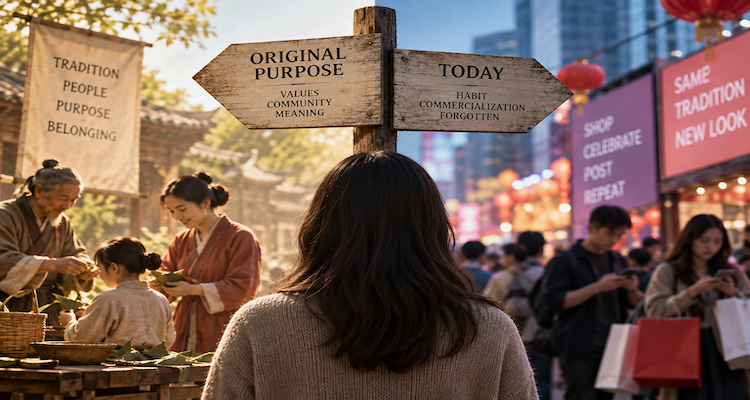
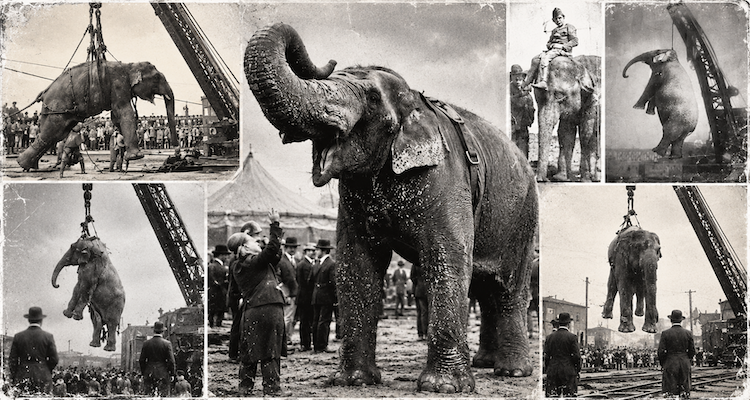
A tradition can survive long after the circumstances that created it have disappeared. A greeting may remain after its original social meaning has faded. A seasonal practice can continue after the environmental problem it addressed has changed. A ritual can be performed faithfully even when few people can explain why its individual steps matter.
That does not necessarily make the tradition meaningless.
Research on ritual and cultural transmission suggests that practices can carry several kinds of value at once: practical knowledge, group identity, social expectations, emotional meaning and ways of coordinating with others. Some of those functions may remain even after the original explanation is forgotten. UNESCO similarly treats intangible heritage as something living: traditions are transmitted between generations but are also continually recreated and adapted by the communities that maintain them.
The more interesting question, then, is not simply what happens when people forget a tradition’s origin? It is what happens when they continue performing the practice without understanding the problem it once solved.
Key Takeaways
- Traditions can preserve social functions even when their original practical purpose is no longer remembered.
- Forgetting a tradition’s history can turn a useful practice into an unquestioned rule.
- Ritual repetition helps transmit culture because people often learn social conventions without knowing their causal logic.
- A tradition can change without disappearing; adaptation is often part of how living cultures survive.
- Recovering a tradition’s purpose can help communities decide what deserves preservation and what should change.
Why Traditions Survive After Their Original Purpose Disappears
Human societies do not transmit only information that people completely understand.
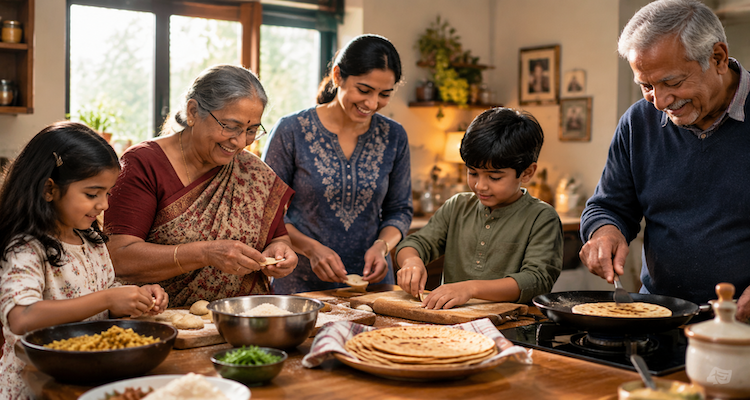
Children learn customs from parents, teachers, relatives and peers. They observe what others do, notice what is considered normal and reproduce it. This process can be remarkably conservative because social conventions often do not have an obvious physical explanation.
Research on ritual cognition describes this as causal opacity: the connection between an action and its apparent purpose may not be obvious to the person performing it. Studies have found that children can reproduce ritualized actions with considerable fidelity even when the individual actions are not necessary to achieve a physical goal.
That tendency has an important cultural consequence.
A practice does not necessarily need a remembered explanation to survive. It can be transmitted simply because previous generations transmitted it.
“That’s how we do it” can therefore become sufficient justification.
This helps explain both the resilience and the vulnerability of tradition. A society can preserve knowledge across generations without every individual understanding its original reasoning. But the same mechanism can preserve practices whose original circumstances have disappeared.
The Meaning of a Tradition Is Often Larger Than Its Origin
It is tempting to assume that every tradition has one original purpose.
Real cultural practices are usually more complicated.
A custom may begin for one reason and acquire additional meanings over generations. A practice that originally helped organize work might later become a marker of identity. A ceremony created around a particular historical event might eventually become an occasion for family gathering. A repeated communal action may become important because it creates solidarity even if its original function is no longer relevant.
Research on ritual has identified social functions including group affiliation, cohesion, commitment and cooperation. At the same time, scholars caution against treating every ritual as if it has one simple evolutionary or social function. Different rituals can involve different psychological and cultural mechanisms.
This distinction matters because forgetting an origin does not necessarily mean losing meaning.
Sometimes the original reason disappears while a new reason takes its place.
What Is Lost When the Explanation Disappears?
The greatest loss may not be the ritual itself. It may be the ability to judge it.
Imagine a community preserving a traditional practice but no longer remembering the environmental, economic or social conditions that produced it.
The practice can eventually become detached from the problem it was designed to address.
At that point, people may defend the practice because it is old rather than because it remains useful.
This is where tradition can become rigid.
Research into cultural evolution shows that social norms can sustain behaviors even when the behaviors are not obviously advantageous to individuals. A 2024 study in Evolutionary Human Sciences, for example, examined how norm reinforcement can help maintain cultural variation, including traditions whose persistence cannot simply be explained by people independently choosing the most immediately rewarding behavior.
The implication is important: longevity is evidence that a tradition has been successfully transmitted, not proof that its original function is still necessary.
Age alone cannot tell a society whether something should remain unchanged.
Ritual Can Preserve Knowledge Without Preserving Its Explanation
There is also a paradox at work.
A community may forget why a practice works while still benefiting from aspects of the practice.
This is one reason cultural transmission is so important.
UNESCO describes intangible cultural heritage as including oral traditions, social practices, rituals, knowledge and traditional skills. It emphasizes that such heritage is not simply frozen material from the past. Communities continually recreate it in response to changing environments and circumstances.
That distinction between preservation and transmission is crucial.
Preservation implies keeping something intact.
Transmission allows something to travel from one generation to another while potentially changing along the way.
For living traditions, the second model is often more realistic.
A tradition that cannot adapt may eventually become ceremonial rather than functional. A tradition that adapts too completely may lose the characteristics that make it recognizable to the community.
The challenge is therefore not simply to keep traditions unchanged. It is to understand what makes them worth carrying forward.
The Social Power of Doing Something Together
Some traditions survive because the act itself creates a social connection.
Research on synchronized ritual behavior has found evidence for increased cohesion and cooperation in some circumstances. But the evidence is not uniformly positive: researchers have also discussed potential trade-offs, including conformity, reduced creativity and harmful forms of group obedience.
That makes collective traditions particularly interesting.
Suppose people no longer remember the historical reason for gathering every year, but the gathering continues to reconnect relatives, strengthen community networks or reinforce a shared identity.
The original purpose may have disappeared, yet another function has emerged.
This means asking only, “Why did people start doing this?” may produce an incomplete answer.
A better set of questions is:
- Why did the practice begin?
- Why did people continue it?
- What does it accomplish now?
- Who benefits from it?
- Who is excluded by it?
- Which parts are essential to its meaning?
- Which parts could safely change?
Those questions turn tradition from an object of passive preservation into something a community can consciously understand.
When Tradition Becomes an Instruction Without a Reason
There is a subtle difference between respecting tradition and obeying tradition.
Respect can involve knowing the history of a practice, understanding its symbolism and deciding consciously to continue it.
Obedience can mean following the practice because questioning it is treated as disloyal.
The difference becomes especially important when traditions contain rules that once made sense but now create unnecessary burdens or conflict with contemporary circumstances.
The research on ritual suggests why such rules can be surprisingly persistent. People can interpret ritualized behavior as socially normative rather than asking whether each action has a direct physical purpose.
In other words, the social question“Is this what people like us do?” — can become more important than the practical question“Why does this need to be done?”
That is a powerful mechanism for cultural continuity.
It is also a reason societies occasionally need to revisit inherited practices.
Forgetting Can Also Make Traditions Fragile
There is another side to the problem.
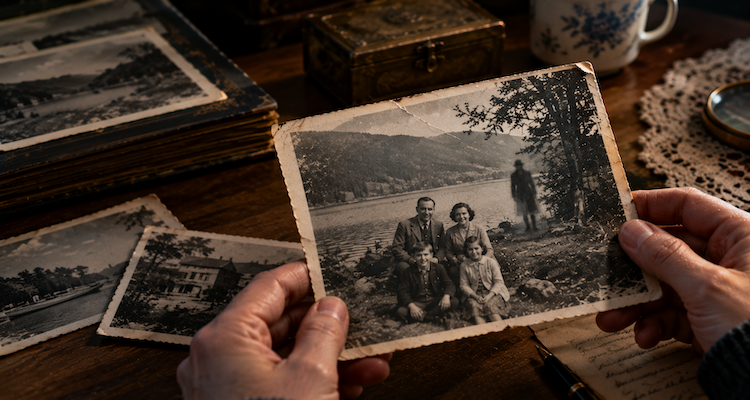
When knowledge about a tradition is held only by a small number of older practitioners, younger generations may inherit the visible form without learning the knowledge behind it.
UNESCO identifies reduced intergenerational contact, migration, urbanization and other social changes as factors that can disrupt the transmission of intangible heritage. It emphasizes that the knowledge and skills needed to enact traditions must themselves be transmitted if those practices are to remain viable.
This creates a dangerous middle ground:
The community remembers the ritual but forgets the knowledge.
A craft may survive as a performance but lose the techniques that gave it meaning. A ceremony may continue while its language, stories or historical context become increasingly unfamiliar. A traditional ecological practice may be celebrated culturally while the detailed knowledge associated with it disappears.
In such cases, documenting only what people do may not be enough.
The knowledge of why, when, how and under what conditions can be equally important.
The Best Traditions Are Not Necessarily Frozen
One of the most important lessons from the study of living heritage is that continuity does not require absolute sameness.
UNESCO explicitly describes intangible heritage as constantly recreated and evolving from one generation to another. Communities themselves are central to deciding what constitutes their living heritage and how it should be transmitted.
That offers a useful way to think about cultural change.
A tradition can retain its identity while changing its form.
The danger lies at two extremes.
At one extreme, everything is treated as untouchable simply because it is inherited.
At the other, inherited practices are dismissed as obsolete before their social and historical value is understood.
Both approaches lose something.
The first can preserve unnecessary restrictions. The second can destroy knowledge that cannot easily be reconstructed once lost.
The more thoughtful approach is informed adaptation: understand the tradition deeply enough to know which elements carry its meaning and which elements belong mainly to the circumstances in which it originated.
What Societies Should Ask Before Abandoning or Preserving a Tradition
When the original explanation has been forgotten, the answer should not automatically be preservation or rejection.
A community can investigate the practice more carefully.
First, recover the history.
Look for oral histories, archival records, material evidence and accounts from people who inherited the practice.
Second, separate origin from present function.
A tradition may no longer serve its original purpose but may perform an important social function today.
Third, identify what is actually being transmitted.
The visible ritual may be only one part of the heritage. Knowledge, skills, language and relationships may be equally important.
Fourth, examine who bears the cost.
A practice can provide belonging for some people while imposing unequal burdens on others.
Finally, let the community decide.
UNESCO’s framework places communities, groups and individuals at the center of identifying and maintaining their living heritage rather than treating outside institutions as the sole authorities.
This approach does not require treating every old practice as sacred.
It requires understanding before changing.
The Deeper Problem Is Not Forgetting It Is Forgetting How to Question
Every society forgets things.
No generation can retain the complete explanation for everything inherited from the past. Culture would become impossible if every person had to rediscover every practice independently.
The remarkable feature of human culture is precisely that people can inherit solutions, behaviors and social knowledge without reconstructing them from scratch. Cultural transmission allows knowledge to accumulate across generations.
But inheritance creates an obligation as well as an advantage.
A society that never asks why can confuse persistence with wisdom.
A society that always asks why can distinguish the parts of its inheritance that still serve a purpose from those that merely survive through repetition.
That may be the most important thing lost when a tradition’s beginning is forgotten: not necessarily the tradition itself, but the ability to understand its relationship with the problem it once solved.
Conclusion
Traditions are not simply relics from the past. They are systems of memory, identity, behavior and social connection that people continually transmit and reinterpret.
Forgetting why a tradition began does not automatically make it empty. Its meaning may have evolved, and its social function may be very different from its original purpose. But forgetting the history behind a practice can make it harder to decide what should be preserved, adapted or abandoned.
The healthiest relationship with tradition is therefore neither blind obedience nor reflexive rejection.
It is curiosity.
A society should be able to ask of its inherited practices: What problem did this once address? What meaning does it carry now? And what would we lose if we changed it?
Those questions do more than protect the past. They help a society decide what kind of past it wants to carry into the future.
This content is published for informational or entertainment purposes. Facts, opinions, or references may evolve over time, and readers are encouraged to verify details from reliable sources.