








When a Generation Grows Up With AI Tutors, Learning May Never Look the Same Again
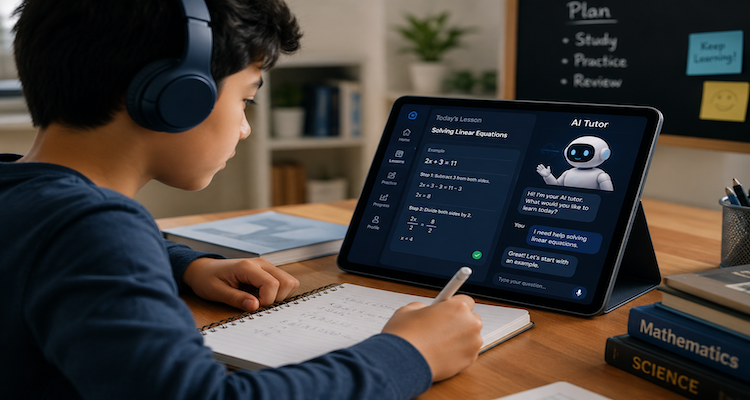
A quiet transformation is unfolding in education, and it is happening far beyond classrooms. Millions of students now have access to artificial intelligence tools that can explain algebra problems, summarize historical events, answer questions instantly, and adapt explanations to individual learning styles. For many young learners, AI is becoming less like a search engine and more like a personal tutor that is available at any hour.
What makes this shift remarkable is not simply the technology itself. Education has seen waves of innovation before, from calculators to online learning platforms. The difference today is that AI can participate in the learning process. It can respond, adjust, encourage, and personalize in ways that traditional educational tools never could.
If an entire generation grows up learning alongside AI tutors, the consequences may extend far beyond better homework help. The way people acquire knowledge, develop skills, solve problems, and even think could begin to change.
The Rise of Personalized Learning at Scale
For decades, education systems have struggled with a basic challenge: every student learns differently, but classrooms often teach everyone the same way.
AI tutoring systems offer a potential solution. Rather than delivering identical explanations to an entire class, AI can adapt its responses based on a learner’s questions, pace, and level of understanding. A student struggling with fractions may receive a simpler explanation, while another can move directly to more advanced concepts.
This level of personalization was once available only through private tutoring, which remained inaccessible to many families. AI has the potential to make individualized guidance far more widely available.
The result could be a generation that experiences learning as a conversation rather than a lecture. Instead of waiting for scheduled instruction, students can explore curiosity whenever it arises.
That shift may prove more important than any single educational outcome.
Knowledge Becomes Less Important Than Navigation
One of the most significant changes may not involve what students know but how they access information.
For centuries, education emphasized memorization because information was difficult to obtain. Students learned facts because they needed to carry knowledge with them.
AI changes that equation.
When explanations, summaries, examples, and guidance are available instantly, the value of simply remembering information may decline relative to understanding how to evaluate, interpret, and apply it.
Future learners may spend less time searching for answers and more time judging whether answers are accurate, relevant, and useful.
This creates a new educational priority: intellectual navigation.
The students who thrive may not be those who can recall the most information but those who can ask better questions, identify weaknesses in AI-generated responses, and combine multiple sources into meaningful understanding.
The Hidden Skill AI Tutors May Encourage
Much of the discussion around AI education focuses on efficiency. Yet a less obvious change may emerge.
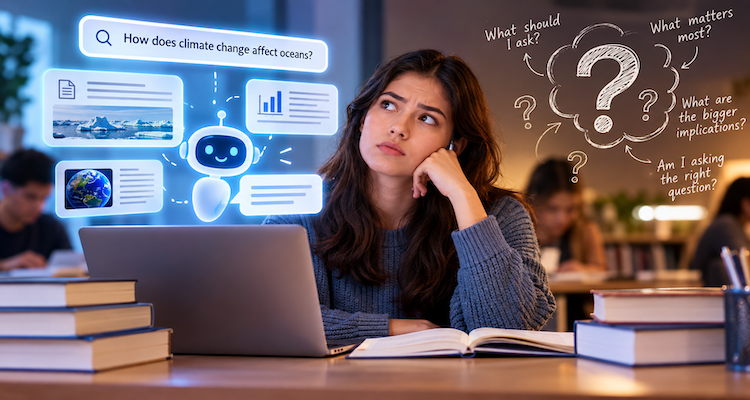
Students who regularly interact with AI tutors are constantly practicing inquiry.
Every useful response begins with a question. If the question is vague, the answer often is too. Better questions typically produce better results.
Over time, this dynamic could strengthen a skill that has historically received less attention in formal education: question formulation.
The ability to frame problems clearly, identify information gaps, and refine inquiries may become increasingly valuable in workplaces and academic environments alike.
In this sense, AI tutors may not merely teach subjects. They may teach students how to think through problems by encouraging continuous dialogue.
New Opportunities and New Risks
The promise of AI tutoring comes with legitimate concerns.
AI systems can make mistakes, generate misleading information, or present inaccurate conclusions with confidence. Young learners may not always possess the critical thinking skills necessary to recognize those errors.
There is also the possibility that excessive dependence on AI could weaken certain learning habits. If students rely on AI to solve every challenge immediately, they may spend less time wrestling with difficult concepts, a process that often contributes to deeper understanding.
Educators and parents face a balancing act.
The goal is unlikely to be restricting AI entirely. Instead, the challenge may be teaching students when to use AI, how to verify information, and where human judgment remains essential.
The most successful educational models may combine AI assistance with traditional instruction, mentorship, and independent thinking.
A Different Relationship Between Students and Teachers
Predictions that AI will replace teachers often overlook what teachers actually do.
Education involves much more than delivering information. Teachers motivate students, manage classroom dynamics, provide emotional support, identify learning challenges, and cultivate social development.
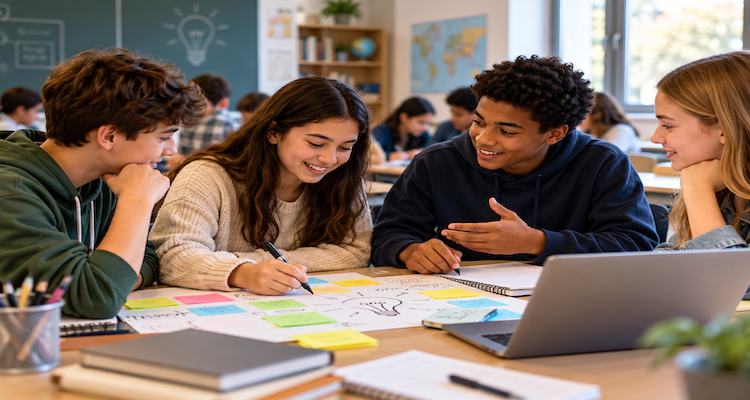
As AI handles more routine explanations and repetitive practice, teachers may spend less time presenting information and more time guiding learning experiences.
This could elevate the importance of distinctly human skills within education.
Empathy, mentorship, creativity, collaboration, and ethical reasoning are difficult to automate. Ironically, the rise of AI may increase the value of the human elements of teaching.
Rather than replacing educators, AI may push the profession toward higher-value responsibilities.
The Future Workforce Will Feel the Impact
The effects of AI tutoring may become especially visible in the workplace.
Today’s students are entering a world where AI is increasingly integrated into professional tasks. Workers already use AI to draft content, analyze information, generate code, brainstorm ideas, and support decision-making.
Students who grow up learning with AI may arrive in the workforce with a fundamentally different relationship to technology.
Instead of viewing AI as a specialized tool, they may see it as a routine collaborator.
This could accelerate productivity in some fields while reshaping expectations around problem-solving, research, and communication.
Organizations may place greater emphasis on creativity, strategic thinking, and judgment, qualities that complement AI rather than compete with it.
Education May Become More Continuous
Another underappreciated consequence involves lifelong learning.
Traditional education often follows a sequence: school, university, then career. Learning becomes less structured once formal education ends.
AI tutors could blur those boundaries.
If personalized educational assistance remains available throughout adulthood, continuous learning becomes more practical. Workers can acquire new skills on demand, explore unfamiliar subjects, and adapt to changing industries without returning to traditional classrooms.
A generation raised with AI tutors may never view education as something confined to a specific phase of life.
Learning could become a permanent, ongoing activity.
The Bigger Question Is Not About Technology
The conversation surrounding AI tutors often focuses on capabilities: how advanced the systems are, how accurate they become, or how many subjects they can teach.
The more important question may be cultural rather than technical.
What happens when young people grow up expecting personalized guidance, instant feedback, and unlimited access to knowledge?
Their expectations of education, work, and even self-improvement may differ dramatically from previous generations.
Some outcomes remain uncertain. Researchers, educators, policymakers, and technology companies are still exploring the long-term effects.
What seems increasingly clear, however, is that AI tutoring is not simply another educational tool. It represents a shift in how learning itself is experienced.
If an entire generation learns with AI tutors, the lasting impact may not be that students learn faster. It may be that they develop a fundamentally different relationship with knowledge—one defined less by access to information and more by the ability to navigate, question, and apply it.
That change could reshape education long after today’s AI systems have evolved into something entirely new.
This content is published for informational or entertainment purposes. Facts, opinions, or references may evolve over time, and readers are encouraged to verify details from reliable sources.