








What Happens When an Entire Generation Learns With AI Tutors?
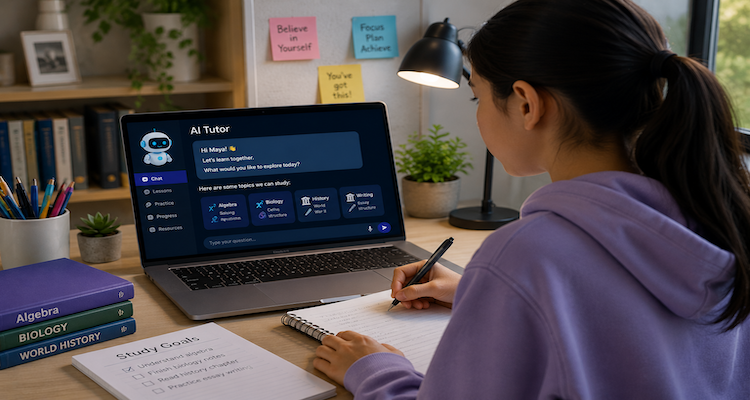
A quiet shift is taking place in education, and it may prove more significant than the move from paper textbooks to laptops. Millions of students are now growing up with access to AI-powered tutors that can explain concepts, answer questions, generate practice exercises, and adapt to individual learning styles almost instantly.
For the first time, a generation is beginning its educational journey with something previous generations never had: a personalized learning companion available on demand. Whether through dedicated educational platforms, AI assistants integrated into productivity tools, or emerging classroom technologies, students are increasingly learning alongside intelligent systems rather than relying solely on teachers, textbooks, or search engines.
The question is no longer whether AI will influence education. The more important question is what happens when an entire generation develops its thinking, study habits, and problem-solving skills with AI as a constant presence.
The Rise of Learning That Never Sleeps
Traditional education has always faced a practical limitation: human attention is finite.
Teachers manage classrooms filled with students who learn at different speeds. Parents may not always have the time or expertise to help with homework. Tutoring services can be expensive and inaccessible for many families.
AI tutors challenge these limitations. They can provide explanations repeatedly without frustration, offer alternative approaches when a student struggles, and remain available at any hour.
For learners, this creates a radically different experience. Instead of waiting for the next class or tutoring session, students can receive immediate feedback and guidance whenever curiosity strikes.
The result is a learning environment that feels more conversational than instructional. Students increasingly engage with knowledge through dialogue rather than passive consumption.
A Shift From Information Access to Learning Support
For decades, the internet solved the problem of information access. Search engines made answers easy to find.
AI tutors are solving a different problem: understanding.
Many students do not struggle because information is unavailable. They struggle because they cannot connect concepts, identify mistakes, or adapt explanations to their level of understanding.
An AI tutor can simplify complex subjects, create examples tailored to a learner’s interests, and guide students through problems step by step.
This changes the educational experience from finding answers to developing comprehension.
The distinction matters because understanding, not information is what ultimately drives meaningful learning.
The Hidden Change: Students May Learn How to Ask Better Questions
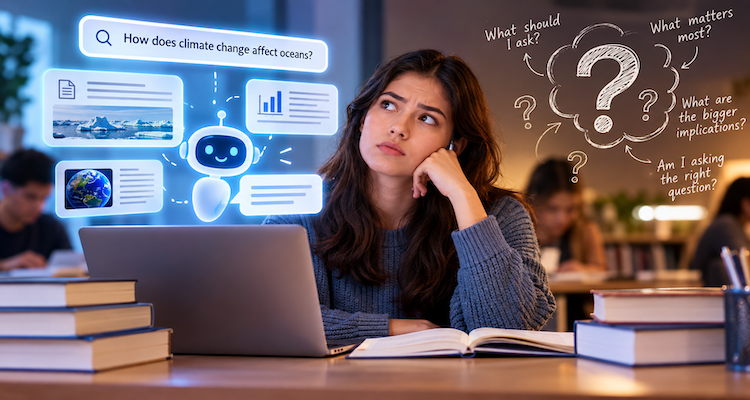
One of the most underappreciated consequences of AI-assisted learning is the growing importance of questioning.
In traditional classrooms, students are often rewarded for producing correct answers. With AI tutors, success increasingly depends on asking effective questions.
A vague question may generate a generic response. A thoughtful question often produces deeper insights.
Over time, students may develop stronger habits of inquiry. They learn how to refine prompts, challenge explanations, request alternative viewpoints, and explore topics from multiple angles.
This could become one of the defining educational skills of the coming decades.
Future academic success may depend less on memorizing facts and more on navigating knowledge effectively.
Personalized Learning at an Unprecedented Scale
Personalization has long been considered one of education’s most desirable goals.
Yet achieving it across entire school systems has been difficult.
AI tutors introduce the possibility of individualized instruction at a scale previously unimaginable. A student struggling with algebra can receive targeted support while another advances more quickly through the material.
This adaptability may help reduce frustration among learners who often feel either overwhelmed or underchallenged.
Educational technology companies are already exploring systems that adjust lesson difficulty, learning pace, and content presentation based on student interactions.
While these tools are still evolving, they point toward a future where learning pathways become increasingly customized rather than standardized.
What Happens to Critical Thinking?
The greatest opportunity may also represent the greatest risk.
When AI tutors provide instant explanations, summaries, and solutions, students gain efficiency. However, there is an ongoing debate about whether convenience could sometimes replace intellectual effort.
Learning often involves struggle. Working through confusion, making mistakes, and experimenting with different approaches are essential parts of developing critical thinking skills.
If students become overly dependent on AI-generated answers, they may miss opportunities to build deeper reasoning abilities.
The challenge for educators is not preventing AI use but teaching students how to use it responsibly.
The most effective learners will likely be those who treat AI as a thinking partner rather than a thinking replacement.
Teachers Become More Important, Not Less
Predictions about technology replacing teachers have appeared for decades. Yet history suggests a different pattern.
New technologies often change professional roles rather than eliminate them.
AI tutors can explain concepts and provide feedback, but they cannot fully replicate mentorship, emotional intelligence, classroom leadership, or the social dynamics of learning communities.
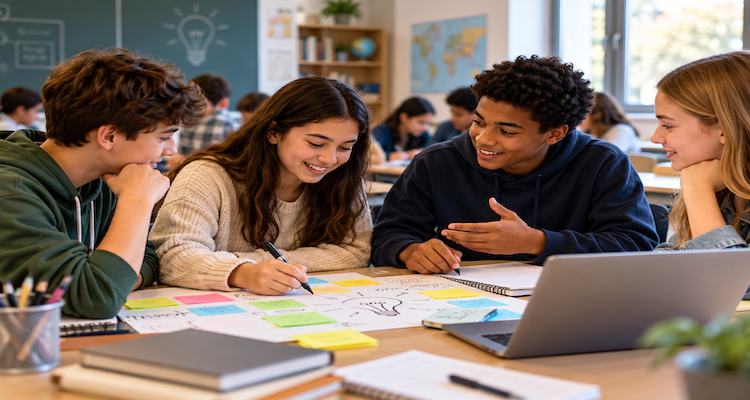
Teachers remain essential for guiding discussions, evaluating nuanced understanding, fostering collaboration, and helping students develop judgment.
In many cases, AI may reduce administrative burdens and repetitive instructional tasks, allowing educators to focus more on higher-value interactions.
Rather than replacing teachers, AI could elevate the aspects of teaching that machines cannot easily reproduce.
Education Becomes More Continuous
Previous generations often separated learning from everyday life.
School happened during school hours. Studying occurred at designated times.
AI tutors blur those boundaries.
Students can learn while commuting, exploring hobbies, participating in online communities, or pursuing personal interests. Educational support becomes embedded within daily activities rather than confined to formal settings.
This shift aligns with broader changes in how people acquire knowledge throughout their lives.
As workplaces evolve and industries change more rapidly, continuous learning is becoming a necessity rather than an option.
Students who grow up with AI tutors may enter adulthood already accustomed to learning on demand.
The Broader Cultural Impact
The effects of AI tutoring extend beyond education.
A generation raised with intelligent learning assistants may approach knowledge differently from previous generations. They may expect immediate guidance, personalized explanations, and interactive problem-solving experiences.
This could influence how people work, make decisions, consume information, and adapt to new challenges.
It may also reshape expectations around expertise. Instead of viewing knowledge as something stored exclusively in institutions or experts, learners may see it as something accessible through ongoing collaboration with intelligent tools.
That cultural shift could prove as significant as the technology itself.
The Generation That Learns Differently
Every generation is shaped by the tools it grows up using.
Books influenced how people organized knowledge. Search engines changed how information was discovered. Smartphones transformed communication and daily habits.
AI tutors may become the defining educational tool of the next generation.
Their greatest impact may not be higher test scores or faster homework completion. It may be the creation of learners who interact with knowledge in fundamentally different ways, more conversationally, more continuously, and more collaboratively.
The long-term outcome remains uncertain. Much will depend on how schools, parents, technology companies, and students themselves choose to use these tools.
What seems increasingly clear, however, is that the conversation is no longer about whether AI belongs in education. It is about what kind of learners, and ultimately what kind of society, we are building when intelligent tutors become a normal part of growing up.
This content is published for informational or entertainment purposes. Facts, opinions, or references may evolve over time, and readers are encouraged to verify details from reliable sources.