








The Animals Quietly Reshaping Entire Ecosystems
A river changes course. A wetland returns after decades of decline. A forest becomes healthier without a single tree being planted. In many cases, these transformations are not driven by governments, conservation groups, or environmental engineers. They begin with animals.
Across the world, scientists and conservationists are paying closer attention to species that do far more than simply inhabit ecosystems. These animals actively modify landscapes, influence water systems, alter vegetation patterns, and create conditions that support countless other forms of life. They are often described as nature’s engineers, species whose everyday behaviors can reshape entire environments in ways that rival human infrastructure projects.
Their influence is not always obvious. Some build dams. Others dig tunnels, disperse seeds, or graze vegetation in ways that affect everything from biodiversity to wildfire risk. Yet as environmental pressures mount and ecosystems face increasing stress, understanding the role of these hidden engineers is becoming more important than ever.
More Than Just Wildlife
Many people think of animals primarily as consumers within a food chain. Predators hunt prey, herbivores eat plants, and scavengers clean up remains. While these roles are essential, certain species have a far greater impact on the physical structure of their environments.
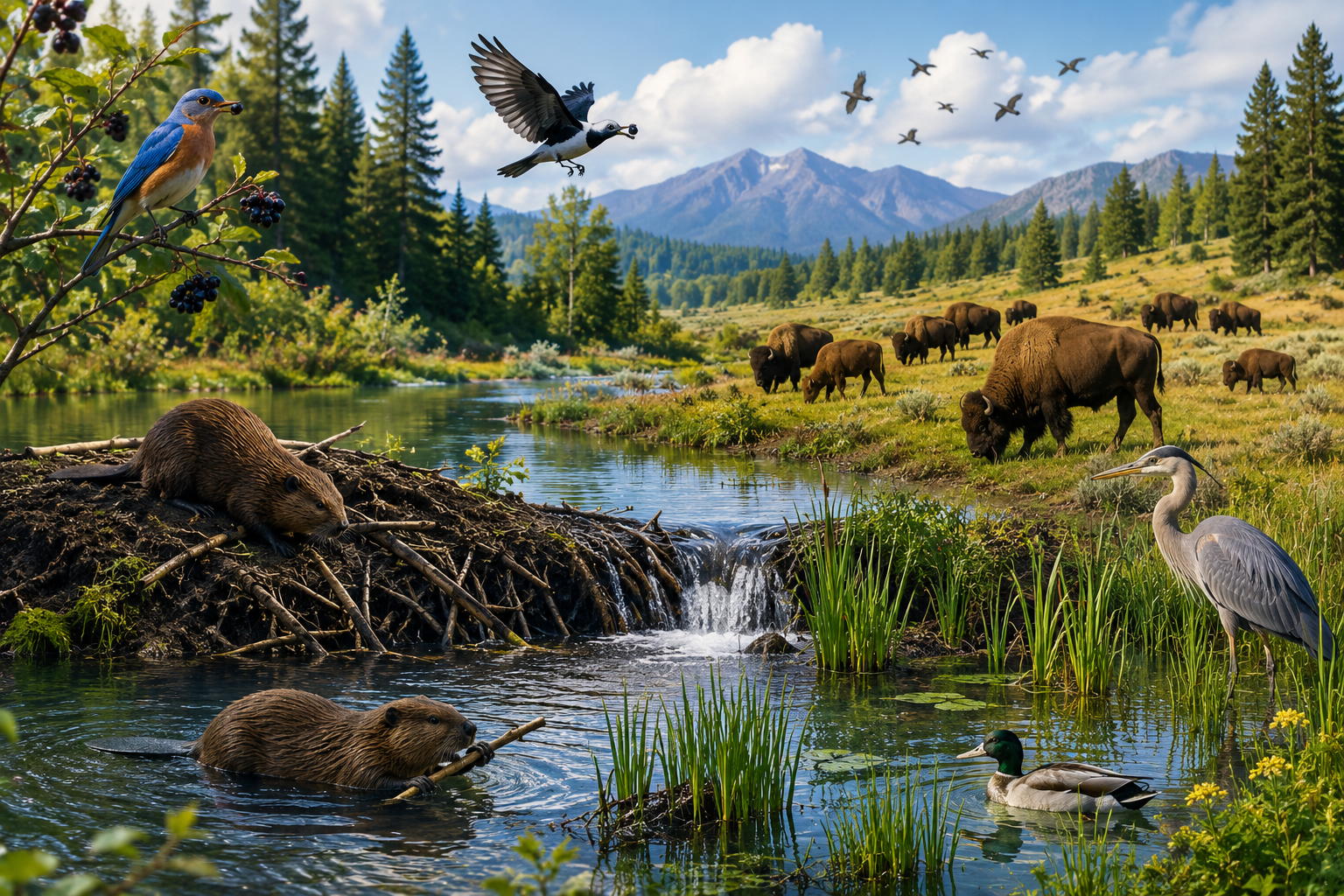
The most famous example is the beaver. By constructing dams, beavers slow water flow, create wetlands, and transform river systems. These wetlands provide habitat for fish, amphibians, birds, and insects while also improving water retention during droughts and reducing flood intensity during heavy rainfall.
What makes beavers remarkable is not simply their engineering ability but the scale of the ecological consequences. A single colony can trigger changes that ripple across an entire landscape.
Yet beavers are only one part of a much larger story.
The Underground Architects
Beneath the surface of many ecosystems, animals are constantly redesigning the soil.
Prairie dogs, ground squirrels, moles, and other burrowing species create networks of tunnels that improve soil aeration and water infiltration. Their digging mixes nutrients, influences plant growth, and creates shelter for other species.
In some grassland ecosystems, the absence of these burrowing animals can lead to noticeable ecological decline. The soil becomes less dynamic, plant diversity decreases, and habitat opportunities shrink.
This highlights a growing realization in ecology: ecosystem health often depends not only on visible species but also on those working out of sight.
Their impact resembles natural maintenance work, continuous, subtle, and easy to overlook until it disappears.
Forest Builders Disguised as Fruit Eaters
Many forests owe their existence to animals that rarely receive credit for their role.
Birds, bats, monkeys, elephants, and countless other creatures disperse seeds as they move through landscapes. By transporting seeds away from parent plants, they help forests regenerate and expand.
Large animals can be especially influential because they carry seeds over long distances. Some tree species depend heavily on animal dispersal for survival. Without these mobile partners, forest composition can gradually change, potentially reducing biodiversity over time.
This relationship reveals an important truth: forests are not merely collections of trees. They are complex collaborations between plants and animals, each shaping the future of the other.
The next time a new sapling appears in a distant clearing, there is a good chance an animal helped place it there.
Grazers That Prevent Ecological Collapse
In many ecosystems, grazing animals act as regulators.
Species such as bison, wildebeest, and various antelope prevent vegetation from becoming overly dense. Their feeding patterns create habitat diversity, allowing different plant and animal communities to coexist.
In some regions, grazing can even influence wildfire behavior. By reducing the accumulation of dry vegetation, herbivores may help limit the amount of fuel available for fires.
This does not mean grazing animals are a universal solution to wildfire risk, but their ecological role demonstrates how interconnected natural systems can be.
A herd moving across a landscape is not simply feeding itself. It may also be shaping future habitat conditions for hundreds of other species.
Why Interest in Nature’s Engineers Is Growing
Interest in ecosystem engineers has expanded because conservation priorities are changing.
For decades, many conservation efforts focused primarily on protecting individual species. While that remains important, researchers increasingly recognize that some animals deliver ecological benefits that extend far beyond their own survival.
Protecting a single engineering species can sometimes help restore entire ecological networks.
This shift mirrors broader changes in environmental thinking. Rather than treating ecosystems as collections of isolated parts, scientists are focusing on relationships, interactions, and system-wide functions.
The question is no longer just, “How do we save this species?”
It is increasingly, “What happens to the ecosystem if this species disappears?”
That perspective changes conservation priorities in significant ways.
A Lesson Humans Are Beginning to Appreciate
One of the most fascinating insights emerging from ecosystem research is how closely nature’s engineers resemble successful human infrastructure systems.
Modern cities rely on transportation networks, water management, maintenance systems, and resource distribution. Healthy ecosystems function in surprisingly similar ways.
Beavers manage water flow. Burrowing animals maintain soil systems. Seed dispersers support forest expansion. Grazers regulate vegetation.
Each species performs a role that helps sustain larger environmental processes.
This comparison offers a powerful lesson. Human solutions often focus on building new infrastructure, while nature frequently relies on biological relationships that have evolved over thousands of years.
Increasingly, environmental restoration projects are exploring how the return of key species can sometimes achieve results that expensive engineering projects struggle to replicate.
The goal is not to replace human intervention but to recognize that ecosystems possess their own forms of natural infrastructure.
The Hidden Economic Value of Wildlife
The work performed by ecosystem engineers has practical implications that extend beyond conservation.
Healthy wetlands can improve water quality. Diverse forests can support tourism and local economies. Functional grasslands contribute to soil health and agricultural resilience.
When ecosystem engineers disappear, these benefits may weaken.
Although assigning precise economic value to ecological processes remains challenging, there is growing recognition that wildlife contributes to environmental services that ultimately affect human communities.
This makes the protection of engineering species more than a biodiversity issue. It is also a question of long-term environmental stability and resilience.
What Could Happen Next?
As ecological research advances, more species are likely to be identified as influential ecosystem engineers.
The future of conservation may increasingly focus on restoring ecological functions rather than simply increasing species numbers. Reintroducing or protecting key engineers could become a central strategy for rebuilding degraded landscapes.
At the same time, climate change, habitat fragmentation, and biodiversity loss may alter how these species interact with their environments, creating new challenges and opportunities for researchers.
What remains clear is that many of the world’s most important environmental transformations are happening quietly.
While humans often focus on dramatic conservation projects and technological solutions, countless animals continue performing the ecological work that sustains forests, wetlands, grasslands, and rivers.
Their engineering projects rarely make headlines.
Yet the landscapes we depend on may owe far more to these animals than most people realize.
This content is published for informational or entertainment purposes. Facts, opinions, or references may evolve over time, and readers are encouraged to verify details from reliable sources.
Related News
- Mary the Elephant: The Animal They Executed for a Crime She Could Never Understand
- The Animals That Change Their Daily Routine When Humans Stop Watching
- The Forest Has a Warning System That Works Before Most Animals Ever See the Predator
- The Animals That Change Their Behavior When Nobody Is Watching