








Why Some Endangered Species Recover While Others Keep Disappearing
A century ago, many conservation stories seemed destined to end the same way: shrinking habitats, dwindling populations, and eventual extinction. Yet today, the picture is far more complicated. While some endangered species are making remarkable comebacks, others continue to slide toward the brink despite receiving attention, funding, and legal protection.
This contrast reveals one of the most important lessons emerging from modern conservation. The fate of endangered species is not determined by rarity alone. Increasingly, scientists, policymakers, and conservation organizations are discovering that recovery depends on a complex combination of ecological resilience, human behavior, economic priorities, and the ability of species to adapt to a rapidly changing world.
Understanding why some species rebound while others decline offers a deeper glimpse into the future of biodiversity, and humanity’s relationship with nature.
The Uneven Reality of Conservation Success
Conservation success stories often capture public imagination. Species once thought to be on an irreversible path toward extinction have returned from dangerously low numbers in certain regions.
Large mammals, birds of prey, and marine animals have demonstrated that recovery is possible when threats are reduced and habitats are protected. In some cases, hunting restrictions, breeding programs, habitat restoration, and stronger environmental regulations have created conditions for populations to stabilize and grow.
Yet for every encouraging success, there are numerous species whose numbers continue to fall. Amphibians, insects, freshwater species, and specialized animals dependent on fragile ecosystems often face mounting challenges despite conservation efforts.
The difference is rarely a matter of luck. Instead, it reflects how well a species’ biological characteristics align with today’s environmental realities.
Adaptability Often Determines Survival
One of the strongest predictors of recovery is adaptability.
Species that can adjust their diets, migration patterns, breeding behaviors, or habitat use often stand a better chance of surviving environmental change. Generalist species, those capable of thriving in a variety of conditions, tend to be more resilient than specialists that rely on a single food source or habitat type.
For example, animals capable of living near human settlements may find new opportunities even as wilderness areas shrink. Others that depend on highly specific environmental conditions may struggle when those conditions change.
Climate change has intensified this divide. Rising temperatures, shifting rainfall patterns, and altered ecosystems create challenges that adaptable species may navigate successfully while more specialized species cannot.
The result is a growing conservation reality: protecting a species is often not enough if the ecological conditions it depends upon are disappearing.
Habitat Quality Matters More Than Habitat Size
Conservation discussions frequently focus on the amount of protected land. While size is important, quality often matters even more.
A large protected area may offer little benefit if it is fragmented, isolated, or degraded. Conversely, smaller but well-connected habitats can provide crucial breeding grounds, migration routes, and food resources.
Many recovering species benefit from conservation strategies that focus on ecosystem restoration rather than simply setting aside land.
Wetland rehabilitation, forest regeneration, river restoration, and wildlife corridors help reconnect fragmented landscapes. These efforts allow animals to move, reproduce, and maintain genetic diversity.
This shift represents an important evolution in conservation thinking. The goal is increasingly to preserve functioning ecosystems rather than protect individual species in isolation.
The Human Factor Is Often the Deciding Factor
Wildlife recovery is rarely just a biological challenge. It is also a social and economic one.
Species living in regions where local communities benefit from conservation often experience better outcomes. Ecotourism, sustainable resource management, and community-led conservation programs can transform wildlife from a perceived burden into a valuable asset.
In contrast, conservation efforts may struggle when local populations face economic pressures that encourage habitat destruction, poaching, or unsustainable resource use.
This highlights a critical but sometimes overlooked reality: successful conservation frequently depends on aligning environmental goals with human interests.
Protecting biodiversity is often most effective when people see tangible benefits from healthy ecosystems.
Why Some Threats Are Harder to Solve
Not all conservation threats are equally manageable.
Certain dangers, such as regulated hunting or habitat protection, can be addressed through policy changes and enforcement. Others are far more complex.
Climate change, invasive species, pollution, disease outbreaks, and ecosystem-wide disruptions often operate across national boundaries and affect multiple species simultaneously.
Amphibians provide a striking example. Many face a combination of habitat loss, changing climate conditions, pollution, and emerging diseases. Addressing a single threat may not be enough to reverse declines because several pressures are acting at once.
As conservation challenges become more interconnected, recovery efforts must become more sophisticated and coordinated.
The Hidden Shift: Conservation Is Becoming Data-Driven
One of the most significant developments in wildlife protection is the growing use of technology.
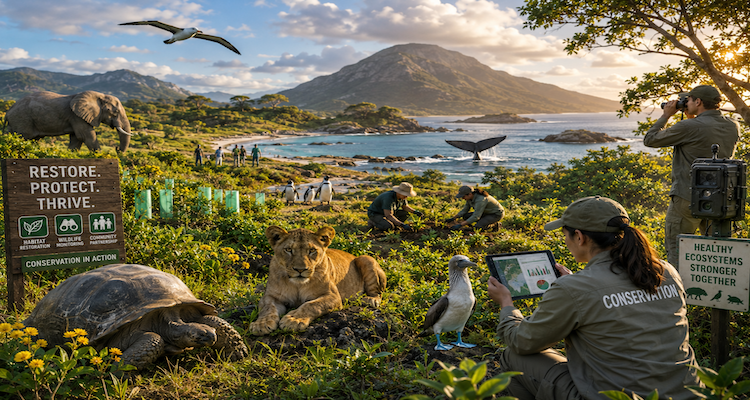
Conservationists increasingly rely on satellite monitoring, camera traps, acoustic sensors, environmental DNA analysis, and artificial intelligence tools to track species and ecosystems.
These technologies allow researchers to detect population changes earlier, identify emerging threats, and allocate resources more effectively.
The deeper insight is not simply that technology is helping conservation. It is changing how decisions are made.
Historically, conservation often reacted to visible declines. Today, growing access to real-time ecological data enables more proactive interventions before populations reach critical levels.
This shift mirrors trends seen in healthcare, business, and urban planning, where predictive analysis is increasingly replacing reactive management.
For wildlife conservation, that transition could prove transformative.
What These Recoveries Reveal About Nature
The recovery of certain endangered species offers an encouraging message: extinction is not always inevitable.
Nature possesses remarkable resilience when given the opportunity to recover. Ecosystems can regenerate, populations can rebound, and ecological relationships can be restored.
At the same time, conservation successes should not create complacency. Many species remain vulnerable, and some face threats that continue to intensify.
The contrast between thriving and declining species underscores a broader lesson. Biodiversity is not simply a collection of individual animals and plants. It is a network of relationships shaped by environmental conditions, human decisions, and ecological adaptability.
When those relationships remain intact, recovery becomes possible. When they break down, even well-intentioned conservation efforts may struggle.
Looking Ahead
The future of endangered species will likely depend less on isolated rescue efforts and more on building resilient ecosystems capable of supporting life under changing conditions.
As climate pressures increase and human populations continue to expand, conservation strategies are evolving from species-specific interventions toward landscape-scale solutions. Protecting migration routes, restoring ecosystems, improving coexistence between people and wildlife, and using advanced monitoring technologies may become just as important as traditional conservation measures.
The species that thrive in the coming decades may not simply be those receiving the most attention. They may be the ones living in ecosystems where nature and human priorities are successfully balanced.
That reality makes the story of endangered species larger than wildlife alone. It is also a story about how societies choose to shape the landscapes and ecosystems on which all life ultimately depends.
This content is published for informational or entertainment purposes. Facts, opinions, or references may evolve over time, and readers are encouraged to verify details from reliable sources.
Related News
- Mary the Elephant: The Animal They Executed for a Crime She Could Never Understand
- The Animals That Change Their Daily Routine When Humans Stop Watching
- The Forest Has a Warning System That Works Before Most Animals Ever See the Predator
- The Animals That Change Their Behavior When Nobody Is Watching