





When Wildlife and Climate Change Start Showing Up in Daily Life
Climate change is often discussed through melting glaciers, rising sea levels, and extreme weather. Wildlife conservation, meanwhile, is frequently framed as something that happens in distant forests, oceans, or protected reserves. Yet a quieter shift is taking place: the relationship between wildlife and climate change is becoming increasingly personal.
People who once viewed biodiversity loss as a remote environmental issue are now encountering its effects in their neighborhoods, workplaces, food systems, and daily routines. Birds are appearing in unfamiliar regions. Pollinators are changing their seasonal patterns. Urban residents are reporting new encounters with wildlife species adapting to changing conditions. What was once a story about ecosystems is becoming a story about everyday life.
That shift matters because it changes how people understand climate change itself. Instead of being measured only in temperature records or scientific reports, climate change is increasingly visible through the living world around us.
The Natural World Is Sending More Visible Signals
Wildlife has always responded to environmental change. Species migrate, adapt, or alter their behavior when conditions shift. What makes the current moment different is the speed and scale of those changes.
Many animals are adjusting migration routes, breeding seasons, feeding habits, and geographic ranges in response to changing temperatures and weather patterns. As ecosystems transform, people are noticing wildlife in places where it was previously uncommon, or noticing the absence of species that once felt familiar.
For many communities, the first tangible sign of ecological change is not a scientific announcement but a change in local wildlife behavior. A bird that arrives earlier each year. A pollinator that appears less frequently. A marine species found in new waters.
These observations may seem small, but collectively they reveal how deeply interconnected climate and biodiversity have become.
Why Public Interest Is Growing
Interest in wildlife and climate change is expanding because people increasingly see direct links to issues they care about.
Food production depends on healthy ecosystems and pollinators. Water quality is influenced by biodiversity. Natural landscapes help regulate floods, droughts, and extreme weather impacts. Even mental well-being is connected to access to thriving natural environments.
As these connections become clearer, wildlife conservation is no longer viewed solely as protecting rare species. It is increasingly understood as protecting systems that support human life.
This broader perspective is reshaping public conversations. Questions that once focused on saving individual animals are evolving into discussions about ecosystem resilience, food security, public health, and economic stability.
The result is a growing recognition that biodiversity is not separate from society, it is part of the infrastructure that makes societies function.
The Hidden Shift: Wildlife Is Becoming a Climate Indicator
One of the most underappreciated developments is that wildlife is increasingly acting as an early warning system.
Scientists have long used species behavior to understand environmental conditions, but the public is beginning to notice these signals as well. Changes in migration timing, breeding patterns, and species distribution often reveal environmental shifts before those changes become obvious in other ways.
This creates an important insight: wildlife is not merely a victim of climate change. It is also a messenger.
When ecosystems begin changing, animals frequently respond first. Their movements and behaviors can offer clues about emerging environmental pressures that may later affect agriculture, infrastructure, tourism, and local economies.
Understanding wildlife in this context transforms conservation from a niche environmental concern into a practical tool for understanding future risks.
Cities Are Becoming Part of the Story
For decades, wildlife conservation was largely associated with remote landscapes. Today, cities are becoming increasingly important ecological spaces.
Urban areas around the world are witnessing new interactions between people and wildlife. Some species are adapting remarkably well to city environments, while others struggle as habitats become fragmented.
Climate pressures add another layer of complexity. Heat waves, changing rainfall patterns, and altered vegetation can influence which species thrive in urban environments and which disappear.
As a result, city planners, architects, and policymakers are paying greater attention to biodiversity. Green roofs, wildlife corridors, native plant restoration, and urban tree programs are increasingly being discussed not only as environmental initiatives but also as climate adaptation strategies.
The future of conservation may depend as much on cities as on wilderness areas.
Technology Is Changing How We Understand Nature
Another reason this topic feels more personal is the rise of technology that brings environmental data closer to the public.
Smartphone apps allow people to identify species, document sightings, and contribute to citizen science projects. Remote sensors, satellite monitoring, and artificial intelligence are helping researchers track wildlife movements and ecosystem changes with unprecedented detail.
These tools are narrowing the gap between scientific observation and public participation.
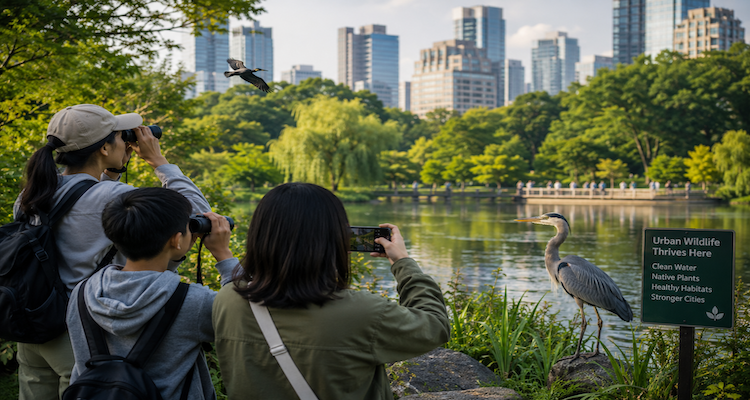
Someone photographing a bird in a local park may unknowingly contribute information that helps researchers understand larger ecological trends. In this way, ordinary citizens are becoming active participants in environmental monitoring.
This democratization of conservation is creating a new relationship between people and nature, one built on observation, engagement, and shared responsibility.
Economic Implications Are Becoming Harder to Ignore
The connection between wildlife and climate change is also emerging as an economic issue.
Industries that depend on natural systems, including agriculture, fisheries, tourism, and forestry, are increasingly affected by ecological disruption. When species populations shift or ecosystems become less stable, economic consequences often follow.
Businesses are beginning to recognize that biodiversity loss can create operational risks, supply chain challenges, and long-term uncertainty.
This explains why environmental discussions increasingly include concepts such as ecosystem services, natural capital, and resilience. These terms may sound technical, but they reflect a growing realization that healthy ecosystems provide measurable value to economies.
The protection of wildlife is becoming not only an environmental objective but also a practical business consideration.
A Cultural Change Is Underway
Perhaps the most significant transformation is cultural.
For many years, climate change and wildlife conservation occupied separate spaces in public consciousness. One was often viewed as a scientific challenge, the other as a conservation issue.
Today, those boundaries are fading.
People are increasingly understanding that climate stability and biodiversity health are deeply interconnected. Protecting habitats can support climate resilience. Restoring ecosystems can help communities adapt to environmental change. Conserving species can strengthen ecological systems that humans rely upon.
This integrated perspective represents a major shift in how society understands environmental challenges.
Instead of asking how climate change affects wildlife, more people are beginning to ask how the condition of wildlife affects all of us.
What Happens Next?
The growing personal relevance of wildlife and climate change suggests that public engagement may continue to deepen.
Future conversations are likely to focus less on abstract environmental concepts and more on practical questions: How will ecosystems change where people live? Which species will adapt? How can communities build resilience? What role can individuals play in supporting biodiversity?
The answers will vary across regions and ecosystems. Yet one reality is becoming increasingly clear.
Wildlife is no longer a distant environmental concern observed from afar. It is becoming one of the most visible ways people experience a changing climate. The animals, plants, and ecosystems around us are revealing environmental shifts in real time, turning a global challenge into a personal one.
And that may ultimately be what changes the conversation most.
This content is published for informational or entertainment purposes. Facts, opinions, or references may evolve over time, and readers are encouraged to verify details from reliable sources.
Related News
- Mary the Elephant: The Animal They Executed for a Crime She Could Never Understand
- The Animals That Change Their Daily Routine When Humans Stop Watching
- The Forest Has a Warning System That Works Before Most Animals Ever See the Predator
- The Animals That Change Their Behavior When Nobody Is Watching