








Rewilding and the Future of Conservation: Can Nature Heal Damaged Ecosystems?
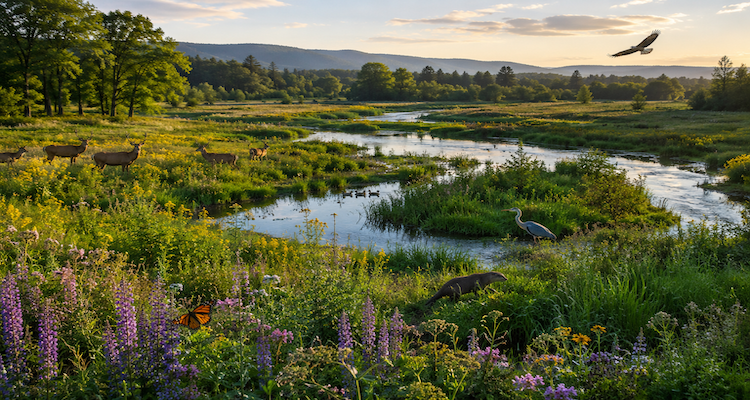
A quiet shift is reshaping how conservationists, governments, and communities think about environmental recovery. For decades, ecological restoration often meant repairing damage piece by piece, planting trees, protecting endangered species, or cleaning polluted waterways. Increasingly, however, a different idea is gaining momentum: instead of trying to manage every aspect of nature, what if the most effective solution is to let nature do more of the work itself?
This philosophy sits at the heart of rewilding, a conservation approach focused on restoring natural processes, reconnecting habitats, and allowing ecosystems greater freedom to recover. What began as a niche environmental concept has evolved into one of the most influential ideas in modern conservation. From river valleys and grasslands to coastal wetlands and urban green spaces, rewilding projects are emerging across the world, driven by a growing recognition that damaged ecosystems often need more than protection, they need the opportunity to function naturally again.
The rise of rewilding reflects a broader realization that environmental challenges are interconnected. Biodiversity loss, climate change, soil degradation, and water scarcity do not occur in isolation. Rewilding seeks to address these problems not through constant intervention, but by rebuilding the ecological relationships that once kept landscapes resilient.
What Rewilding Actually Means
Despite its growing popularity, rewilding is frequently misunderstood. It does not necessarily mean abandoning land or turning every landscape into wilderness.
At its core, rewilding focuses on restoring ecological processes. This can involve reconnecting fragmented habitats, allowing rivers to follow more natural courses, reintroducing species that play critical ecological roles, or reducing intensive human management where appropriate.
The objective is not to recreate a perfect version of the past. Instead, it is to help ecosystems regain their ability to adapt, regenerate, and sustain themselves.
A healthy ecosystem is far more than a collection of plants and animals. It is a network of relationships involving predators, prey, pollinators, soil organisms, waterways, and vegetation. When these relationships are disrupted, ecological decline often follows. Rewilding attempts to rebuild those connections.
Why Interest in Rewilding Is Growing
Several factors are driving renewed interest in rewilding.
Climate change is intensifying environmental stress worldwide. Extreme weather, habitat loss, and shifting ecosystems have exposed the limitations of conservation strategies that focus solely on protecting isolated species or locations.
At the same time, researchers and conservation practitioners have observed that ecosystems often recover more effectively when natural processes are allowed to operate. Wetlands can absorb floodwaters, forests can regenerate degraded soils, and predator-prey relationships can help stabilize ecological balance.
Public attitudes are also changing. Increasing numbers of people are seeking meaningful connections with nature, particularly as urbanization expands. Rewilded landscapes offer not only ecological benefits but also recreational, educational, and cultural value.
For policymakers and land managers, rewilding presents an appealing possibility: creating environmental resilience that does not depend on perpetual human intervention.
The Unexpected Economic Dimension
One of the most overlooked aspects of rewilding is its economic significance.
Conservation discussions are often framed as a choice between environmental protection and economic growth. Rewilding challenges this assumption.
Restored ecosystems can support tourism, outdoor recreation, sustainable agriculture, and local business development. Wildlife watching, nature-based travel, and ecological tourism have become important economic drivers in many regions.
Healthy wetlands can reduce flood-related costs. Restored forests can improve water quality and soil stability. Pollinator populations can support agricultural productivity. These benefits are not always immediately visible, but they can influence long-term economic resilience.
The emerging insight is that ecosystems function as infrastructure. Rivers, wetlands, grasslands, and forests provide services that would otherwise require costly human-built solutions. Rewilding is increasingly being viewed not only as a conservation strategy but also as an investment in natural capital.
Lessons from Species That Shape Landscapes
Certain animals have demonstrated how powerful ecological relationships can be.
Species often described as ecosystem engineers play a disproportionately large role in shaping habitats. Grazing animals influence vegetation patterns, predators help regulate prey populations, and wetland-building species can transform entire landscapes.
When these ecological roles disappear, ecosystems may gradually lose resilience. Reintroducing key species or allowing their populations to recover can trigger broader environmental improvements that extend far beyond the species themselves.
What makes these examples compelling is that they reveal a fundamental principle: restoring ecological function may matter more than simply increasing species numbers.
The success of many rewilding efforts depends less on individual species and more on rebuilding the interactions that sustain biodiversity.
Rewilding in Human-Dominated Landscapes
A common misconception is that rewilding only applies to remote wilderness areas. In reality, some of the most interesting developments are occurring much closer to where people live.
Cities are experimenting with more natural urban parks, pollinator corridors, wetland restoration projects, and river recovery initiatives. Agricultural regions are exploring ways to balance food production with habitat restoration.
This reflects a significant cultural shift. Rather than treating nature as something separate from human life, rewilding increasingly recognizes that ecological health and human well-being are deeply connected.
Urban residents may experience improved air quality, greater access to green spaces, and enhanced biodiversity. Farmers may benefit from healthier soils and more stable ecosystems. Communities may gain protection from flooding and extreme weather.
The future of conservation may depend less on creating isolated reserves and more on integrating ecological recovery into everyday landscapes.
The Challenges Rewilding Must Address
Despite its promise, rewilding is not without controversy.
Land-use priorities can create conflicts between conservation goals and agricultural, industrial, or residential development interests. Some communities worry about changes in wildlife populations or restrictions on land management.
There are also practical questions about what ecological conditions should be restored and how success should be measured. Ecosystems are constantly evolving, particularly under the influence of climate change.
This means rewilding is rarely a simple process of returning to a historical baseline. Instead, it requires adaptive management, community engagement, and realistic expectations.
The most successful projects often involve collaboration among scientists, landowners, policymakers, Indigenous communities, and local residents. Ecological recovery tends to be strongest when conservation goals align with social and economic realities.
A New Relationship Between People and Nature
Perhaps the most important aspect of rewilding is not ecological but philosophical.
For much of modern history, environmental management has been built around control—controlling rivers, landscapes, forests, and wildlife populations. Rewilding introduces a different perspective. It suggests that resilience may emerge not from greater control, but from restoring the natural systems that evolved over thousands of years.
This does not mean removing humans from the equation. Instead, it involves redefining humanity’s role within ecosystems.
As environmental pressures continue to grow, rewilding offers an alternative vision of conservation—one that focuses less on preserving isolated fragments of nature and more on rebuilding living, interconnected systems capable of adapting to change.
Whether rewilding becomes a dominant conservation strategy remains uncertain. What is clear, however, is that it has transformed an important question. Rather than asking how humans can manage every aspect of nature, more people are beginning to ask how nature might recover if given the opportunity.
The answer could shape the future of ecosystems, communities, and environmental resilience for decades to come.
This content is published for informational or entertainment purposes. Facts, opinions, or references may evolve over time, and readers are encouraged to verify details from reliable sources.
Related News
- Mary the Elephant: The Animal They Executed for a Crime She Could Never Understand
- The Animals That Change Their Daily Routine When Humans Stop Watching
- The Forest Has a Warning System That Works Before Most Animals Ever See the Predator
- The Animals That Change Their Behavior When Nobody Is Watching