







The Quiet Future: How Science and Environmental Change Are Redefining Modern Life
Science and environmental reporting is entering a new phase. For years, major headlines focused on dramatic events, record-breaking heat, extreme weather, endangered species, and breakthrough discoveries. Those stories remain important, but something more subtle is beginning to capture public attention.
The most significant science and environment stories of 2026 may not be the biggest events. Instead, they are likely to be the developments quietly changing how people live, work, consume, travel, and make decisions every day.
A growing number of environmental shifts are moving from the realm of distant concern into immediate reality. At the same time, scientific advances are becoming increasingly visible in everyday life. The result is a new kind of public interest, one driven less by curiosity alone and more by personal relevance.
This change is reshaping how readers engage with science and environmental content, and it reveals a deeper story about society’s evolving relationship with knowledge, risk, and the future.
The Environment Is No Longer a Separate Topic
For decades, environmental issues were often treated as a specialized subject. Climate change belonged to scientists. Conservation belonged to environmental organizations. Sustainability belonged to policymakers.
That separation is fading.
Environmental conditions increasingly influence food prices, insurance costs, housing decisions, travel patterns, infrastructure planning, and public health discussions. As these effects become more visible, audiences are no longer reading environmental stories as distant observations. They are reading them as practical information.
A drought is no longer simply a weather event. It can affect agricultural output, consumer costs, water security, and regional economies. Rising temperatures are not merely climate statistics; they influence workplace productivity, energy demand, and urban planning.
This shift creates a powerful content opportunity. Readers increasingly seek explanations that connect environmental developments to real-world consequences rather than abstract scientific concepts.
The Rise of “Everyday Science”
Scientific research has traditionally reached the public through major discoveries: a new planet, a medical breakthrough, or a significant technological invention.
Today, interest is expanding beyond headline discoveries.
People are becoming more interested in how scientific knowledge affects daily decisions. Questions about air quality, food systems, renewable energy, biodiversity, water resources, and emerging technologies are moving into mainstream conversations.
The growth of wearable technology, environmental monitoring tools, and AI-assisted research has also made science feel more accessible. Individuals can now engage with data and information that once remained largely within academic institutions.
As a result, audiences increasingly want context rather than simply facts. They are asking not only, “What happened?” but also, “What does this mean for me?”
That subtle shift is transforming science communication.
Why Hidden Environmental Changes Are Capturing Attention
The environmental stories generating sustained interest are often not the most dramatic ones.
Instead, readers are drawn to gradual changes that accumulate over time.
Examples include shifts in pollinator populations, changing migration patterns among wildlife, urban heat islands, water scarcity challenges, soil degradation, and ecosystem adaptation. These developments may not produce immediate headlines every day, but they reveal larger transformations underway.
What makes these stories compelling is their ability to connect local experiences with global trends.
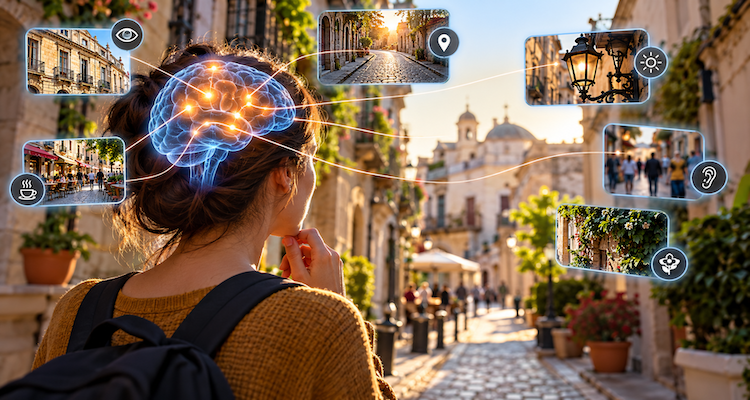
A resident noticing changing seasonal patterns, reduced insect activity, or unusual weather conditions may begin searching for explanations. This creates strong demand for content that bridges personal observation and scientific understanding.
The most effective environmental journalism in 2026 will likely focus on helping audiences interpret the changes they are already seeing around them.
The New Curiosity Around Adaptation
For years, public discussion centered heavily on prevention, reducing emissions, protecting ecosystems, and slowing environmental damage.
Those conversations remain essential. However, a growing portion of public interest now focuses on adaptation.
Communities, businesses, educational institutions, and governments are increasingly exploring how to function in changing environmental conditions.
Questions about resilient infrastructure, sustainable agriculture, water management, urban design, and climate-conscious business practices are becoming more prominent.
This shift creates a rich editorial opportunity because adaptation stories are inherently practical. They move beyond warnings and focus on solutions, preparation, innovation, and long-term resilience.
Readers often respond strongly to content that provides understanding without creating helplessness.
The Unexpected Link Between Science Literacy and Economic Decisions
One underreported development is the growing connection between scientific literacy and financial decision-making.
Environmental and scientific knowledge increasingly influences investment strategies, supply chains, property values, insurance assessments, energy planning, and workforce development.
Businesses across industries, from agriculture and manufacturing to transportation and technology, are paying closer attention to scientific forecasts and environmental risk assessments.
For individuals, understanding environmental trends may affect where they choose to live, what products they buy, how they manage energy consumption, and how they prepare for future disruptions.
This represents a significant cultural shift.
Science is no longer viewed solely as an academic discipline. It is becoming a practical tool for navigating economic uncertainty and long-term planning.
That transformation helps explain why science-related content is attracting broader audiences than in previous years.
Technology Is Changing Environmental Understanding
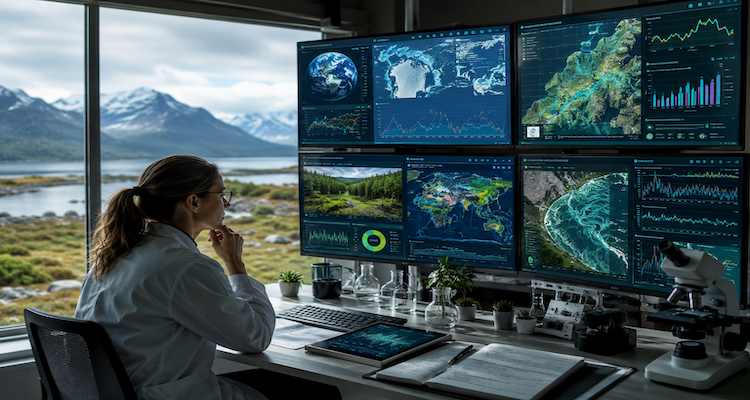
Advances in satellite imaging, remote sensing, artificial intelligence, and data analysis are dramatically expanding humanity’s ability to observe environmental systems.
Scientists can now monitor forests, oceans, glaciers, wildlife populations, and atmospheric conditions with unprecedented precision.
At the same time, these technologies are making environmental information more accessible to the public.
The result is greater visibility into processes that were once largely invisible.
People can track air quality, weather conditions, water availability, and environmental indicators through digital platforms and mobile applications. This accessibility encourages greater engagement because complex scientific issues become easier to visualize and understand.
As environmental monitoring becomes more sophisticated, public demand for interpretation and analysis is likely to increase alongside it.
Why Human Stories Matter More Than Ever
One of the most important lessons emerging from science and environmental publishing is that readers connect with people before they connect with data.
Statistics may establish importance, but human experiences create meaning.
Stories about farmers adapting to changing growing conditions, researchers developing innovative solutions, communities restoring ecosystems, or cities redesigning public spaces often resonate more deeply than technical reports alone.
This does not diminish the value of scientific evidence. Instead, it highlights the importance of context.
The strongest science and environment content combines rigorous information with relatable experiences, helping readers understand both the facts and their implications.
What Comes Next for Science and Environment Content
The future of science and environmental storytelling is likely to become increasingly interdisciplinary.
Climate issues intersect with business. Biodiversity intersects with food systems. Energy transitions intersect with geopolitics. Scientific research intersects with education, healthcare, and workforce development.
As these connections become more visible, audiences will seek content that explains relationships rather than isolated events.
The stories most likely to attract sustained attention in 2026 are not necessarily those that announce dramatic discoveries or alarming warnings. They are the stories that reveal how scientific and environmental changes are quietly reshaping everyday life.
For readers, the value lies in understanding those connections.
For publishers, the opportunity lies in helping audiences see what is changing before those changes become impossible to ignore.
Science and environmental journalism is no longer just about documenting the world. Increasingly, it is about helping people navigate a future that is arriving faster than many expected.
This content is published for informational or entertainment purposes. Facts, opinions, or references may evolve over time, and readers are encouraged to verify details from reliable sources.