







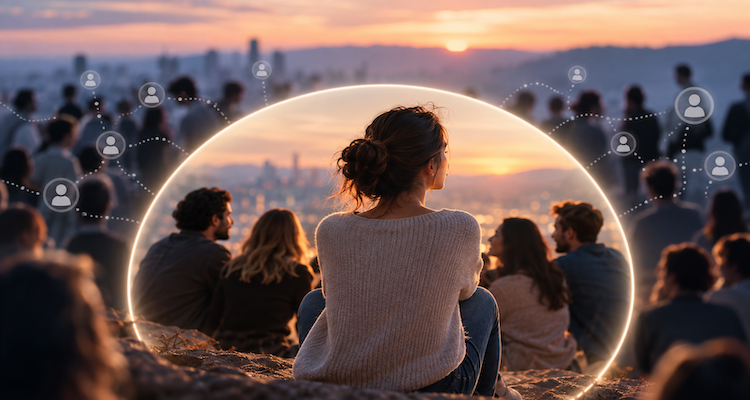

Why People Are Starting to Trust AI More Than Their Own Memory
Artificial Intelligence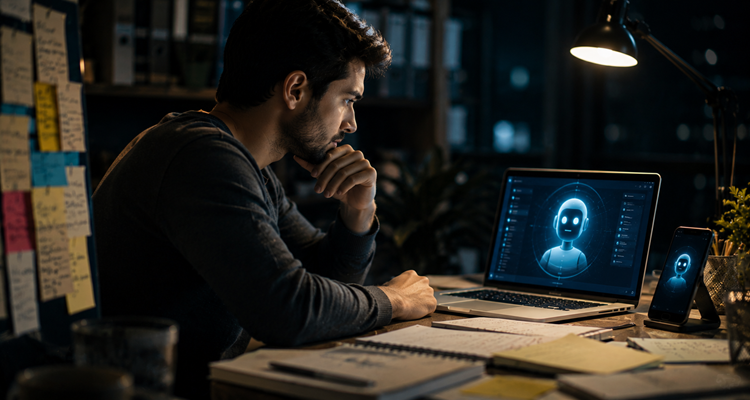
Have you ever opened your phone to check something you were certain you remembered, only to discover you were wrong?
It happens more often than most people realize. A date, a conversation, a recommendation from a friend, the name of a book, or even where you parked your car. Instead of relying on memory, many people now instinctively turn to AI assistants, search tools, and digital records for answers.
What’s changing isn’t just how people access information. It’s how they think about their own memory.
A growing number of people are beginning to trust AI-generated recall more than their own recollection. While that may sound surprising, it reflects a deeper shift in the relationship between humans, information, and technology.
The Rise of External Memory
For centuries, people relied on memory to navigate daily life. Important information was stored mentally because there were few alternatives.
Then came notebooks, calendars, cameras, smartphones, cloud storage, and search engines. Each innovation reduced the need to remember certain details.
AI represents the next step in that progression.
Unlike a traditional search engine that requires users to hunt for information, AI can retrieve, organize, summarize, and present information conversationally. Instead of searching through emails or notes, users can simply ask a question.
The experience feels less like looking something up and more like consulting a highly organized extension of the mind.
That convenience is changing behavior.
Why Human Memory Feels Less Reliable
Human memory has never been as accurate as many people assume.
Psychologists have long understood that memory is reconstructive rather than reproductive. People do not replay events like video recordings. They rebuild memories from fragments, context, emotions, and assumptions.
This explains why eyewitness accounts can differ, why family members remember the same event differently, and why confidence does not always equal accuracy.
AI, by contrast, often appears objective.
When an assistant retrieves information from stored documents, calendars, messages, or notes, the answer can seem more trustworthy than a personal recollection influenced by time and bias.
The result is a subtle shift: people increasingly treat AI as a source of verification.
The Convenience Factor Is Powerful
Trust is not always earned through accuracy alone.
Sometimes it grows through convenience.
Consider how people use navigation apps. Many drivers follow directions without questioning them, even when traveling familiar routes. The app becomes the default authority because it is easier than making independent decisions.
A similar pattern is emerging with AI.
Instead of remembering meeting schedules, people ask AI. Instead of recalling research notes, they ask AI. Instead of trying to remember where they saved a document, they ask AI.
Repeated successful interactions build confidence.
Over time, the brain learns a simple lesson: asking is easier than remembering.
That habit can gradually reshape how people approach information itself.
AI Is Becoming a Personal Knowledge Hub
The latest generation of AI systems is increasingly integrated into daily workflows.
Platforms from companies such as OpenAI, Google, Microsoft, and Apple are moving toward assistants that can interact with calendars, documents, emails, notes, and personal data.
As these systems gain context about users’ activities, they become more useful.
Imagine asking:
- What did I promise during last week’s meeting?
- Where did I save the marketing proposal?
- Which restaurant did my friend recommend three months ago?
- What was the book title I mentioned recently?
Instead of searching manually, users receive immediate answers.
When AI consistently provides correct information, it begins functioning as a personal knowledge hub rather than a simple tool.
That changes the psychology of trust.
What Happens When AI Remembers Better Than We Do?
A fascinating question is emerging.
If AI can reliably recall information that humans frequently forget, should people trust the machine more than themselves?
For practical tasks, many already do.
Professionals rely on digital calendars instead of memory. Students store notes digitally. Businesses maintain records rather than depending on employee recollection.
In many situations, external memory systems outperform human memory because they do not suffer from fatigue, distraction, or emotional distortion.
Yet there is a difference between using technology as a reference and surrendering judgment entirely.
Memory is not merely storage. It is connected to reasoning, learning, and decision-making.
The challenge lies in balancing convenience with cognitive engagement.
A Less Obvious Perspective
The most interesting shift may not be technological at all.
It may be cultural.
For generations, intelligence was often associated with remembering information. People admired those who could recall facts, dates, phone numbers, and details from memory.
Today, value is increasingly moving from remembering information to interpreting it.
When AI can instantly retrieve facts, the competitive advantage shifts toward asking better questions, evaluating answers, spotting errors, and connecting ideas creatively.
In other words, society may be redefining what it means to be knowledgeable.
The person who memorizes everything may no longer have the greatest advantage. The person who knows how to work effectively with intelligent systems may.
This cultural transition resembles earlier shifts brought by calculators, search engines, and smartphones. Skills once considered essential become less central, while new skills emerge.
The real story isn’t that AI is replacing memory.
It’s that memory itself is becoming less important as a measure of capability.
The Risks of Outsourcing Too Much
The trend also raises important concerns.
When people depend heavily on external systems, certain cognitive abilities can weaken through lack of use.
Most people no longer memorize phone numbers because smartphones store them. Many struggle to navigate unfamiliar places without GPS. Some find it difficult to recall information they know is available online.
Researchers often describe this behavior as cognitive offloading—the practice of relying on external tools to reduce mental effort.
Used wisely, cognitive offloading can free attention for more meaningful work.
Used excessively, it may reduce active engagement with information.
The danger is not forgetting facts. The danger is becoming less curious, less attentive, and less critical.
Trust should never eliminate verification.
AI can be helpful, but it can also misunderstand questions, provide incomplete information, or make mistakes. Human judgment remains essential.
Why This Matters Right Now
The timing is significant.
AI assistants are moving rapidly from optional tools to everyday companions.
People increasingly use them at work, at school, while shopping, while planning trips, and while managing personal tasks.
As this adoption grows, trust becomes one of the most important questions surrounding AI.
Not whether AI can remember more than humans.
Not whether AI can process information faster.
But whether people can develop a healthy relationship with systems that often appear more organized than their own minds.
The answer will shape how future generations learn, work, and make decisions.
The Future of Memory in the AI Age
Human memory is unlikely to disappear as a valuable skill.
What may change is its role.
Instead of remembering everything, people may focus on remembering what matters most while allowing AI to handle routine recall.
The future probably belongs neither to pure human memory nor to complete machine dependence.
It belongs to collaboration.
The most effective individuals may be those who understand when to trust their own recollection, when to verify information, and when to use AI as an intelligent partner rather than an unquestioned authority.
As AI becomes woven into everyday life, one thing is becoming clear: the technology is not just changing how we find information.
It is changing how we think about remembering itself.
The views and opinions expressed in this article are those of the author and are intended for informational and educational purposes only. While every effort is made to ensure accuracy, Wiobs does not guarantee the completeness, reliability, or timeliness of the information presented. Readers are encouraged to verify facts independently and use their own judgment before making decisions based on this content.
Stay Connected with Wiobs
Explore more insights on technology, artificial intelligence, science, business, and innovation. Follow Wiobs and never miss an update.