








The Forests That Grow Faster After Being Forgotten
Science and Environment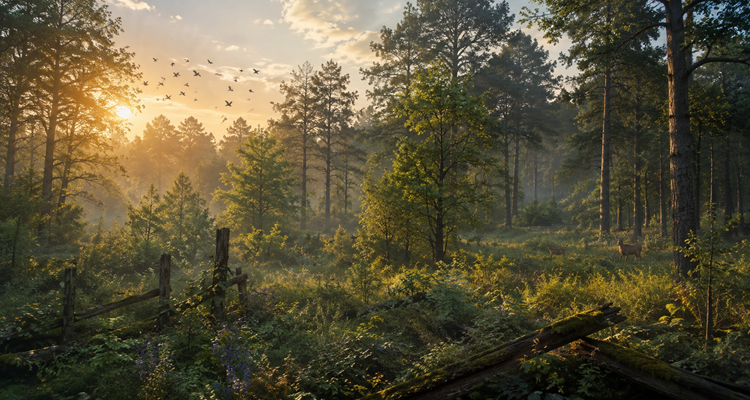
There is a quiet paradox unfolding in parts of the world. While headlines often focus on forests being cut down, burned, or degraded, another story is taking shape in places that have slipped out of human attention. Former farms, abandoned villages, unused mining sites, and neglected pastures are slowly transforming into thriving forests, not because people planted millions of trees, but because people walked away.
This natural recovery challenges a deeply rooted assumption that every damaged ecosystem requires constant human intervention. Sometimes, nature’s most remarkable rebuilding projects begin when we simply stop interrupting them.
Key Takeaways
- Many forests regenerate naturally when farmland and other disturbed areas are abandoned.
- Natural forest recovery often creates more resilient ecosystems than single-species plantations.
- Wildlife frequently returns before people realize a recovering forest exists.
- Rewilding is becoming an increasingly important conservation strategy in many regions.
- Forgotten forests quietly store carbon, improve biodiversity, and restore local water cycles.
- Protecting recovering forests can be as valuable as planting new ones.
When Abandoned Land Becomes a Forest Again
Walk through parts of Eastern Europe, Japan, or the eastern United States, and you may find dense woodland where farms or settlements once stood. These forests weren’t necessarily planted. They simply returned.
The process is known as natural regeneration. Once farming, grazing, logging, or construction stops, grasses appear first, followed by shrubs, young trees, and eventually mature woodland. Birds carry seeds. Wind disperses others. Animals spread countless more as they move through recovering habitats.
Nature already possesses an impressive blueprint for rebuilding itself.
This doesn’t happen overnight. Depending on climate, soil quality, and nearby vegetation, a recovering forest may take decades to resemble an established woodland. Yet the transformation often begins within just a few years.
Why Forgotten Forests Are Receiving New Attention
Conservation discussions have long emphasized tree-planting campaigns. Those efforts remain valuable, especially where ecosystems have been severely damaged.
But scientists and environmental organizations are paying increasing attention to forests that recover naturally because they often develop richer ecological complexity.
Instead of neat rows of identical trees, naturally regenerated forests typically contain a mixture of native species of different ages and heights. Fallen logs remain on the forest floor. Small wetlands form. Insects, fungi, birds, and mammals gradually rebuild interconnected ecosystems.
The result is often closer to the region’s original forest than a carefully managed plantation.
That distinction matters because biodiversity depends on variety, not simply the number of trees.
Nature Doesn’t Waste Empty Space
One overlooked lesson from forgotten forests is how quickly life responds when pressure disappears.
Old fences become climbing structures for vines.
Abandoned roads crack open, allowing mosses and wildflowers to spread.
Ponds that once watered livestock become breeding sites for amphibians.
Dead trees remain standing long enough to shelter woodpeckers, bats, insects, and countless microorganisms.
None of this follows a perfectly designed plan. Yet the outcome often appears surprisingly organized because ecosystems rebuild through countless small interactions happening simultaneously.
Wildlife Usually Arrives Earlier Than Expected
Many people imagine forests returning first and wildlife following years later.
Reality is often less predictable.
Birds frequently arrive while shrubs are still growing. Pollinating insects quickly discover flowering plants. Foxes, deer, wild boar, and smaller mammals begin exploring recovering habitats long before the canopy closes.
Predators may eventually return as prey populations become established.
Europe has witnessed the gradual recovery of species such as wolves and Eurasian lynx in certain regions where suitable habitat has expanded. In parts of North America, forests growing on former farmland have supported the return of many native bird species and mammals.
Wildlife often notices ecological opportunity sooner than humans do.
The Difference Between Growing Trees and Growing Forests
Tree planting has become a powerful symbol of climate action.
Yet planting trees and growing forests are not always the same thing.
A commercial plantation may contain thousands of identical trees managed primarily for timber production. These forests can provide economic value, but they may support fewer native species than naturally regenerated woodlands.
Forgotten forests evolve differently.
Different tree species compete naturally. Older trees coexist with younger ones. Dead wood remains part of the ecosystem instead of being removed. Soil organisms rebuild complex underground networks that help trees exchange nutrients and communicate through fungal relationships.
Healthy forests are communities, not simply collections of trees.
Climate Change Makes Natural Recovery Even More Important
Natural regeneration is attracting attention partly because restoring forests has become an essential part of climate strategies.
Recovering forests absorb atmospheric carbon as trees grow and soils rebuild organic matter.
They also help regulate local temperatures, reduce erosion, improve water retention, and create habitat corridors that allow wildlife to move as climate conditions change.
Not every abandoned landscape becomes a thriving forest. Severe soil degradation, invasive species, prolonged drought, or repeated fires can interrupt recovery.
Still, where conditions allow, natural regeneration can provide long-term environmental benefits with relatively little direct intervention.
A Less Obvious Perspective
Perhaps the most fascinating aspect of forgotten forests isn’t ecological; it’s psychological.
People often value places only when they actively use them.
A productive farm, a busy road, or a developed neighborhood feels important because human activity is visible. An abandoned field may seem empty or wasted.
Nature sees something entirely different.
What humans interpret as neglect may represent opportunity.
This shift challenges the way societies think about conservation. Success isn’t always measured by how much we build, plant, or manage. Sometimes success comes from knowing when to step back.
Businesses are beginning to recognize this as well. Some companies support restoration projects that prioritize natural regeneration instead of intensive planting because allowing ecosystems to recover naturally can, in suitable locations, create healthier long-term habitats.
The broader lesson extends beyond forests.
Whether rebuilding wetlands, restoring rivers, or protecting coastal ecosystems, the most effective solution isn’t always adding more. Sometimes it’s removing the pressures that prevented recovery in the first place.
That perspective changes conservation from an endless construction project into an exercise in patience.
Why These Forests Matter to Everyday Life
A recovering forest may seem distant from daily routines, but its benefits ripple outward.
Healthier forests improve water quality by filtering runoff.
They help stabilize local climates by providing shade and reducing heat.
They support pollinators that contribute to agriculture.
They reduce flood risks by absorbing rainfall.
They create recreational spaces that improve mental well-being.
Even urban areas benefit when nearby forests recover naturally, creating cooler surroundings and richer biodiversity.
Protecting these ecosystems isn’t simply about wildlife. It’s also about creating healthier places for people to live.
The Future May Include More Forgotten Forests
Global population patterns continue to change. In some regions, rural communities are shrinking as people move toward cities. Agricultural practices are becoming more efficient, reducing the need to farm every available hectare.
These shifts create opportunities for abandoned land to recover naturally.
Not every forgotten landscape should become forest. Some open grasslands, wetlands, and cultural landscapes deserve protection in their own right.
The challenge for conservationists is recognizing where natural regeneration offers the greatest ecological value.
The forests quietly growing beyond abandoned fences remind us that nature rarely stops trying to heal itself. Sometimes recovery begins not with grand restoration projects, but with a simple absence of disturbance.
The next thriving woodland may already be taking root in a place most people have forgotten.
The views and opinions expressed in this article are those of the author and are intended for informational and educational purposes only. While every effort is made to ensure accuracy, Wiobs does not guarantee the completeness, reliability, or timeliness of the information presented. Readers are encouraged to verify facts independently and use their own judgment before making decisions based on this content.
Stay Connected with Wiobs
Explore more insights on technology, artificial intelligence, science, business, and innovation. Follow Wiobs and never miss an update.