








The Animals That Quietly Rewrite the Places We Call Home
Wildlife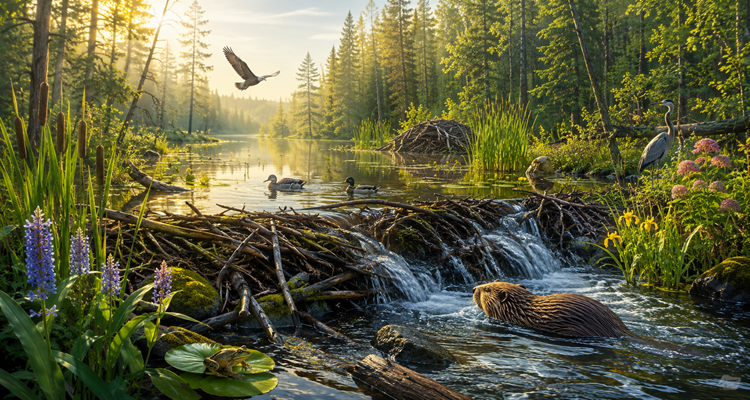
A beaver fells a few trees, and years later a wetland appears where dry ground once stretched. A colony of termites raises towering mounds that reshape soil and water movement. Tiny earthworms churn the ground beneath our feet without attracting much attention, yet they influence how forests, farms, and gardens grow.
When people think about animals changing the world, they often picture predators, migrations, or endangered species. Yet some of the most remarkable environmental transformations happen quietly, carried out by creatures that rarely make headlines. These animals do more than survive within ecosystems; they actively reshape them.
Key Takeaways
- Some animals physically transform habitats, creating entirely new environments for countless other species.
- Small creatures such as earthworms, termites, and corals can influence water, soil, and biodiversity on a surprising scale.
- Human development often overlooks these natural ecosystem engineers until their absence becomes noticeable.
- Understanding how animals reshape environments can improve conservation, farming, and urban planning.
- Many of the places people value today exist because generations of wildlife have continuously modified them.
Nature’s Original Architects
Every ecosystem contains species whose influence reaches far beyond their own survival. Scientists often describe them as ecosystem engineers because they alter the physical environment in ways that affect many other plants and animals.
Unlike predators that influence food chains or pollinators that help plants reproduce, ecosystem engineers physically modify their surroundings. Their work may take years or even centuries, but the results can completely redefine an area.
Some changes are obvious, while others happen so gradually that people rarely notice until they compare the landscape across generations.
The Beaver: A Builder That Creates Entire Ecosystems
Few animals demonstrate environmental engineering better than the beaver.
By cutting trees and constructing dams, beavers slow streams and rivers, allowing water to spread into surrounding areas. These wetlands provide breeding grounds for amphibians, habitat for birds, shelter for fish, and rich feeding areas for insects and mammals.
The effects extend beyond wildlife.
Wetlands created by beavers can reduce downstream flooding, improve water storage during dry periods, trap sediments, and even help filter pollutants naturally. As climate patterns become less predictable, researchers and land managers have shown growing interest in how restored beaver populations may support healthier watersheds.
One industrious family of beavers can reshape an entire valley over time.
Tiny Workers Beneath Our Feet
Earthworms rarely receive admiration, yet healthy soils owe much to their constant activity.
As worms burrow through the ground, they loosen compacted soil, improve drainage, and help mix organic matter with minerals. Their tunnels allow roots to penetrate deeper while making it easier for rainwater to soak into the earth instead of running off the surface.
Healthy soil supports healthier forests, farms, gardens, and grasslands.
Even where people never notice them, millions of earthworms may be quietly working beneath every hectare of productive land.
Their influence reminds us that dramatic environmental change doesn’t always require large animals.
Coral Reefs: Animals That Build Cities Underwater
Many people think corals are plants or colorful rocks.
In reality, corals are tiny marine animals that gradually build enormous limestone structures over thousands of years.
Those reefs become homes for thousands of marine species, from clownfish and sea turtles to sharks and countless invertebrates.
Coral reefs also help absorb wave energy, reducing coastal erosion and protecting shorelines during storms.
Without these small animals, many of Earth’s richest marine ecosystems simply would not exist.
Termites: The Engineers of Dry Lands
Termites have an unfortunate reputation because some species damage wooden buildings.
Yet in natural environments, termites perform essential ecological work.
Their colonies recycle dead vegetation, enrich soil with nutrients, and improve water infiltration. In many African and Australian savannas, towering termite mounds create pockets of fertile ground where unique plants thrive.
These nutrient-rich islands attract grazing animals, insects, birds, and predators, creating hotspots of biodiversity across otherwise uniform landscapes.
The mound itself becomes part of the ecosystem’s architecture.
Elephants: Giants That Open Forests
Large herbivores shape environments in ways that smaller animals cannot.
Elephants push over trees, create pathways through dense vegetation, dig water holes during droughts, and disperse seeds over long distances.
These activities influence which plants dominate certain areas while creating habitats that benefit countless other species.
A single elephant herd can gradually change woodland structure over decades.
Their role demonstrates that habitat change isn’t always destructive. In many natural systems, disturbance is an essential part of ecological balance.
The Hidden Partnership Between Animals and Plants
Landscape change rarely results from animals acting alone.
Plants respond to animal behavior, while animals depend on the habitats those plants create.
Birds spread seeds into new locations. Ants transport seeds underground where conditions favor germination. Grazing animals prevent certain plants from dominating entire regions, allowing greater diversity to flourish.
This constant interaction creates environments that remain dynamic rather than static.
What appears to be untouched wilderness is actually the product of countless biological relationships unfolding over generations.
Why These Changes Matter to People
The benefits reach well beyond wildlife.
Healthy wetlands reduce flood risks.
Living coral reefs help protect coastal communities.
Rich soils support agriculture.
Diverse forests capture carbon, regulate local climates, and maintain cleaner water supplies.
When ecosystem engineers disappear, those services often decline.
This has become increasingly relevant as urban expansion, infrastructure development, pollution, and habitat fragmentation alter natural environments.
Recognizing the work animals perform can help communities make better decisions about restoration, conservation, and sustainable land management.
A Less Obvious Perspective
Perhaps the most surprising lesson isn’t that animals change nature.
It’s that humans often assume stable environments exist without constant maintenance.
Many forests, grasslands, rivers, and wetlands appear permanent because generations of wildlife have been quietly maintaining them.
When one key species disappears, people sometimes blame climate, weather, or poor land management for environmental decline without realizing that a missing animal may have started the chain of change years earlier.
This shift in perspective has influenced modern conservation efforts. Increasingly, restoration projects focus not only on protecting habitats but also on restoring the species that naturally maintain them.
Instead of asking, “How do we repair this ecosystem ourselves?” scientists increasingly ask, “Which natural engineers are missing?”
That question often leads to more sustainable and longer-lasting solutions.
Looking Ahead
As climate pressures, population growth, and land use continue to reshape the planet, understanding nature’s own builders has become more valuable than ever.
Whether it’s a beaver slowing a stream, coral colonies constructing reefs, termites enriching dry soils, or elephants opening forests, these animals remind us that environmental change isn’t driven only by human activity.
The world around us has always been under construction.
Much of that work simply happens quietly, one burrow, one branch, one tunnel, and one generation at a time.
The next time you walk through a forest, beside a wetland, or across a healthy meadow, there’s a good chance the place owes part of its existence to animals most people never stop to notice.
The views and opinions expressed in this article are those of the author and are intended for informational and educational purposes only. While every effort is made to ensure accuracy, Wiobs does not guarantee the completeness, reliability, or timeliness of the information presented. Readers are encouraged to verify facts independently and use their own judgment before making decisions based on this content.