









Beyond the Jyotirlingas: Exploring Shiva’s Hidden Sacred Geography
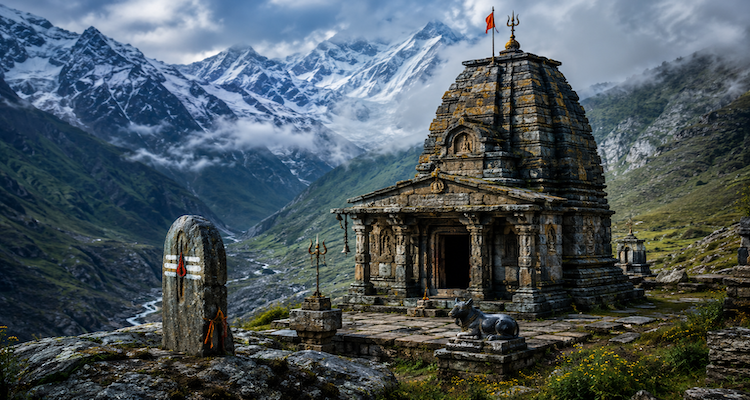
Millions of devotees know the twelve Jyotirlingas as the most revered shrines associated with Lord Shiva. From Somnath on the western coast to Kedarnath in the Himalayas, these temples form a spiritual map that has guided pilgrims for centuries. Yet an equally fascinating story lies beyond these famous destinations, a vast sacred geography of lesser-known caves, mountains, forests, rivers, and ancient shrines where Shiva’s presence has been woven into local traditions for generations.
As interest in spiritual travel expands beyond conventional pilgrimage circuits, travelers and seekers are beginning to look past the most crowded religious destinations. They are searching for places that offer silence, cultural depth, and a more intimate connection with sacred traditions. This shift is revealing an overlooked aspect of India’s spiritual landscape: the hidden geography of Shiva.
What emerges is not simply a collection of temples. It is a network of places that reflects how communities across different regions understood nature, spirituality, and the divine long before modern tourism arrived.
A Sacred Landscape Larger Than Any Temple Network
The popularity of the Jyotirlingas sometimes creates the impression that Shiva worship revolves around a fixed group of sacred sites. Historically, however, Shiva’s presence has been associated with a far broader landscape.
Unlike many religious traditions that concentrate around a single holy city or institution, Shaivism evolved across mountains, forests, riverbanks, deserts, and remote settlements. Sacred geography became an essential part of spiritual practice. The landscape itself was often viewed as an expression of divine energy.
This helps explain why countless places connected with Shiva exist outside mainstream pilgrimage guides. Some are tied to ancient legends. Others emerged through local devotional traditions. Many have remained significant for nearby communities while remaining largely unknown to wider audiences.
The Mystique of Guptkashi and the Himalayan Trail
Before reaching Kedarnath, many pilgrims pass through Guptkashi in Uttarakhand. According to tradition, Shiva is believed to have concealed himself here while avoiding the Pandavas after the Kurukshetra war.
The name itself means “Hidden Kashi,” suggesting a sacred parallel to Varanasi. While thousands travel through the region each year, relatively few pause to explore its spiritual significance. Ancient temples, mountain views, and local rituals create an atmosphere that feels connected to older layers of Himalayan spirituality.
The story of Guptkashi highlights a recurring theme in Shiva’s sacred geography: some of the most meaningful places are not destinations but passages, spaces where myth and landscape intersect.
Amarnath’s Lesser-Known Spiritual Context
The famous Amarnath cave attracts immense attention during its annual pilgrimage season. Yet the broader region surrounding the cave contains a rich spiritual ecosystem often overshadowed by the main shrine.
Traditional pilgrimage routes, mountain meadows, glacial streams, and ancient stopping points form part of a larger sacred experience. Historically, journeys to Shiva’s shrines were rarely about reaching a single destination. The path itself was considered transformative.
This perspective offers an important reminder for contemporary travelers. Sacred geography is not only about monuments; it is about relationships between places, stories, and journeys.
Southern India’s Hidden Shaiva Heritage
Tamil Nadu is home to some of the most remarkable yet underappreciated Shiva traditions in the world. Beyond famous temples such as Brihadisvara and Chidambaram lies a network of ancient shrines celebrated in devotional literature known as the Tevaram hymns.
Many of these temples remain active centers of worship while receiving far fewer visitors than major pilgrimage destinations. Their architecture, inscriptions, and ritual practices preserve centuries of cultural memory.
What makes these sites particularly significant is their continuity. Unlike archaeological monuments that primarily serve historical interest, these temples remain living institutions where ancient traditions continue to shape everyday life.
Forests, Caves, and Natural Shrines
One of the most distinctive aspects of Shiva worship is its connection to wild and untamed landscapes.
Across India, sacred caves, isolated hilltops, and forest shrines continue to attract pilgrims seeking a quieter spiritual experience. Places such as the caves associated with meditation traditions, remote lingams found in mountain regions, and naturally occurring rock formations revered as manifestations of Shiva reveal a different dimension of sacred geography.
These sites often lack elaborate infrastructure. Their significance comes from the experience of place itself—the feeling that nature and spirituality cannot be separated.
In many ways, this reflects Shiva’s symbolic role as the ascetic deity who resides beyond conventional boundaries.
Why Interest in Hidden Sacred Sites Is Growing
A notable cultural shift is influencing spiritual travel today.
Many travelers increasingly seek experiences that feel authentic rather than heavily commercialized. The same trend can be seen in heritage tourism, ecological travel, and cultural exploration worldwide. People are often willing to travel farther and spend more time in less-publicized destinations if they believe the experience will be more meaningful.
Hidden Shiva sites fit naturally into this trend. They offer a combination of spiritual depth, cultural history, and environmental beauty that many modern visitors find appealing.
The rise of digital storytelling has also played a role. Social media, independent travel creators, and heritage researchers are bringing attention to locations that previously remained known only within regional communities.
The Deeper Meaning of Sacred Geography
Perhaps the most important insight is that Shiva’s sacred geography challenges modern assumptions about spirituality.
Contemporary culture often encourages people to think in terms of destinations, places to visit, photograph, and check off a list. Traditional pilgrimage operated differently. Sacred landscapes were understood as interconnected systems where rivers, mountains, temples, forests, and stories formed a unified whole.
This perspective carries surprising relevance today.
As societies debate environmental conservation, cultural preservation, and sustainable tourism, sacred geography offers a model that views nature as worthy of reverence rather than merely consumption. The landscape is not a backdrop to spirituality; it is part of the spiritual experience itself.
That idea may explain why these hidden places continue to resonate with people centuries after their origins.
A Living Map Still Being Discovered
The twelve Jyotirlingas remain central to Shiva devotion and will continue to draw pilgrims from around the world. Yet they represent only one layer of a much larger spiritual map.
From hidden Himalayan valleys and ancient cave sanctuaries to village temples preserved through generations of local devotion, Shiva’s sacred geography extends far beyond the most famous pilgrimage circuits.
For travelers, historians, and spiritual seekers alike, these lesser-known places offer something increasingly rare: an opportunity to encounter living traditions away from the spotlight. They remind us that sacred landscapes are not fixed relics of the past. They are evolving cultural ecosystems that continue to shape how communities understand faith, nature, and identity.
In that sense, the hidden geography of Shiva is not merely about discovering new destinations. It is about seeing familiar landscapes through a deeper lens, one that reveals connections between place, memory, and the enduring human search for meaning.
This content is published for informational or entertainment purposes. Facts, opinions, or references may evolve over time, and readers are encouraged to verify details from reliable sources.
Related News
- Why Shiva Remains Relevant Even Outside Traditional Religious Practice
- Shiva’s Cosmic Dance: Why Nataraja Represents Creation, Destruction and the Rhythm of Time
- What Shiva’s Meditation Reveals About the Hindu Idea of Inner Stillness
- The Meaning of Ardhanarishvara: When Shiva and Shakti Become One Form