







Kaal Bhairav: Meaning, Worship and Spiritual Significance
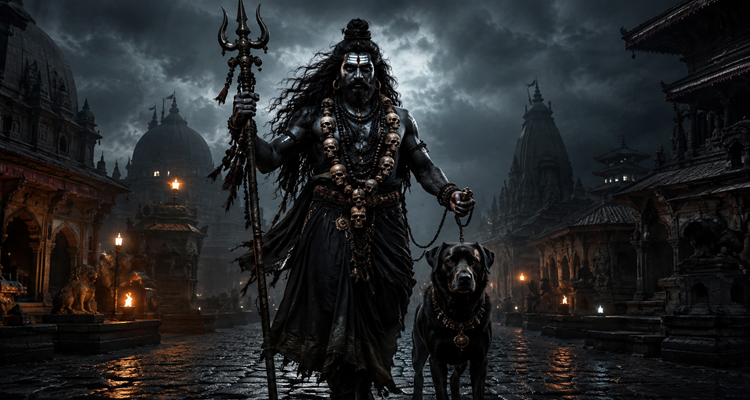
In Hindu tradition, few divine forms are as intense, mysterious, and spiritually powerful as Kaal Bhairav. Often associated with protection, justice, time, and the destruction of fear, Kaal Bhairav represents one of the fiercest manifestations of Lord Shiva.
For many devotees, Kaal Bhairav is not merely a deity of wrath. He is seen as a guardian who removes darkness, disciplines arrogance, and protects seekers from unseen negativity. His worship is especially important in sacred cities such as Kashi and Ujjain, as well as at Shakti Peethas, where he is revered as a divine protector.
At a deeper level, Kaal Bhairav’s symbolism speaks to something timeless: the need to conquer ego, face fear, and restore balance when life feels uncertain.
Who Is Kaal Bhairav?
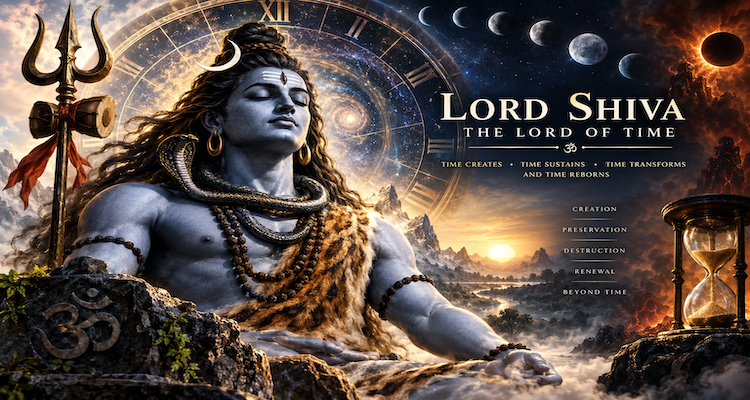
Kaal Bhairav is widely regarded as a fierce form of Lord Shiva. The word “Kaal” refers to time, death, and cosmic order, while “Bhairav” is associated with awe, intensity, and the power to remove fear. Together, Kaal Bhairav represents the force that governs time, destroys negativity, and protects righteousness.
Unlike the gentle image of Shiva as Bholenath, Kaal Bhairav reflects Shiva’s uncompromising side. He appears when disorder, arrogance, or spiritual imbalance threatens cosmic harmony. His form is intense, but his purpose is protective.
This is why devotees often pray to Kaal Bhairav during periods of fear, uncertainty, legal troubles, financial pressure, spiritual confusion, or the difficult phases associated with Shani.
The Story Behind Kaal Bhairav’s Origin
A central legend associated with Kaal Bhairav explains the danger of ego, even at the highest cosmic level. According to traditional belief, Brahma once became filled with pride over his role as the creator of the universe. He began to see himself as superior, even suggesting that Shiva and Vishnu were also products of his creation.
This arrogance disturbed the cosmic balance. Brahma is often shown with four heads today, but in this legend, he had a fifth head that symbolized ego and pride. To restore balance, Shiva manifested Kaal Bhairav, who severed Brahma’s fifth head.
The act was not merely an act of punishment. It symbolized the removal of the destructive ego. The story teaches that creation, preservation, and destruction are interconnected cosmic functions, and no one principle can claim absolute superiority.
Why Kaal Bhairav Holds a Skull
One of the most striking images of Kaal Bhairav shows him carrying a skull, or kapala. This is linked to the legend of Brahma’s severed head. Because Brahma was a divine being, the act of cutting his head brought upon Kaal Bhairav the burden of Brahmahatya dosha, a grave spiritual consequence.
As part of his penance, Kaal Bhairav wandered with the skull as a begging bowl. The skull would not leave him until he reached Kashi, where his burden was finally released. This is why Kashi is also associated with Kapal Mochan, the place where the skull-related sin was absolved.
The symbolism is powerful. Even divine justice carries responsibility. Kaal Bhairav’s story shows that discipline, punishment, and purification are connected to accountability.
Kaal Bhairav and Kashi
Kashi, also known as Varanasi, holds a special place in Kaal Bhairav worship. He is regarded as the Kotwal, or divine guardian, of Kashi. In this role, Kaal Bhairav is believed to watch over the sacred city, protect devotees, and maintain spiritual order.
In traditional belief, anyone visiting Kashi is encouraged to seek Kaal Bhairav’s blessings. His presence is linked to the idea that Kashi is a city of liberation, where karmic accounts are settled, and the path toward moksha becomes possible.
Kaal Bhairav’s connection with Kashi is not just devotional. It also reflects a deeper idea: liberation requires courage, truth, and the willingness to face one’s actions.
Kaal Bhairav and Shakti Peethas
Kaal Bhairav is also associated with the Shakti Peethas, the sacred sites connected with Goddess Sati. In many traditions, each Shakti Peetha has a Bhairav form serving as the protector of that sacred energy.
This is why devotees often believe that a Shakti Peetha pilgrimage is incomplete without Bhairav darshan. The divine feminine power of the Shakti Peetha is guarded by Bhairav, who protects the sanctity of the site from negative forces.
This pairing of Shakti and Bhairav reflects balance: energy and protection, devotion and discipline, compassion and strength.
Kaal Bhairav and Ujjain
Ujjain, home to the famous Mahakaleshwar Jyotirlinga, is another major center of Kaal Bhairav worship. The Kaal Bhairav temple in Ujjain is especially well known among devotees.
Ujjain’s association with Mahakal, time, and cosmic power makes Kaal Bhairav’s presence especially meaningful. Here, he is also regarded as a guardian figure, protecting the sacred geography of the city and those who come in faith.
Why Kaal Bhairav Is Linked With Shani
Kaal Bhairav is traditionally considered significant for people experiencing difficult Shani periods, such as Sade Sati or Dhaiya. In devotional belief, worshipping Kaal Bhairav helps reduce fear, pressure, and obstacles linked with Shani’s influence.
This connection comes from the belief that Kaal Bhairav is spiritually superior to or revered by Shani in certain traditions. Since Shani represents karma, discipline, and consequences, Kaal Bhairav’s role as a guardian of justice aligns closely with Shani’s cosmic function.
Both deities remind devotees that actions matter. But where Shani tests and disciplines, Kaal Bhairav protects, guides, and strengthens the devotee through difficult phases.
The Meaning Behind Kaal Bhairav’s Dog
Kaal Bhairav is often shown with a dog, which is considered his vehicle or companion. In spiritual symbolism, the dog represents loyalty, alertness, and guardianship.
Feeding dogs is considered a simple and meaningful act associated with Kaal Bhairav worship. Devotees often offer food to dogs, especially on Kalashtami or other sacred days dedicated to Bhairav.
The practice also carries a humane message. True devotion is not limited to rituals; it extends to compassion toward living beings.
Why Meat and Liquor Are Associated With Kaal Bhairav
Kaal Bhairav worship is sometimes associated with offerings that differ from mainstream temple traditions, including meat and liquor in certain sects and regions. These offerings are often linked with tantric traditions and symbolic surrender.
One interpretation is that these items represent tamasic tendencies, desires, addictions, and impulses that bind the mind. Offering them to Kaal Bhairav can symbolize surrendering lower instincts, harmful habits, and inner darkness.
In this sense, the offering is not about indulgence. It is about transformation. The devotee symbolically asks Kaal Bhairav to remove destructive cravings, ego, and negativity.
Spiritual Benefits Associated With Kaal Bhairav Worship
Devotees believe Kaal Bhairav worship can help with courage, protection, and clarity. His blessings are often sought for:
Protection from fear and negativity
Relief from unseen obstacles
Strength during difficult Shani periods
Support in legal or karmic struggles
Removal of ego and inner darkness
Spiritual discipline and sharper decision-making
Relief from anxiety, insecurity, and confusion
The deeper lesson is that Kaal Bhairav worship encourages inner strength. It reminds devotees to act truthfully, face consequences, and walk through difficult times without losing faith.
Kalashtami and Kaal Bhairav Jayanti
Kalashtami is considered an important day for Kaal Bhairav worship. Devotees observe prayers, fasting, temple visits, and acts of service. Kaal Bhairav Jayanti is another sacred occasion dedicated to his manifestation.
On these days, devotees often visit temples, recite Bhairav mantras, light lamps, offer prayers, and feed dogs. For many, these observances are a way to seek protection, discipline the mind, and reconnect with spiritual courage.
Why Kaal Bhairav Still Matters Today
Kaal Bhairav’s relevance is not limited to mythology. His symbolism speaks directly to modern life. People today face fear, stress, uncertainty, debt, legal complications, emotional instability, and moral confusion. Kaal Bhairav represents the strength to confront these difficulties without surrendering to panic.
He also represents the destruction of the ego. In a world driven by status, competition, and self-importance, the story of Brahma’s fifth head remains deeply relevant. The ego can distort judgment, damage relationships, and create imbalance. Kaal Bhairav’s message is clear: pride must give way to truth.
His worship also teaches responsibility. Time is powerful. Actions have consequences. Discipline matters. Fear can be overcome, but not by denial, only through courage, clarity, and surrender.
Conclusion
Kaal Bhairav is one of Hinduism’s most profound and misunderstood divine forms. Though fierce in appearance, his purpose is deeply protective. He removes fear, cuts through ego, guards sacred spaces, and guides devotees through difficult karmic phases.
His story is not only about divine wrath. It is about balance, accountability, and transformation. For believers, Kaal Bhairav is the guardian who stands at the threshold between fear and freedom, darkness and clarity, arrogance and surrender.
To understand Kaal Bhairav is to understand that spiritual strength is not always gentle. Sometimes, the force that protects us must also challenge what weakens us from within.
This content is published for informational or entertainment purposes. Facts, opinions, or references may evolve over time, and readers are encouraged to verify details from reliable sources.