






The 19 Avatars of Shiva and Their Deeper Meaning
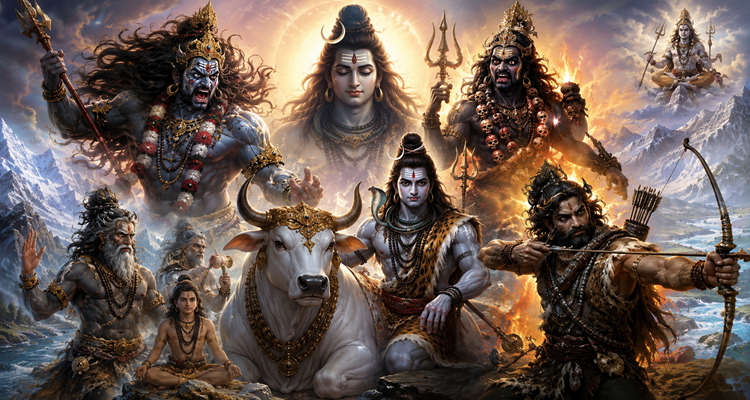
Hindu mythology is filled with stories of divine incarnations, cosmic battles, and symbolic transformations. Most people are familiar with the Dashavatar, the ten incarnations of Lord Vishnu that are believed to guide humanity through different cosmic ages. Far fewer, however, know about another fascinating tradition woven through Shaivite lore: the many avatars of Lord Shiva.
Unlike Vishnu’s incarnations, which often arrive to restore cosmic balance through direct intervention, Shiva’s manifestations are more mysterious, philosophical, and emotionally layered. Some appear as fierce destroyers, others as wandering ascetics, compassionate protectors, teachers, warriors, or even humble seekers testing human devotion.
Together, these forms reveal why Shiva occupies such a unique place in Hindu thought. He is not simply a god of destruction, as he is often described in popular culture. Shiva represents transformation itself, anger that leads to justice, detachment that leads to wisdom, and destruction that clears the path for renewal.
Across ancient traditions, scriptures, and oral storytelling, 19 major avatars of Shiva are commonly referenced. Each carries a symbolic meaning that extends far beyond mythology and continues to resonate in spiritual and cultural discussions today.
Why Shiva’s Avatars Are Different From Other Divine Incarnations
In Hindu philosophy, avatars are not merely physical appearances. They are manifestations of cosmic purpose. Vishnu’s incarnations are generally structured around preserving order and defeating evil in clearly defined eras. Shiva’s forms, however, often emerge from emotional or spiritual necessity.
Some appear during moments of cosmic imbalance. Others arise to test ego, challenge arrogance, guide devotees, or reveal hidden truths.
This difference is important because Shiva’s avatars frequently embody contradictions:
- Fierce yet compassionate
- Detached yet deeply emotional
- Destructive yet protective
- Silent yet transformative
These paradoxes are central to Shaivite philosophy. Shiva is not portrayed as a distant deity removed from human complexity. Instead, his forms often mirror the struggles of anger, grief, devotion, pride, sacrifice, and redemption.
The Fierce Forms: Avatars Born From Cosmic Rage
Among Shiva’s many manifestations, some are remembered for their terrifying intensity. These forms are not expressions of uncontrolled violence but symbols of justice unleashed when cosmic boundaries are crossed.
Veerabhadra: The Warrior Born From Grief
One of Shiva’s most powerful forms is Veerabhadra, a fierce warrior manifestation associated with the story of Sati and King Daksha.
According to mythology, Daksha insulted Shiva publicly during a grand sacrificial ritual. Unable to bear the humiliation directed toward her husband, Sati immolated herself in grief. Shiva’s sorrow transformed into unbearable rage, and from that fury emerged Veerabhadra, a destructive force sent to dismantle Daksha’s arrogance.
Veerabhadra symbolizes what happens when ego, disrespect, and pride destroy sacred relationships. In many traditions, he is not merely viewed as a destroyer but as divine justice personified.
Bhairava: The Destroyer of Ego
Another feared and revered form is Bhairava, often depicted carrying intense spiritual energy. Bhairava appears in stories connected to the dangers of arrogance among gods themselves.
This avatar is associated with the removal of false pride and illusion. Temples dedicated to Bhairava across India often portray him as a guardian figure, especially in sacred cities connected with liberation and spiritual awakening.
Philosophically, Bhairava represents the destruction of ego, the idea that spiritual progress requires humility before truth.
Sharabha: The Force That Calms Destruction
One lesser-known but fascinating form is Sharabha, a powerful being described in some traditions as part-animal and part-divine.
Sharabha appears in narratives involving Narasimha, the fierce incarnation of Vishnu. After Narasimha’s rage threatened to spiral beyond control following the defeat of Hiranyakashipu, Shiva manifested as Sharabha to pacify the cosmic fury.
The symbolism here is profound: even righteous anger must eventually yield to balance.
Shiva as the Protector of Devotees
Not all Shiva avatars are terrifying. Many stories emphasize compassion, guidance, and the rewarding of unwavering devotion.
Nandi: More Than Shiva’s Sacred Bull
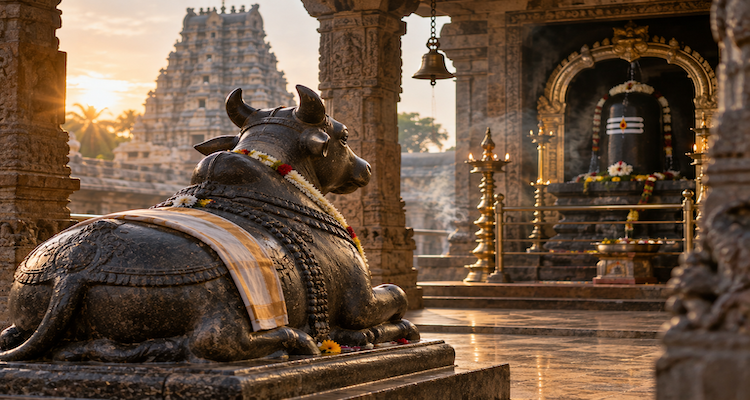
Nandi is widely recognized as Shiva’s mount and gatekeeper, but in many traditions, he is also viewed as an incarnation or divine extension of Shiva’s energy.
Nandi symbolizes patience, loyalty, and disciplined devotion. Positioned outside Shiva temples, he is always shown facing the deity, representing constant focus on spiritual truth.
In a deeper sense, Nandi teaches stillness in an age obsessed with distraction.
Pippalada: The Protector of Children
The Pippalada avatar is associated with astrological suffering, particularly the influence of Shani (Saturn). According to traditional stories, this manifestation emerged after deep personal suffering connected to separation and hardship.
Pippalada’s role eventually became linked to protecting children from harsh planetary influences during early life.
This avatar reflects a recurring theme in Shaivite mythology: pain transformed into compassion.
Grihapati: The Sacred Child
Grihapati is another gentle form connected with devotion and family life. This avatar represents divine grace entering ordinary domestic existence.
Unlike Shiva’s ascetic image in the Himalayas, Grihapati highlights the idea that spirituality is not limited to caves, forests, or renunciation. The sacred can exist inside the household as well.
For many devotees, this form bridges worldly responsibilities and spiritual aspiration.
Shiva’s Avatars as Spiritual Teachers
Several manifestations of Shiva appear not to fight demons but to challenge ignorance.
Yatinath: Testing the Meaning of Hospitality
In one traditional narrative, Shiva appears as Yatinath to test the sincerity and compassion of humble devotees living in difficult circumstances.
The lesson embedded in this story centers on selflessness and duty toward guests, an ancient principle deeply rooted in Indian culture.
The deeper message remains relevant even today: spirituality is meaningless without compassion in action.
Avadhuta: The Form Beyond Social Identity
The Avadhuta form is associated with detachment from pride, status, and worldly illusion. Shiva appears in this form to humble those intoxicated by power.
The Avadhuta archetype continues to influence spiritual traditions across India, particularly among ascetic and non-dual philosophical schools. It represents freedom from ego and social conditioning.
In modern psychological terms, the Avadhuta challenges identity built entirely around achievement or authority.
Brahmachari: The Tester of Faith
In this manifestation, Shiva appears as a wandering ascetic to test the devotion of Parvati during her intense penance.
Rather than revealing himself immediately, he questions her commitment and even criticizes Shiva himself to measure the depth of her conviction.
This story explores an enduring spiritual principle: true devotion must survive doubt, criticism, and emotional challenge.
Warrior and Guardian Forms in Epic Traditions
Shiva also appears in several forms connected to the Mahabharata and cosmic warfare.
Kirata: The Hunter Who Tested Arjuna
One of the most celebrated Shaivite episodes involves Shiva appearing as Kirata, a tribal hunter, before the warrior Arjuna.
The encounter begins with conflict but ends with revelation. Only after proving his courage and humility does Arjuna receive the divine Pashupatastra weapon.
The symbolism is striking. Divine wisdom often arrives disguised, and spiritual worth cannot be measured by status or appearance.
Ashwatthama and the Shadow of Immortality
Some traditions associate Ashwatthama, the immortal warrior of the Mahabharata, with Shiva’s energy.
Ashwatthama’s story is darker than most divine narratives. He represents uncontrolled rage, revenge, and the burden of immortality without peace.
This connection reflects a recurring truth within Shaivite mythology: power without wisdom becomes suffering.
Hanuman and Shiva’s Expansive Influence
In many traditions, Hanuman is considered an aspect or partial incarnation of Shiva.
Hanuman combines devotion, humility, courage, and immense strength. Unlike many warriors in mythology, his power is always guided by surrender and service rather than ego.
This may explain why Hanuman remains one of the most universally loved figures in Hindu spirituality. He represents disciplined strength in the service of righteousness.
The Symbolic Meaning Behind Shiva’s Many Forms
At first glance, the 19 avatars may appear like disconnected mythological stories. But taken together, they form a larger philosophical framework.
Each form represents a human or cosmic condition:
| Avatar Theme | Symbolic Meaning |
| Veerabhadra | Justice born from grief |
| Bhairava | Destruction of ego |
| Nandi | Devotion and patience |
| Pippalada | Compassion through suffering |
| Kirata | Humility before wisdom |
| Avadhuta | Freedom from identity |
| Hanuman | Strength guided by devotion |
Rather than presenting morality in black-and-white terms, Shiva’s avatars embrace complexity. Anger is not always evil. Destruction is not always negative. Silence is not weakness. Renunciation is not escape.
This layered symbolism helps explain why Shiva remains one of the most psychologically compelling figures in world mythology.
Why These Stories Still Matter Today
Ancient myths survive because they continue speaking to modern anxieties and aspirations.
The avatars of Shiva resonate today because they explore timeless themes:
- Ego and humility
- Anger and restraint
- Faith and doubt
- Power and responsibility
- Devotion and sacrifice
- Transformation through suffering
In an era shaped by constant distraction, status competition, and emotional burnout, Shiva’s forms offer a radically different perspective. Many of these stories suggest that transformation begins not through conquest of the world, but through mastery of the self.
Even readers who approach these tales symbolically rather than religiously often find philosophical value in them.
The Cultural Legacy of Shiva’s Avatars
The influence of Shiva’s incarnations extends far beyond scripture.
These stories continue to shape:
- Temple traditions
- Classical dance and theater
- Regional folklore
- Meditation practices
- Spiritual literature
- Visual art and sculpture
- Popular television and cinema
From the fierce iconography of Bhairava to the serene devotion associated with Nandi and Hanuman, Shiva’s avatars remain deeply woven into India’s cultural imagination.
They also reveal how mythology evolves across regions and traditions. Different texts interpret these forms differently, adding richness rather than contradiction to the broader spiritual narrative.
Conclusion
The 19 avatars of Shiva are far more than mythological episodes. They form a vast symbolic map of human emotion, spiritual evolution, and cosmic balance.
Some avatars emerge to punish arrogance. Others protect innocence, test devotion, or restore humility. Together, they portray Shiva not as a distant supernatural figure, but as a force deeply connected to transformation itself.
That may be why these stories continue to endure across generations. They are not only about gods and cosmic events; they are reflections of inner struggles that remain profoundly human.
In every fierce warrior, wandering ascetic, devoted guardian, and silent teacher, Shiva’s avatars ask the same timeless question: what must be destroyed within us so that something wiser can emerge?
This content is published for informational or entertainment purposes. Facts, opinions, or references may evolve over time, and readers are encouraged to verify details from reliable sources.