









Why People Are Becoming More Selective About What They Let Into Their Homes
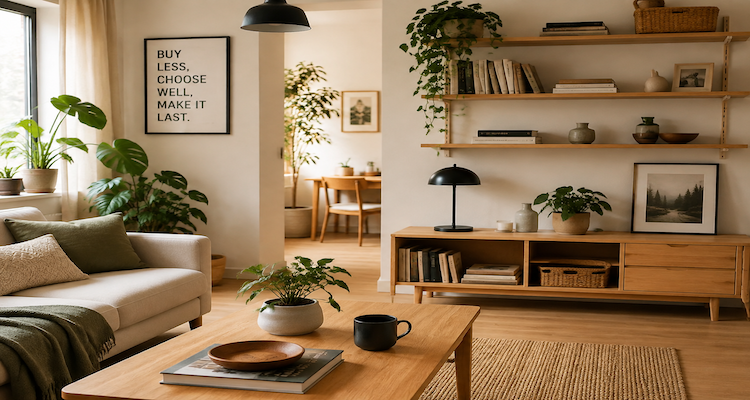
For generations, a home was often measured by what it contained: furniture, decorations, collections, appliances, and objects collected over years of living. But a quieter shift is changing the way many people think about their private spaces. Increasingly, people are asking a different question before bringing something home: Does this add value to my life, or does it simply take up space?
This change is not only about minimalism or having fewer possessions. It reflects a broader reconsideration of how physical environments influence emotions, routines, identity, sustainability choices, and even digital habits. Homes are becoming places that people actively curate rather than passively fill.
From concerns about clutter and mental fatigue to growing awareness of environmental impact and product quality, consumers are becoming more deliberate about purchases. The objects inside a home are increasingly seen as part of a personal ecosystem one that affects comfort, productivity, health, and well-being.
Key Takeaways
- People are increasingly evaluating possessions based on usefulness, meaning, and long-term value.
- Research suggests cluttered environments can influence stress, attention, and daily decision-making.
- Sustainability concerns are encouraging consumers to buy fewer but more durable products.
- Digital shopping has increased choice, making intentional purchasing more important.
- Homes are becoming expressions of personal priorities rather than collections of possessions.
The Shift From Owning More to Choosing Better
The idea of carefully selecting what enters a home has existed in different forms for decades, from minimalist design movements to traditional practices of avoiding unnecessary consumption. However, recent social and economic changes have accelerated this mindset.
The growth of online shopping created unprecedented convenience but also made impulse purchasing easier. With millions of products available instantly, many consumers now face a different challenge: not finding things to buy, but deciding what deserves a place in their lives.
This has contributed to renewed interest in concepts such as intentional living, decluttering, repair culture, and conscious consumption. The goal is not necessarily owning the fewest items possible; rather, it is reducing the number of possessions that create inconvenience without providing meaningful benefit.
Psychologist and researchers studying environmental psychology have long examined how surroundings affect human behavior. A person’s environment can influence attention, mood, and feelings of control. While individual responses vary, the relationship between physical spaces and psychological experiences has become an important area of study.
Clutter Is Becoming More Than a Design Problem
For many people, clutter is no longer viewed simply as an aesthetic issue. It has become connected with feelings of mental overload.
A widely cited study published in the Personality and Social Psychology Bulletin examined the relationship between household environments and stress-related responses among women. Researchers found associations between descriptions of home environments that reflected clutter and indicators related to stress and mood.
The research did not conclude that all clutter is harmful or that minimal homes automatically create happiness. Instead, it highlighted how personal environments can interact with psychological experiences.
This distinction matters because a meaningful home does not have to look empty. A collection of books, photographs, artwork, or family objects may provide comfort and identity. The issue is often not the number of possessions but whether those possessions support or interfere with daily life.
Health, Materials, and Indoor Environments Influence Buying Decisions
Another reason people are becoming more selective is increased awareness of what products are made from and how they affect indoor environments.
Furniture, cleaning products, paints, textiles, and household materials can contribute to indoor air quality depending on their composition and use. Organizations such as the U.S. Environmental Protection Agency have highlighted that indoor environments can contain pollutants from multiple sources, including building materials and household products.
As consumers become more informed, some are paying closer attention to:
- Material transparency
- Product durability
- Repairability
- Chemical emissions
- Manufacturing practices
- Long-term maintenance needs
This does not mean every consumer researches every purchase in detail. Cost, convenience, and availability remain major factors. But expectations around product information and responsible manufacturing have changed significantly.
Sustainability Is Changing the Meaning of a “Good Purchase”
Environmental concerns have also influenced how people think about household consumption.
A cheap product that quickly breaks may no longer feel like a smart purchase for consumers who consider waste, replacement costs, and environmental impact. This has helped increase interest in second-hand markets, refurbished goods, durable furniture, and products designed for longer use.
The shift does not eliminate consumption. People still buy homes, furniture, technology, and everyday items. The difference is that many consumers are moving from quantity-based purchasing toward value-based purchasing.
A well-made chair that lasts years may be viewed differently from a cheaper alternative that needs frequent replacement. A kitchen appliance that can be repaired may appeal more than one designed primarily for replacement.
The growing popularity of resale platforms and repair communities reflects this broader change in attitudes toward ownership.
Homes Are Becoming Expressions of Identity
A home has always communicated something about the people living inside it. But today, personal spaces are increasingly treated as extensions of individual values.
Objects are often selected because they represent:
- Personal memories
- Cultural connections
- Creative interests
- Lifestyle choices
- Environmental values
- Professional needs
This explains why selective ownership does not necessarily mean a completely empty home. Many people are not rejecting possessions; they are rejecting possessions without purpose.
A carefully chosen collection can carry more emotional value than a large number of forgotten purchases.
Technology Has Created a New Type of Home Decision
Technology has changed the way people interact with their homes. Smart devices, connected appliances, streaming equipment, and digital assistants have introduced another layer of decision-making.
Consumers are now considering questions beyond appearance and price:
- Does this device protect my privacy?
- Will software support continue?
- Does it create convenience or another source of complexity?
- Does it reduce effort or add another maintenance task?
The rise of connected homes means household choices increasingly involve both physical and digital considerations.
A device that occupies a small physical space may still create a significant digital footprint through data collection, subscriptions, updates, and account management.
The Economic Reality Behind More Careful Choices
Selective purchasing is also influenced by financial pressures.
Higher living costs, housing challenges, and economic uncertainty have encouraged many households to reconsider spending habits. Buying fewer unnecessary items can become both a lifestyle preference and a practical financial strategy.
However, economic pressure does not affect everyone equally. Some consumers may choose premium durable products, while others prioritize affordability and immediate needs.
The trend toward intentional purchasing exists alongside another reality: many people still depend on inexpensive products because of budget limitations.
Understanding this difference prevents oversimplifying the movement as simply a lifestyle choice. For some, selective buying is about values. For others, it is about necessity.
What This Means for the Future of Homes
The changing relationship between people and possessions suggests that homes may increasingly become spaces designed around function, comfort, and personal meaning.
Future household trends may include:
- Greater demand for durable and repairable products
- More interest in second-hand and circular consumption models
- Increased attention to indoor environmental quality
- More thoughtful integration of technology
- Greater emphasis on flexible, multifunctional spaces
The central question may no longer be “What can I add to my home?” but “What deserves to remain in my home?”
Conclusion
The growing selectiveness around household possessions reflects a broader cultural change. People are not simply buying fewer things; many are reconsidering the relationship between objects, identity, environment, and well-being.
A home is becoming less about displaying abundance and more about creating a space that supports the life someone wants to live.
The most meaningful shift may be that ownership itself is being redefined. Instead of measuring success by how much a person can collect, many are beginning to measure value by how thoughtfully they choose what stays.
This content is published for informational or entertainment purposes. Facts, opinions, or references may evolve over time, and readers are encouraged to verify details from reliable sources.