








Why Biological Age Is Becoming a New Health Obsession
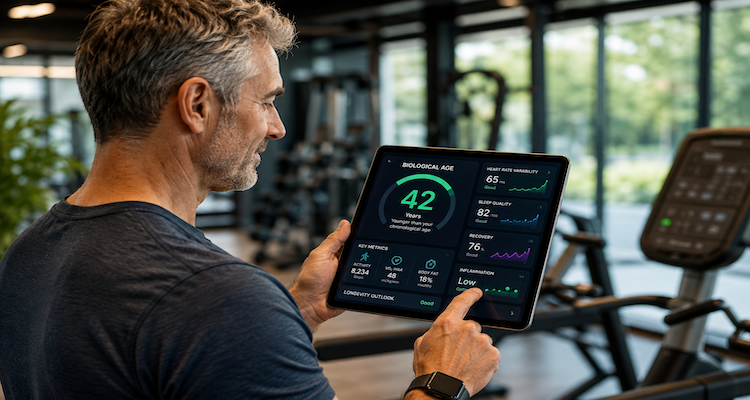
A growing number of people who appear healthy on the surface are discovering something unsettling: their biological age may not match the age on their birth certificate.
Someone in their early forties who exercises regularly, maintains a balanced diet, and has no obvious medical conditions may learn that their body shows signs typically associated with someone much older. Meanwhile, another person with less-than-perfect habits may discover their biological age is younger than expected. The possibility that health can be measured in a deeper, more personalized way is changing how many people think about aging.
This shift is creating a new conversation around wellness. Instead of asking, “How old am I?” people are increasingly asking, “How old is my body?” The distinction may sound subtle, but it reflects a broader transformation in how health is understood, tracked, and managed.
The Difference Between Chronological and Biological Age
Chronological age is straightforward. It is the number of years that have passed since birth.
Biological age attempts to estimate how well the body is functioning compared with typical aging patterns. Researchers explore various indicators such as cellular health, metabolism, inflammation, cardiovascular function, sleep quality, and other physiological markers to better understand the aging process.
While there is no single universally accepted measurement of biological age, growing interest in longevity science has brought the concept into mainstream discussion. Advances in health tracking, genetic testing, wearable technology, and personalized medicine have made people more aware of the possibility that aging may not occur at the same rate for everyone.
The result is a powerful new question: if aging is influenced by lifestyle and environment, can it also be slowed?
Why Healthy People Are Paying Attention
What makes the current trend notable is that concern about biological age is not limited to people facing health problems.
Many of the individuals seeking biological age assessments are already health-conscious. They exercise, monitor nutrition, prioritize sleep, and invest in preventive care. For them, biological age represents another layer of insight rather than a response to illness.
Part of the appeal lies in personalization. Traditional health indicators often focus on diagnosing disease or identifying risk factors. Biological age, by contrast, offers a broader narrative about overall health and resilience.
People increasingly want to understand not only whether they are healthy today but also how their current habits may influence their future quality of life.
This reflects a cultural shift from disease treatment toward health optimization.
The Rise of the Longevity Mindset
Interest in biological age is closely connected to the growing longevity movement.
For decades, health discussions largely focused on lifespan, how long people live. Today, many conversations center on healthspan, the number of years spent living in good physical and mental condition.
This distinction has become increasingly important as populations age and healthcare systems confront rising rates of chronic disease. Many individuals are less interested in simply adding years to life and more interested in maintaining energy, mobility, cognitive function, and independence for as long as possible.
Companies in health technology, wellness, nutrition, and preventive medicine have responded by introducing products and services designed to help people understand and potentially influence aging-related factors. Wearable devices, advanced health screenings, personalized nutrition programs, and sleep optimization tools all tap into this broader desire to age well rather than merely age longer.
A New Form of Health Tracking
One of the most significant developments behind the biological age trend is the expansion of personal health data.
People now routinely track steps, heart rate, sleep patterns, stress levels, and exercise performance. What began as simple fitness monitoring has evolved into a more comprehensive effort to quantify overall wellbeing.
Biological age fits naturally into this ecosystem.
Rather than viewing health as a series of isolated measurements, consumers increasingly seek a single metric that summarizes how their body is performing. Biological age offers an appealing narrative because it transforms complex physiological information into something intuitive and easy to understand.
However, experts often caution that biological age estimates should be interpreted carefully. Different methods may produce different results, and no single number can fully capture an individual’s health status.
The value often lies less in the exact number and more in the broader insights it may encourage.
The Hidden Insight: Health Is Becoming Predictive
Perhaps the most important aspect of the biological age trend is what it reveals about the future of healthcare.
Historically, medicine has often been reactive. People sought medical attention after symptoms appeared.
Today, technology and health science are gradually moving toward prediction and prevention. Biological age represents part of this transition.
Instead of waiting for disease to develop, people want signals that help them understand long-term trajectories. They want early indications of whether current habits are supporting or undermining future health.
This predictive mindset is reshaping consumer behavior. Wellness is no longer viewed solely as a response to problems. It is increasingly seen as an ongoing process of managing future outcomes.
The popularity of biological age reflects a deeper psychological shift: people are seeking greater control over uncertainty.
The Emotional Appeal of Biological Age
Beyond science and technology, biological age resonates because it addresses a universal concern.
Aging is one of the few experiences shared by everyone. Yet people experience it differently.
The idea that daily choices might influence how the body ages offers a sense of agency. Whether through exercise, nutrition, stress management, social connection, or sleep quality, individuals see opportunities to actively participate in shaping their future health.
At the same time, biological age can create anxiety if interpreted too rigidly. A higher-than-expected result may feel discouraging, while a younger biological age could lead to overconfidence.
For this reason, many health professionals emphasize balance. Biological age can be a useful tool for reflection and motivation, but it should not define a person’s health identity.
What Happens Next?
Interest in biological age is unlikely to disappear anytime soon.
As longevity research advances and health technologies become more sophisticated, consumers will likely gain access to increasingly personalized insights about aging. Future tools may provide more precise ways to understand how lifestyle, environment, and genetics interact over time.
Yet the most enduring lesson may be surprisingly simple.
The growing fascination with biological age is not really about numbers. It reflects a broader desire to live better, stay healthier for longer, and make informed choices before problems arise.
In that sense, biological age has become more than a health metric. It has evolved into a symbol of a larger cultural shift, one that prioritizes prevention, personalization, and long-term wellbeing over short-term fixes.
For many healthy people, that is precisely why it matters.
This article is provided for general informational and educational purposes. It is not medical advice, diagnosis, or a substitute for consultation with a qualified healthcare professional. Health evidence can change, and individual circumstances vary.