










The Hidden Health Cost of Micro-Stress and Why It’s Getting Harder to Escape
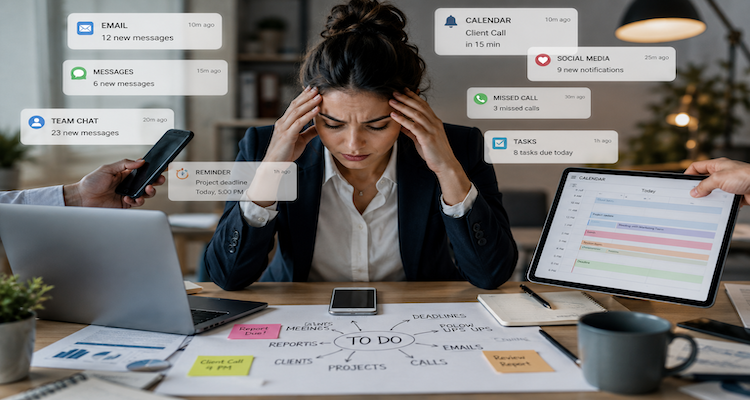
A major health challenge isn’t always dramatic. It doesn’t arrive as a crisis, a medical emergency, or a life-changing diagnosis. Instead, it often appears as dozens of tiny pressures scattered throughout an ordinary day: a work notification during breakfast, a delayed response from a colleague, an overflowing inbox, a forgotten errand, a crowded commute, or the nagging feeling that there is always something else to do.
Researchers and health professionals increasingly refer to these small but persistent pressures as “micro-stress.” Individually, they may seem insignificant. Collectively, they can create a constant state of low-level tension that gradually affects mental and physical well-being.
What makes micro-stress particularly important is that many people do not recognize it as stress at all. They simply experience fatigue, irritability, difficulty concentrating, disrupted sleep, or a sense of being mentally overloaded without understanding the underlying cause. As work, technology, and daily life become more interconnected, these subtle stressors are becoming an increasingly common feature of modern living.
Why Small Stressors Can Have a Big Impact
Traditional discussions about stress often focus on major life events such as job loss, illness, financial hardship, or personal crises. Those events certainly matter, but they are not the only source of strain on the human body.
Micro-stress operates differently. It accumulates.
A single interruption during the day may be harmless. Twenty interruptions spread across work meetings, emails, messaging apps, social media alerts, and personal obligations can create a continuous cycle of mental switching. The brain rarely gets the opportunity to fully relax before the next demand appears.
This constant activation can contribute to feelings of exhaustion even when someone has not faced any major challenge. Many people end the day wondering why they feel depleted despite accomplishing relatively routine tasks.
The answer may lie in the sheer volume of small demands competing for attention.
The Attention Economy Is Fueling the Trend
One reason interest in micro-stress is growing is the way modern technology has transformed expectations around availability and responsiveness.
Work no longer exists only within office walls. Messages arrive after hours. Group chats continue throughout the evening. Notifications create an ongoing stream of requests for attention.
The result is a subtle but significant shift: many people are psychologically “on call” even when they are technically off duty.
This does not necessarily mean they are working longer hours. Rather, their attention is being fragmented more frequently. The human brain evolved to focus on immediate tasks and recover afterward. Today, recovery periods are increasingly interrupted by digital prompts that keep individuals mentally engaged.
The challenge is not technology itself. Digital tools provide enormous benefits. The issue is the growing difficulty of creating uninterrupted periods of rest, focus, and reflection.
The Workplace Transformation Behind Micro-Stress
Micro-stress has become particularly relevant in workplaces undergoing rapid change.
Hybrid work, remote collaboration, global teams, and digital communication platforms have increased flexibility. At the same time, they have created new forms of pressure that often go unnoticed.
Employees may feel obligated to respond quickly to messages. Managers may struggle with an endless flow of information. Teams working across multiple platforms can experience communication overload without realizing it.
Interestingly, some workplace experts suggest that the most draining stressors are not always tied to heavy workloads. Instead, uncertainty, constant interruptions, and emotional demands from professional relationships can consume significant mental energy.
A five-minute conversation that creates confusion or tension may linger in someone’s thoughts for hours. These invisible cognitive burdens often contribute to exhaustion more than people expect.
The Health Effects May Be Gradual but Meaningful
Micro-stress is unlikely to cause immediate health problems on its own. The concern lies in its cumulative effect over months and years.
Persistent low-level stress can influence sleep quality, emotional resilience, concentration, and overall life satisfaction. When people remain in a near-constant state of alertness, recovery becomes more difficult.
Poor sleep can lead to reduced energy. Reduced energy can affect exercise habits. Lower physical activity can influence mood and overall health. What begins as a seemingly minor stressor can become part of a larger chain of consequences.
Importantly, individuals respond differently. Some people are highly resilient to frequent interruptions, while others experience significant mental fatigue from the same environment. Factors such as personality, workload, social support, and lifestyle habits all play a role.
The Overlooked Social Side of Micro-Stress
One of the most underreported aspects of micro-stress is its social dimension.
Many stressors do not originate from tasks themselves but from relationships. Expectations from coworkers, family members, friends, and online communities can create a continuous stream of emotional obligations.
A delayed reply may trigger worry. An unresolved disagreement may occupy mental space. The pressure to maintain multiple digital relationships simultaneously can quietly consume attention.
Social media adds another layer. Even casual exposure to updates from others can create subtle comparisons, feelings of inadequacy, or a sense of missing out. None of these experiences may seem significant in isolation, yet their cumulative effect can be surprisingly powerful.
This helps explain why some people feel mentally exhausted even after a day that appears relatively uneventful.
A Larger Cultural Shift Is Emerging
The rise of micro-stress reveals something important about contemporary culture.
For decades, productivity was often measured by output and efficiency. Today, many people are beginning to recognize that attention itself is a limited resource.
The challenge is no longer simply getting work done. It is protecting the mental capacity required to think clearly, make decisions, and recover from constant stimulation.
This shift is influencing workplace policies, wellness programs, and conversations about digital well-being. Organizations are increasingly exploring practices such as meeting-free periods, notification management, flexible work boundaries, and mental health support.
At a personal level, people are becoming more aware that stress management is not only about responding to major crises. It is also about reducing the accumulation of everyday pressures.
The Most Important Insight: Stress Is Becoming More Invisible
Perhaps the most significant insight behind the micro-stress conversation is that many health challenges now originate from factors that are difficult to see.
People often assume stress should feel intense and obvious. Micro-stress challenges that assumption.
A person can function normally, meet deadlines, maintain relationships, and appear successful while simultaneously carrying hundreds of small psychological burdens that slowly drain energy and resilience.
Recognizing these hidden pressures may be the first step toward addressing them.
Rather than asking, “What major stress is affecting me?” a more useful question may be, “What small demands are quietly consuming my attention every day?”
The answer can reveal patterns that are far more influential than they initially appear.
Looking Ahead
As digital connectivity continues to expand and work becomes increasingly integrated into daily life, micro-stress is likely to remain an important topic in health and wellness discussions.
The future conversation around stress may focus less on isolated events and more on cumulative experiences. Understanding how small pressures shape long-term well-being could help individuals, employers, and communities create healthier environments.
The challenge is not eliminating every source of stress. That is neither realistic nor desirable. The goal is recognizing when countless small pressures begin to function as one large burden.
Because sometimes the greatest impact on health comes not from a single overwhelming event, but from the weight of a thousand tiny ones.
This article is provided for general informational and educational purposes. It is not medical advice, diagnosis, or a substitute for consultation with a qualified healthcare professional. Health evidence can change, and individual circumstances vary.