









Why Your Home Might Be Undermining Your Health Without You Realizing It
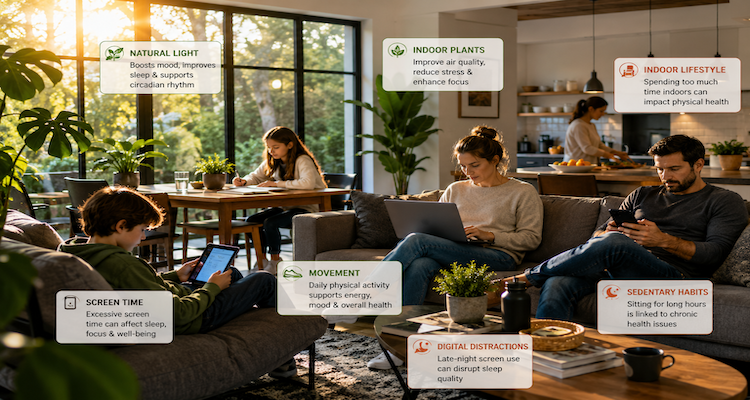
For decades, the ideal home has been defined by comfort, convenience, and efficiency. Homes have become quieter, better insulated, smarter, and more connected than ever before. Yet a growing question is emerging among health experts, architects, and wellness advocates: what if some of the very features designed to improve modern living are quietly working against our well-being?
Many people think of health risks as something that exists outside the home, traffic pollution, workplace stress, crowded public spaces, or unhealthy food choices. But the average person spends a significant portion of their life indoors, and much of that time is spent at home. As a result, the design, environment, and habits associated with modern living spaces may have a larger impact on health than many realize.
The issue is not that modern homes are inherently unhealthy. Rather, the way homes have evolved, and how people use them, has introduced a collection of subtle lifestyle shifts that can accumulate over time.
The Hidden Cost of Constant Comfort
Modern homes are remarkably good at maintaining stable indoor temperatures. Air conditioning, central heating, and advanced insulation help create year-round comfort.
However, some researchers and health professionals suggest that constantly controlled environments may reduce natural exposure to temperature variations that once encouraged physical adaptation. Historically, people experienced seasonal and daily changes more directly. Today, many individuals move between climate-controlled homes, offices, cars, and shopping centers with little environmental variation.
While comfort itself is not a problem, excessive dependence on controlled environments can contribute to increasingly sedentary lifestyles. People may spend less time outdoors, engage in fewer physical activities, and become disconnected from natural rhythms that once shaped daily routines.
Indoor Air Quality Isn’t Always Better
Many people assume that being indoors automatically means cleaner air. The reality is more complicated.
Modern homes often prioritize energy efficiency by reducing airflow between indoor and outdoor environments. While this can lower energy costs, it may also limit natural ventilation if not properly managed.
Indoor air can contain pollutants from cleaning products, synthetic furnishings, paints, building materials, cooking activities, and even scented household products. In well-sealed homes, these substances may linger longer than expected.
The growing popularity of air purifiers and smart air-quality monitors reflects a broader awareness that indoor environments deserve as much attention as outdoor pollution. What people cannot see or smell can still influence comfort, sleep quality, and overall well-being.
The Rise of the Sitting Home
Perhaps one of the most significant changes in modern housing is not architectural, it is behavioral.
Homes have increasingly become centers for work, entertainment, shopping, education, and social interaction. A person can attend meetings, stream movies, order groceries, communicate with friends, and manage finances without leaving the living room.
Remote work has accelerated this trend. The same space that once served primarily as a place for rest now functions as an office, classroom, gym, and entertainment hub.
The result is often fewer daily movements. Walking to public transportation, climbing stairs at workplaces, or simply moving between locations once provided natural physical activity. Many of those small movements have disappeared from daily life.
One overlooked insight is that health is influenced not only by exercise sessions but also by routine movement throughout the day. A modern home can unintentionally remove many opportunities for that movement.
Screens Have Become Part of the Architecture
The modern home is increasingly built around screens.
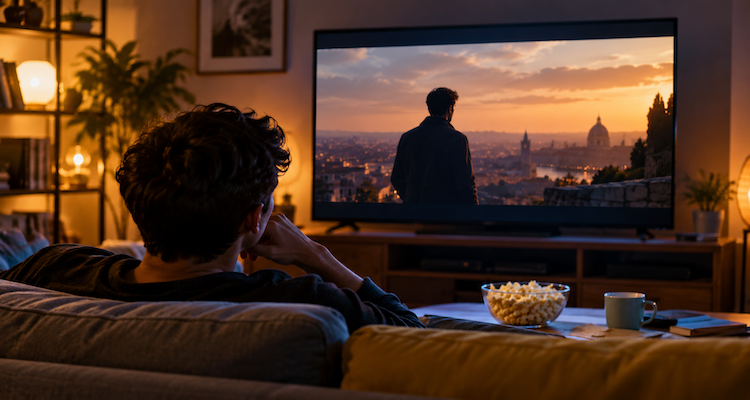
Televisions dominate living rooms. Smartphones accompany people into bedrooms. Tablets and laptops occupy kitchens, dining tables, and home offices. Smart displays are becoming common fixtures in family spaces.
This shift has transformed how people spend their leisure time. Instead of activities that involve movement, face-to-face interaction, or outdoor experiences, much of daily attention is directed toward digital environments.
The health discussion is not simply about screen time itself. It is also about what screens replace. Time spent scrolling late at night may displace sleep. Hours spent streaming content may replace physical activity. Constant notifications may interrupt periods of rest and mental recovery.
The home has become a digital ecosystem, and that ecosystem increasingly shapes habits, attention, and emotional well-being.
Natural Light Is More Valuable Than Many Realize
Large windows are common in many contemporary homes, but access to meaningful natural light remains inconsistent.
People who spend most of their day indoors may experience limited exposure to changing daylight patterns. This matters because natural light plays an important role in regulating circadian rhythms, the body’s internal clock that influences sleep, alertness, and energy levels.
Modern lifestyles often compound the issue. Many individuals begin the day by looking at a phone screen and end it the same way, receiving more artificial light than natural sunlight.
The result can be a subtle disconnect between biological rhythms and daily routines. While the effects vary from person to person, awareness of light exposure has become an increasingly important part of conversations about wellness-focused home design.
A Home Designed for Convenience Can Reduce Everyday Resilience
Convenience is one of the defining achievements of modern living.
Voice assistants answer questions instantly. Food arrives at the door. Smart appliances automate routine tasks. Household technology continues to remove friction from daily life.
Yet there is an interesting paradox. The more convenient life becomes, the fewer opportunities people may have to engage in small challenges that once formed part of ordinary living.
Walking to local stores, carrying groceries, performing household tasks manually, and spending time outdoors all contributed to daily activity and engagement. Modern convenience often eliminates those experiences.
This does not mean technology is harmful. Rather, it highlights the importance of balancing convenience with intentional activity.
The Emerging Wellness Home Movement
In response to these concerns, a new approach to residential design is gaining attention.
Architects, builders, and homeowners are increasingly focusing on features that support well-being rather than convenience alone. Interest is growing in natural ventilation, better daylight access, indoor plants, low-emission materials, walkable neighborhoods, and dedicated spaces for movement and relaxation.
The shift reflects a broader cultural change. People are beginning to view homes not merely as shelters or investments, but as environments that actively influence physical and mental health.
This trend suggests that future homes may be evaluated not only by square footage, energy efficiency, or smart features, but also by how effectively they support healthy behaviors.
Rethinking What a Healthy Home Really Means
The biggest health challenge posed by modern homes may not be any single feature. It is the cumulative effect of dozens of small changes that encourage people to sit more, move less, spend more time indoors, and remain constantly connected.
Most modern homes are safer, more comfortable, and more efficient than those of previous generations. Yet comfort alone does not automatically create health.
A healthy home is increasingly being understood as one that supports natural movement, quality sleep, fresh air, daylight exposure, and moments of genuine disconnection from digital demands. As homes continue to evolve, the question may no longer be how smart or efficient a house can become, but how well it helps the people inside thrive.
This article is provided for general informational and educational purposes. It is not medical advice, diagnosis, or a substitute for consultation with a qualified healthcare professional. Health evidence can change, and individual circumstances vary.