








When Scientific Discovery Outpaces Human Understanding
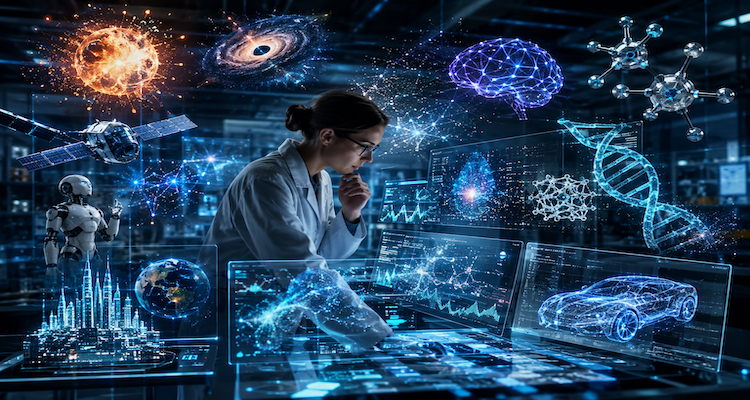
A curious gap is opening between what humanity can discover and what humanity can truly understand.
For most of history, scientific progress moved at a pace that allowed societies, institutions, and individuals to gradually absorb new knowledge. A breakthrough would emerge, experts would debate its meaning, educators would translate it into learning, and eventually the public would develop a shared understanding of its implications.
That rhythm is changing.
Today, discoveries in fields such as artificial intelligence, biotechnology, quantum computing, neuroscience, and materials science are arriving faster than many people, including specialists—can fully interpret. The challenge is no longer simply producing knowledge. It is making sense of an ever-growing flood of knowledge before the next wave arrives.
The result is a new scientific reality: humanity’s capacity to generate discoveries may be accelerating faster than its capacity to understand them.
The Age of Accelerated Discovery
Scientific advancement has always depended on tools. Telescopes expanded astronomy. Microscopes transformed biology. Computers revolutionized nearly every research discipline.
Now researchers are increasingly using AI systems, automated laboratories, advanced simulations, and massive datasets to identify patterns and generate insights at unprecedented speed.
In pharmaceutical research, machine-learning systems can help identify promising drug candidates in a fraction of the time traditional methods often require. In genetics, researchers can analyze enormous amounts of biological information that would have been impossible to process manually. In astronomy, automated systems sift through vast streams of observational data, detecting phenomena that human observers might never notice.
The outcome is not merely faster science. It is a different scale of science.
Researchers are finding themselves in situations where systems can identify correlations, possibilities, or predictions before humans fully understand the mechanisms behind them.
That distinction matters.
A discovery can be useful long before it is completely understood.
Knowing That Something Works Is Not the Same as Knowing Why
One of the most significant shifts in modern science is the growing separation between prediction and explanation.
Traditionally, scientific progress focused heavily on understanding causes. Scientists wanted to know not only what would happen but why it would happen.
Today, advanced computational systems can sometimes predict outcomes with remarkable accuracy while offering limited explanations for how those predictions were reached.
Artificial intelligence provides perhaps the clearest example.
Many powerful AI models can generate useful outputs, identify patterns, or make predictions that surprise even their creators. Researchers can measure performance, but understanding every internal decision pathway remains difficult.
This introduces an unusual situation. Society may increasingly rely on technologies that work reliably without fully understanding every aspect of how they work.
That is not entirely new. People have long used technologies without mastering the underlying science. Few drivers understand every detail of an internal combustion engine.
The difference today is that the creators themselves may not always possess complete explanatory clarity.
The Emerging Risk: Interpretation Lag
The most overlooked consequence of rapid discovery may not be technological disruption. It may be interpretation lag.
Interpretation lag occurs when new knowledge spreads faster than society’s ability to evaluate, contextualize, and integrate it.
Scientific findings do not exist in isolation. They influence public policy, healthcare decisions, education systems, business strategies, and cultural beliefs.
When discoveries arrive faster than interpretation, confusion can follow.
This challenge becomes particularly visible in areas such as genetics, nutrition, climate science, and artificial intelligence. New findings often generate headlines before experts have fully debated limitations, uncertainties, or broader implications.
As information moves through media platforms and social networks, complexity is frequently compressed into simplified narratives.
The result is a paradox: people have access to more scientific information than ever before, yet understanding may not always keep pace.
Why This Matters Beyond Science
The effects extend far beyond research laboratories.
Businesses increasingly face decisions involving technologies that evolve faster than regulatory frameworks. Educational institutions must prepare students for industries that may look dramatically different within a few years. Policymakers are asked to make choices involving technologies whose long-term consequences remain uncertain.
Even consumers encounter this challenge.
People now navigate decisions about AI-powered tools, genetic testing services, digital health platforms, and emerging technologies that often arrive before society has developed clear norms around their use.
The question is no longer whether innovation is occurring.
The question is whether our systems for understanding innovation can evolve quickly enough to keep up.
The Hidden Shift From Information Scarcity to Understanding Scarcity
For generations, access to information was the primary challenge.
Libraries, universities, and experts acted as gateways to knowledge because information itself was scarce.
Today, information is abundant.
Understanding is becoming the scarce resource.
This may be one of the defining characteristics of the twenty-first century.
The competitive advantage for individuals, organizations, and societies increasingly lies not in acquiring more information but in interpreting information effectively.
Those who can distinguish signal from noise, context from headlines, and meaningful breakthroughs from temporary excitement gain a significant advantage.
This shift is changing the value of expertise itself.
Experts are no longer simply providers of information. They are becoming translators of complexity.
A Cultural Challenge as Much as a Scientific One
The acceleration of discovery is not just a technological phenomenon. It is a cultural one.
Modern societies often celebrate speed. Faster innovation, faster communication, and faster decision-making are frequently treated as indicators of progress.
Yet understanding often requires the opposite conditions.
It requires reflection, debate, skepticism, and time.
Scientific knowledge becomes most valuable when it can be interpreted, challenged, tested, and integrated into broader human understanding.
Without that process, discoveries risk becoming disconnected from the people they are intended to benefit.
This creates a tension that may define the coming decades: the race between the speed of discovery and the speed of comprehension.
What Happens Next?
The future is unlikely to involve slower scientific progress.
If anything, breakthroughs may arrive even more rapidly as AI systems become more capable and research tools grow more sophisticated.
The more important question is whether society can develop better mechanisms for understanding what it discovers.
That may require new educational models, stronger scientific communication, improved interdisciplinary collaboration, and a greater emphasis on critical thinking.
The most valuable skill of the future may not be generating more knowledge.
It may be making sense of the knowledge we already have.
Scientific discovery has always expanded humanity’s horizons. But as the pace accelerates, a new challenge emerges. Progress is no longer measured solely by what we can uncover. It is increasingly measured by what we can comprehend.
The future may belong not to those who discover the most, but to those who understand what those discoveries truly mean.
This content is published for informational or entertainment purposes. Facts, opinions, or references may evolve over time, and readers are encouraged to verify details from reliable sources.