










The Rise of Digital Friendships: Can Online Relationships Be as Real as Offline Ones?
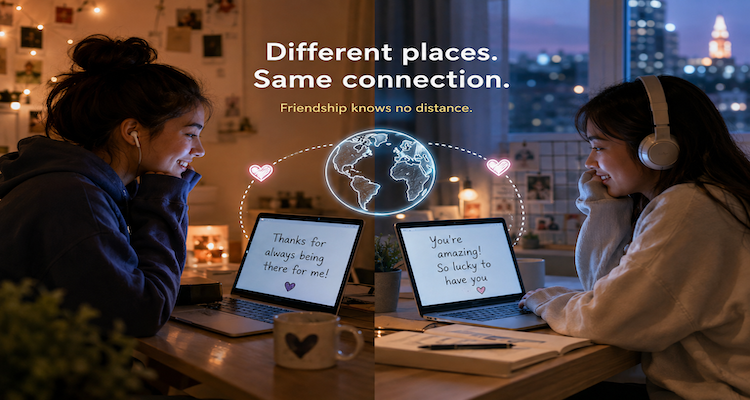
A friendship can now begin with a shared game, a private Discord server, a comment on a video, or a conversation that starts with no expectation of becoming important. For millions of people, the internet is no longer simply a tool for maintaining existing relationships. It is a place where entirely new ones are formed.
That shift challenges an old assumption: that a relationship becomes “real” only when people regularly occupy the same physical space. Research on online communication and social connection suggests the question is more complicated. Digital relationships can provide companionship, emotional support and a sense of belonging, but they also lack some of the information and practical support that physical proximity can provide. The medium matters but so does what people actually do with it.
The more useful question, then, may not be whether online friendships are real or fake. It is what kind of relationship is being built, what needs it fulfills, and where its limitations begin.
Key Takeaways
- Online friendships can involve genuine trust, emotional support and long-term commitment, even when friends rarely or never meet in person.
- Research suggests digital communication does not have a single effect on wellbeing; outcomes depend heavily on how, why and with whom people interact.
- Shared activities, repeated interaction and reciprocal self-disclosure can help transform online contacts into meaningful friendships.
- Digital relationships can be especially valuable when geography, disability, identity or life circumstances limit access to compatible local communities.
- Physical proximity still offers advantages, particularly for practical help, spontaneous interaction and communication beyond words.
- The strongest view of modern friendship may be hybrid rather than competitive: online and offline relationships increasingly overlap.
When Friendship Moves Online, What Actually Changes?
The basic ingredients of friendship have not disappeared. People still look for trust, shared interests, understanding, reciprocity and someone who will listen. Digital technology changes the environment in which those ingredients develop.
A friendship that begins in an online game may grow through hundreds of hours of cooperation and conversation. A person may find a community around a niche interest that does not exist in their town. Friends living on different continents can remain part of each other’s daily lives through messaging, voice chat and video.
Research on adolescents illustrates how established this pattern had already become before the current generation of platforms. Pew Research Center found that 15% of U.S. teens surveyed in 2018 had a close friend they first met online, while 35% said they had a close friend who lived far away. Online groups were also described by many participants as places that introduced them to new people, increased feelings of acceptance or helped them through difficult times.
Earlier Pew research found that 57% of surveyed teens had met a new friend online. The figures should not be treated as a measure of all adults or of today’s global population, but they demonstrate that digitally initiated friendships were already a significant social reality rather than an unusual phenomenon.
The important distinction is between the location of a friendship and the quality of a friendship. An online relationship can be shallow. So can an offline one. A relationship in either setting becomes meaningful through repeated interaction, mutual knowledge, reliability and emotional investment.
Why Online Relationships Can Feel Deeply Real
One reason digital friendships can become emotionally significant is self-disclosure. Relationships generally deepen when people gradually share information, concerns and experiences with one another and receive a responsive reaction.
A systematic review of adolescent research found that self-disclosure was associated with better relationship quality and wellbeing. The review also concluded that online and offline disclosure can both play a role in meeting social needs, although face-to-face disclosure was generally found to be more fulfilling. Importantly, some people such as highly anxious young people in the studies reviewed may find online interaction an easier starting point for disclosure.
That helps explain a feature of digital friendship that can seem counterintuitive: physical distance does not necessarily mean emotional distance.
A person may know an online friend’s fears, ambitions, family problems and everyday frustrations while knowing relatively little about the details visible in a traditional face-to-face friendship. Digital communication can encourage deliberate conversation because interaction often depends on choosing to message, call, play or meet online.
But depth should not be confused with constant contact. A friendship involving thousands of messages can still be fragile if the relationship is one-sided, anonymous in a misleading way, or sustained only by convenience.
The Limits of the Screen
Saying that online friendships can be real does not mean that digital and physical relationships are identical.
Face-to-face interaction provides information that text communication often removes: tone, body language, facial expression, physical surroundings and the spontaneous moments that occur when people simply spend time together. Video calls restore some of those signals, but not all.
Research reflects this distinction. The systematic review of adolescent self-disclosure found that online disclosure could support relationship-building, while overall appearing less fulfilling than face-to-face disclosure in the evidence reviewed.
Another study examining online disclosure found that the effects of digital sharing depended on relationship context. Its findings caution against treating all online communication as equally intimate or beneficial; the way information is shared, who receives it and the type of relationship all matter.
There is also a practical difference. A friend who lives thousands of kilometres away may provide extraordinary emotional support but cannot necessarily drive you home, help during an emergency or simply appear at your door when life falls apart.
That does not make the relationship unreal. It means friendship has multiple dimensions.
Digital Friendship Can Expand Who We Are Able to Meet
Perhaps the most significant social change is not that people can communicate online. It is that they can find people they may never have encountered otherwise.
Geography traditionally limited friendship. Schools, workplaces, neighbourhoods and local social circles acted as the main gateways to new relationships. Digital communities make it easier to organize social life around interests, experiences and identities rather than location alone.
For some people, that difference can be particularly important. Research into online support communities has found evidence that digital spaces can facilitate social support among people with disabilities and help reduce barriers associated with physical participation.
Research on transgender online communities has similarly documented how participants sought peer support, shared experiences and reduced some of the difficulties created by distance, while also facing risks such as hostile or invalidating interactions.
This points to an overlooked aspect of the debate. The question is not simply whether people are abandoning “real life” for screens. For some individuals, an online community may provide access to social connection that was previously difficult or impossible to find locally.
The Problem Is Not Simply “Screen Time”
Public discussion about digital relationships often treats time spent online as though it automatically replaces meaningful human contact. The evidence is more complicated.
Pew found in its 2018 analysis that U.S. teens who described themselves as almost constantly online were just as likely as their less-connected peers to socialize with friends in person. When online and offline interactions were considered together, highly connected teens reported more contact with friends.
That does not prove that more internet use improves friendship or wellbeing. It does, however, challenge the simplistic assumption that online communication and offline social life always compete.
A more useful distinction may be between active connection and passive consumption.
Sending a thoughtful message, joining a community discussion, collaborating in a game or speaking regularly on a video call are social activities. Endless passive scrolling is something else. Grouping every form of digital behaviour under a single label such as “screen time” can hide these differences.
A six-wave longitudinal study of Dutch internet users also examined how social networking, online social support and wellbeing were connected, highlighting the importance of looking beyond simple measures of platform use to factors such as advice-seeking, strong ties and social support.
When Does an Online Friendship Become “Real”?
There is no scientific switch that turns an acquaintance into a genuine friend. But several practical signs matter more than whether the relationship began online or offline.
A meaningful friendship is more likely to involve:
- Reciprocity: Both people make an effort and share something of themselves.
- Reliability: Contact and support are reasonably consistent over time.
- Trust: Personal information is treated with care rather than exploited.
- Shared experience: Conversations, projects, games, communities or life events create a history together.
- Recognition: Each person knows the other as more than a username, profile or source of entertainment.
- Healthy boundaries: The relationship does not depend on manipulation, financial pressure, deception or constant surveillance.
These criteria are not unique to the internet. They are simply useful reminders that the technology carrying a relationship is not the relationship itself.
The New Reality Is Often Hybrid
The strongest argument may not be that digital friendship is replacing offline friendship. Increasingly, the two are intertwined.
Friends meet in person and continue their conversations online. Former classmates remain close after moving to different countries. Gaming groups meet digitally for years and eventually gather offline. Online communities become the starting point for local friendships.
The categories themselves are becoming less useful.
A friendship can be partly physical and partly digital, changing form as jobs, families, travel and geography change. What matters is not whether every interaction happens in the same room, but whether the relationship continues to provide genuine connection and mutual value.
Conclusion
Online relationships can be real but “real” should not mean identical to face-to-face friendship.
Digital communication can create genuine intimacy, support and belonging, especially when people interact repeatedly, share meaningfully and build trust over time. It can also widen access to communities beyond the limits of geography and local circumstance.
At the same time, screens do not erase the value of physical presence. Offline friendship offers forms of communication, spontaneity and practical support that digital relationships cannot always reproduce.
The better way to understand the rise of digital friendship is not as a contest between virtual and real life. Friendship is adapting to a world in which human connection can begin in one place, deepen through another and continue across both.
For readers, the practical test is simple: Does the relationship involve trust, reciprocity, care and a meaningful sense of being known? If it does, the fact that the friendship began behind a screen may be far less important than we once assumed.
This content is published for informational or entertainment purposes. Facts, opinions, or references may evolve over time, and readers are encouraged to verify details from reliable sources.