










The New Social Status Symbol May Be Having Nothing to Prove
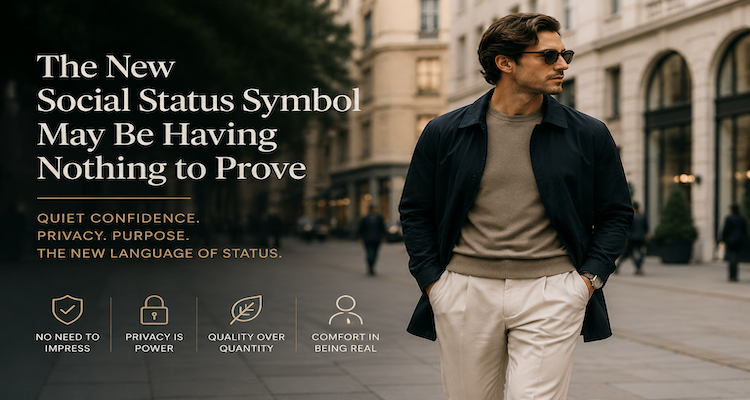
For generations, social status was often displayed through visibility: luxury logos, expensive possessions, exclusive memberships, public achievements, and carefully constructed images of success. But a quieter form of status has been gaining cultural attention the ability to appear comfortable without needing to demonstrate success.
From understated fashion choices to private lifestyles and reduced interest in public validation, a growing cultural conversation suggests that status is increasingly connected not only to what people own, but to what they no longer feel compelled to show.
This shift does not mean traditional luxury has disappeared. Luxury brands continue to generate significant consumer demand, and visible symbols of wealth remain influential in many communities. Instead, the change reflects a broader evolution in how people interpret confidence, authenticity, and social position.
The question is no longer only, “What can someone afford?” It is also becoming, “How secure does someone feel without having to prove it?”
Key Takeaways
- Status signaling is moving from obvious displays of wealth toward subtler signals of confidence and personal freedom.
- Social media has increased both the desire for visibility and the fatigue associated with constant self-presentation.
- “Quiet luxury” reflects a cultural preference for discretion, but it does not replace traditional luxury markets.
- Psychological research shows people use possessions and behavior to communicate identity and social belonging.
- The desire to appear effortless can itself become another form of status signaling.
Why Visible Status Lost Some of Its Power
The idea that people use possessions to communicate social position is not new. Sociologist Thorstein Veblen described “conspicuous consumption” in his 1899 book The Theory of the Leisure Class, arguing that some purchases serve not only practical needs but also social signaling purposes.
Luxury watches, designer clothing, premium cars, and exclusive experiences can communicate wealth, taste, achievement, or belonging.
However, the meaning of these signals changes over time.
A visible luxury item can communicate success in one environment but appear excessive in another. In some professional and cultural circles, restraint may now communicate confidence more effectively than obvious display.
This does not eliminate status competition. Instead, it changes the language of status.
A person wearing a simple outfit, declining unnecessary attention, or maintaining privacy may be perceived as possessing something valuable: independence from external approval.
The Rise of “Quiet Luxury” and Understated Consumption
The phrase “quiet luxury” became widely discussed in fashion and popular culture, especially after television and celebrity trends brought attention to minimalist, logo-free styles.
The appeal is based on a simple idea: luxury does not always need to announce itself.
Brands associated with craftsmanship, heritage, and subtle design have long existed alongside more visibly branded luxury companies. The recent attention around understated style reflects changing consumer conversations rather than the invention of a completely new market.
Research into consumer psychology has found that luxury purchases can serve different purposes. Some consumers seek social recognition, while others value quality, personal satisfaction, craftsmanship, or emotional connection.
A study published in the Journal of Consumer Research examined how consumers use possessions to construct identity and communicate meaning. It showed that consumption choices are often connected to personal narratives, not only material value.
The important shift is that the signal itself is changing.
A large logo may communicate “I have achieved something.”
A deliberately simple choice may communicate “I do not need to convince you.”
Social Media Changed the Meaning of Being Seen
The rise of digital platforms has complicated the relationship between status and visibility.
Social media encourages people to present carefully selected versions of their lives. Achievements, purchases, travel experiences, and lifestyle choices can become public signals of identity.
At the same time, constant performance can create fatigue.
Research on social media use has explored how self-presentation, comparison, and the desire for approval affect well-being. The pressure to maintain an appealing online identity can influence how people think about success and belonging.
This creates an interesting contradiction:
The internet made it easier than ever to display status, but it also increased the value of appearing unaffected by the need to display it.
Privacy itself can become a form of social capital.
Someone who appears selective about what they share may be perceived as having confidence, control, or a life that does not depend on public recognition.
Having Nothing to Prove Is Still a Social Signal
There is an important paradox in this cultural shift.
Rejecting status symbols can become its own status symbol.
A person who chooses simple clothing, avoids attention, or emphasizes experiences over possessions may still be communicating a message about identity and social position.
Sociologists and consumer researchers often describe this as a form of signaling. People communicate information about themselves through both what they display and what they deliberately avoid.
In other words, minimalism is not always the absence of status competition. Sometimes it is a more subtle version of it.
The difference is that the competition moves from “Who has more?” toward “Who appears less dependent on showing it?”
Why This Matters Beyond Fashion
The changing idea of status affects more than clothing and luxury purchases.
It influences workplace culture, personal branding, entrepreneurship, and online behavior.
For professionals, credibility is increasingly connected to expertise, trust, and demonstrated ability rather than only visible markers of success.
For businesses, the shift creates challenges. Companies cannot rely only on obvious symbols of prestige. Many consumers now evaluate brands through values such as craftsmanship, sustainability, authenticity, and purpose.
For individuals, the trend raises a deeper question: Are people pursuing success itself, or are they pursuing recognition for success?
The answer varies widely. Some people genuinely value public achievement and visible rewards. Others increasingly prioritize autonomy, flexibility, privacy, and personal satisfaction.
Neither approach is inherently superior.
The Limits of the “Effortless Status” Trend
The idea that “having nothing to prove” is becoming the ultimate status symbol should not be treated as a universal social rule.
Visible displays of success remain meaningful in many cultures and industries. Luxury markets continue to thrive because people attach emotional, social, and personal meaning to premium products.
Additionally, appearing effortless can itself require significant resources. A minimalist wardrobe, flexible lifestyle, or private experience may be easier to achieve for people who already have financial security.
This means understated status is not necessarily the absence of privilege. In many cases, it depends on having enough security to avoid visible competition.
Understanding this distinction prevents the trend from becoming another simplified story about wealth and success.
The Future of Status May Be More Personal Than Public
The broader movement suggests that status is becoming less about a single universal symbol and more about personal interpretation.
For some, status will remain connected to achievement, influence, and visible success. For others, it will be expressed through independence, expertise, creativity, health, time freedom, or privacy.
The important change is not that people have stopped caring about status. Humans have always used social signals to understand themselves and others.
The change is that the signals are becoming harder to recognize.
Conclusion
The new status symbol may not be having nothing at all it may be having the confidence to decide what deserves to be shown and what does not.
In a culture built around visibility, restraint can become meaningful. But the deeper shift is not about pretending not to care. It is about moving from proving worth through external signals toward building identities based on values, capability, and personal choice.
The most powerful signal may no longer be showing everyone what you have.
It may be showing that you know who you are without needing constant confirmation.
This content is published for informational or entertainment purposes. Facts, opinions, or references may evolve over time, and readers are encouraged to verify details from reliable sources.