









The New Education Divide May Be Between Students With Feedback and Students Without It
Education has always been shaped by unequal access: differences in schools, teachers, learning materials, internet connectivity, and family resources. A new divide may now be emerging around something less visible but equally important the quality and availability of feedback students receive while learning.
For decades, feedback has been one of the strongest tools for improving learning. Teachers use it to identify misunderstandings, correct mistakes, and guide students toward better performance. But in many classrooms, limited teacher time means feedback is often delayed, brief, or available only for selected assignments.
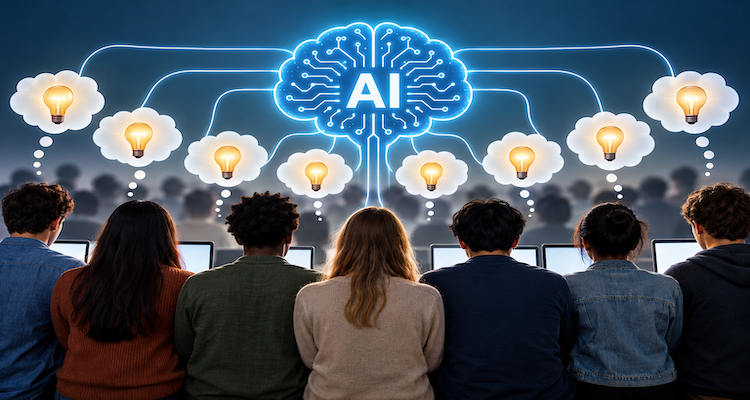
Artificial intelligence systems, digital learning platforms, and adaptive education tools are changing that equation by making immediate feedback possible at a scale that was previously difficult to achieve. Students who have access to these tools may receive explanations, practice suggestions, and error analysis whenever they need them.
The challenge is that access to feedback-enhancing technology is unlikely to be evenly distributed. The next education divide may not simply be between students who have devices and those who do not. It may be between students who learn with continuous guidance and those who must navigate mistakes alone.
Key Takeaways
- Feedback quality and timing strongly influence how effectively students learn and improve.
- AI tools may expand access to personalized feedback but are not equally available to all learners.
- Technology can support teachers but cannot replace expert human judgment and mentorship.
- Students without reliable feedback systems may struggle to identify and correct learning gaps.
- The future education challenge may involve access to guidance, not only access to information.
Why Feedback Has Become the Hidden Resource in Education
Information has become abundant. Students can access online courses, videos, digital textbooks, and educational platforms within seconds. But access to information does not automatically produce understanding.
Learning depends heavily on a cycle:
- Attempt a task.
- Receive feedback.
- Understand the mistake.
- Adjust the approach.
- Try again.
Educational researchers have long studied the importance of feedback in improving student outcomes. Research summarized by education scholars such as John Hattie has identified feedback as one of the influential factors associated with learning achievement, although the impact depends on the quality, timing, and context of the feedback.
Not all feedback is equally useful.
A simple statement such as “incorrect” may tell a student that something went wrong but provides little direction. Effective feedback explains why an answer is incorrect, identifies the misunderstanding, and suggests what the learner should do next.
This creates a practical problem: meaningful feedback requires time.
A teacher managing dozens of students may understand exactly what each learner needs but may not have enough hours to provide detailed guidance after every exercise, draft, or question.
AI Is Changing the Speed and Scale of Feedback
Generative AI systems have introduced a new possibility: personalized responses available immediately.
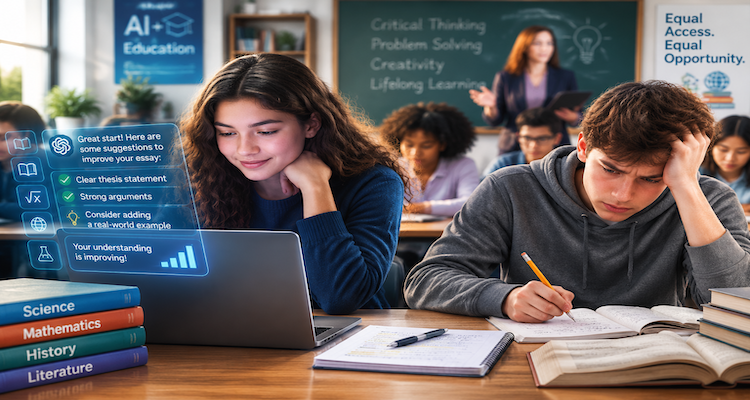
A student writing an essay can ask an AI tool for suggestions on structure, clarity, or reasoning. A learner practicing mathematics can receive explanations of mistakes. A language student can practice conversations and receive corrections.
These capabilities do not mean AI has solved education. Current AI systems can produce incorrect answers, misunderstand student intent, or provide explanations that appear confident but are inaccurate.
However, their potential value comes from one specific area: reducing the waiting time between making a mistake and receiving guidance.
In traditional education models, a student might submit work and wait days before discovering what went wrong. AI-assisted learning environments can shorten that feedback loop from days to minutes.
That difference matters because learning is often shaped by what happens immediately after confusion appears.
The Risk of a New Feedback Inequality
The technology itself is not automatically creating inequality. The concern is that unequal access to high-quality learning support may deepen existing educational gaps.
Students with access to:
- reliable internet connections,
- paid educational platforms,
- AI learning assistants,
- supportive digital environments,
- knowledgeable guidance on using technology,
may gain more opportunities to practice and improve.
Students without these resources may still have teachers and textbooks, but fewer opportunities for continuous personalized correction outside classroom hours.
This creates a possible shift in educational advantage.
Historically, privileged students often benefited from additional resources such as tutoring, smaller classes, or enrichment programs. AI-powered feedback tools could become another form of supplemental learning support potentially widening differences if access remains uneven.
The issue is not that AI replaces teachers. The issue is that some students may gain an additional learning partner while others do not.
Teachers Remain Central to Meaningful Feedback
A common misconception is that AI feedback could eliminate the need for teachers. Educational reality is more complicated.
Teachers provide forms of feedback that technology struggles to reproduce:
- understanding emotional barriers,
- recognizing when a student lacks confidence,
- adapting explanations based on personal context,
- identifying deeper misconceptions,
- encouraging persistence.
A student who repeatedly fails a mathematics problem may not simply need another explanation. They may need reassurance, a different learning strategy, or help rebuilding confidence.
Human educators also evaluate goals beyond correctness. They help students develop curiosity, creativity, communication skills, and independent thinking.
The strongest future models are likely to combine human expertise with AI assistance rather than replace one with the other.
The Real Question Is Not “AI or Teachers” It Is Access to Better Learning Systems
The education debate around AI often focuses on whether students should use these tools. A more important question may be:
Who gets access to the best learning support, and who does not?
Technology has repeatedly changed education access. The internet expanded access to information. Online courses expanded access to instruction. AI may expand access to personalized feedback.
But every expansion creates policy questions:
- Should AI learning tools be publicly available through schools?
- How should educators teach students to use AI responsibly?
- How can schools prevent technology from increasing inequality?
- What kinds of feedback should remain human-led?
These questions will influence whether AI becomes an equalizing force or another advantage available mainly to already-privileged students.
Building a Future Where Feedback Is a Basic Learning Resource
If feedback becomes one of the most valuable educational resources, schools may need to treat it similarly to other essential learning supports.
Possible approaches include:
- providing responsible AI access through public education systems,
- training teachers to use AI as a support tool,
- improving digital literacy,
- ensuring students understand AI limitations,
- designing technology around learning outcomes rather than convenience.
The goal should not be creating classrooms where machines provide endless answers. The goal should be creating learning environments where every student has more opportunities to understand mistakes and improve.
Conclusion
The next major education divide may not be measured only by who has a computer, an internet connection, or digital textbooks. It may be measured by who has access to meaningful guidance while learning.
Feedback has always been a powerful educational advantage. Artificial intelligence may make personalized feedback more available than ever before, but the benefits will depend on how societies choose to distribute access.
The central challenge is not whether technology can provide feedback. It is whether every student will have the opportunity to receive the kind of feedback that helps them grow.
The information presented in this article is based on publicly available sources, reports, and factual material available at the time of publication. While efforts are made to ensure accuracy, details may change as new information emerges. The content is provided for general informational purposes only, and readers are advised to verify facts independently where necessary.