










Beyond Labels: Why More People Are Searching for an Inner Sense of Identity
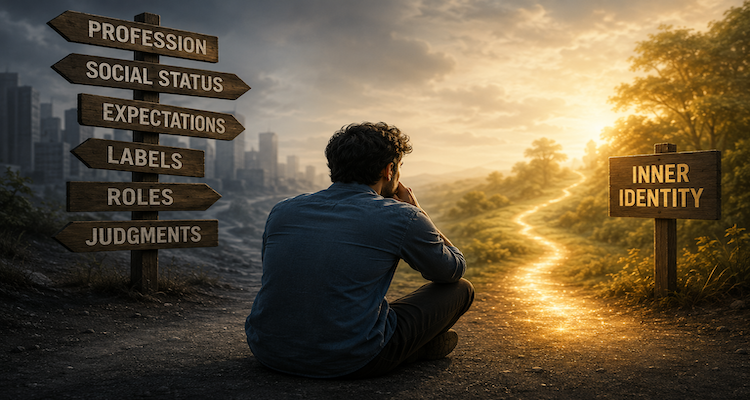
A curious shift is unfolding beneath the noise of modern culture. While public conversations increasingly revolve around identity categories, social groups, personal brands, and online personas, many people are quietly asking a different question: Who am I when none of those labels apply?
The search is showing up in unexpected places. It appears in conversations about burnout, in growing interest in mindfulness and spirituality, in debates about authenticity on social media, and even in career changes that seem irrational on paper but deeply meaningful to the individuals making them. Beneath these diverse experiences lies a shared feeling that external definitions, while useful, may not fully explain who a person is.
For many, the challenge is no longer finding an identity. It is finding one that feels genuine.
The Age of Labels
Human beings have always used labels to understand themselves and others. Nationality, profession, religion, political affiliation, family roles, and cultural identities help people navigate society. They create belonging, provide context, and make social interaction easier.
The digital era, however, has amplified this tendency.
Social platforms encourage people to present themselves through concise descriptions, interests, affiliations, and carefully curated images. Professional networks often reduce identity to career achievements. Algorithms categorize users based on behavior, preferences, and demographics.
Labels can offer clarity, but they can also become limiting. A person may be identified as a manager, parent, artist, entrepreneur, student, activist, or creator. Yet many discover that these descriptions capture only fragments of a much larger reality.
The more society emphasizes categorization, the more some individuals begin questioning whether identity can truly be reduced to categories.
Why the Search Is Intensifying
Several cultural and psychological forces appear to be driving this deeper exploration.
One factor is the growing instability of traditional identity anchors. Careers change more frequently than in previous generations. People relocate across countries and cultures. Social groups evolve. Economic shifts disrupt long-term plans.
An identity built entirely around external circumstances can become fragile when those circumstances change.
Someone who strongly identifies with a profession may experience a personal crisis after losing a job. An athlete may struggle after retirement. A parent may feel disoriented when children become independent. In each case, the question emerges: Who am I without this role?
Another factor is digital visibility.
Never before have individuals been so aware of how they are perceived by others. Likes, comments, followers, and personal branding have created new forms of social feedback. While this visibility can be empowering, it can also create pressure to maintain a public identity that no longer feels authentic.
As a result, many people are becoming less interested in appearing successful and more interested in understanding themselves beyond public perception.
The Difference Between Identity and Inner Identity
External identity is largely relational. It describes how a person fits into society.
Inner identity is more personal and less visible. It relates to values, consciousness, purpose, character, and the deeper sense of self that remains even when circumstances change.
This distinction explains why some highly accomplished individuals still report feeling disconnected or uncertain. Success can strengthen external identity while leaving deeper questions unanswered.
A person may know what they do, where they belong, and how others perceive them. Yet they may still wonder what gives their life meaning.
The growing interest in self-reflection, psychology, philosophy, and spiritual traditions suggests that more people are recognizing this difference.
The search is not necessarily a rejection of labels. Instead, it reflects a desire to place labels in their proper context—as descriptions rather than definitions.
What This Trend Reveals About Modern Culture
One of the most overlooked aspects of this shift is that it reflects a broader cultural movement from performance toward authenticity.
For years, public attention rewarded visibility. The more visible a person became, the more valuable they often appeared.
Today, many people seem less convinced that visibility alone creates fulfillment.
This is evident in workplace discussions about purpose, the popularity of digital detoxes, growing interest in mental well-being, and the increasing appeal of practices that encourage introspection rather than constant expression.
The hidden insight is that modern society may be entering a period where identity is becoming less about signaling who we are and more about discovering who we are.
That distinction has significant implications.
When identity becomes primarily performative, people often seek validation from external audiences. When identity becomes exploratory, the focus shifts toward self-understanding.
The difference can influence relationships, career choices, consumption habits, and even political and cultural conversations.
The Influence of Ancient Wisdom in a Modern Search
Interestingly, many people exploring inner identity are turning to ideas that predate the internet by centuries.
Philosophical and spiritual traditions across cultures have long distinguished between external roles and a deeper self. Whether through meditation, contemplation, self-inquiry, or ethical living, these traditions often encourage individuals to look beyond temporary identities.
The enduring relevance of such teachings may explain why ancient texts and wisdom traditions continue attracting modern audiences. They address questions that technology cannot easily answer.
Questions such as:
Who am I beyond my achievements?
What remains when circumstances change?
What gives life meaning beyond recognition or status?
These are not new questions. What may be new is the number of people asking them simultaneously in a highly connected world.
How Businesses and Institutions Are Responding
The search for deeper identity is not limited to individuals. Organizations are increasingly encountering the effects of this shift.
Employers are finding that compensation alone is often insufficient to attract and retain talent. Employees frequently seek alignment with values, purpose, and meaningful work.
Educational institutions are facing similar challenges. Students increasingly want guidance not only on career paths but also on personal development and life direction.
Brands are adapting as well. Consumers often respond more positively to authenticity than to polished marketing narratives. Companies that demonstrate genuine values tend to build stronger emotional connections than those focused solely on image.
These developments suggest that the conversation about identity is moving beyond personal reflection and becoming a broader social and economic force.
What Happens Next?
The future is unlikely to eliminate labels. Human societies depend on categories, roles, and shared identities.
What may change is the relationship people have with them.
Rather than viewing labels as complete definitions, more individuals may begin treating them as temporary descriptions. A profession, belief system, community, or social role may remain important without becoming the sole source of self-worth.
This perspective can create greater adaptability in a rapidly changing world.
As careers evolve, technologies advance, and cultural expectations shift, those with a strong sense of inner identity may be better positioned to navigate uncertainty. Their sense of self is less dependent on external conditions and more connected to enduring values and purpose.
The growing interest in inner identity ultimately reflects a deeper human need. People want to belong, but they also want to understand themselves. They want recognition, but they also want authenticity.
In an age defined by categories, profiles, and constant visibility, the most significant identity journey may be the one that happens away from public view.
The search beyond labels is not a rejection of society. It is an attempt to discover what remains when society’s definitions no longer feel sufficient. And for a growing number of people, that search is becoming one of the defining questions of our time.
This content is published for informational or entertainment purposes. Facts, opinions, or references may evolve over time, and readers are encouraged to verify details from reliable sources.