






Wildlife Highways Are Redrawing the Map of Conservation
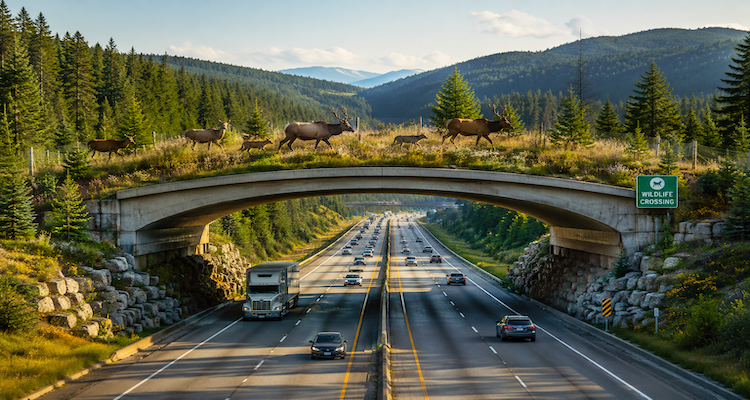
Every year, countless animals attempt journeys that their species have made for generations. Deer move between feeding grounds, bears roam across mountain ranges, and elephants follow ancient migration routes. Yet many of these pathways now intersect with highways, rail lines, cities, and industrial developments that did not exist a century ago.
A quiet transformation is beginning to change that reality. Across continents, a new generation of wildlife highways—networks of crossings, corridors, green bridges, and protected migration routes is emerging to reconnect fragmented landscapes. What may appear at first glance to be simple infrastructure projects are becoming some of the most ambitious conservation efforts of the modern era.
These wildlife highways are not merely about helping animals cross roads safely. They reflect a broader shift in how societies think about development, biodiversity, and the relationship between human expansion and the natural world.
The Growing Problem of Fragmented Habitats
For much of the twentieth century, infrastructure development focused almost exclusively on human mobility. Roads connected cities, railways expanded trade routes, and urban growth transformed vast stretches of land.
The unintended consequence was habitat fragmentation.
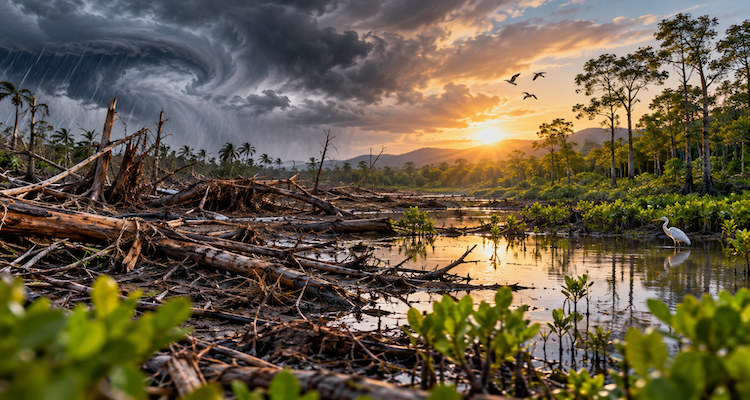
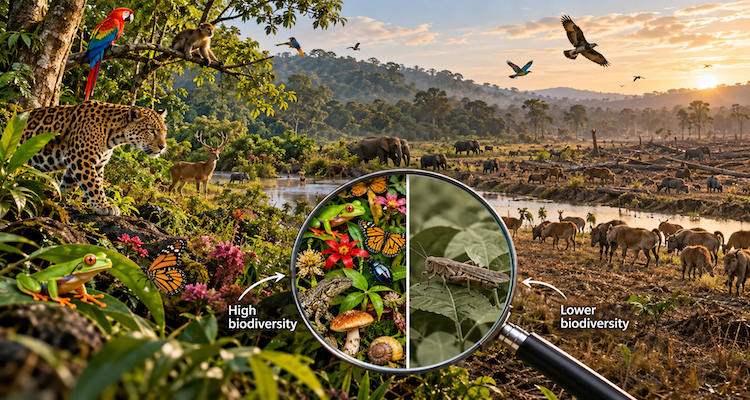
When forests, grasslands, wetlands, and mountain ecosystems become divided by physical barriers, animal populations can become isolated. This separation affects migration patterns, access to food, breeding opportunities, and genetic diversity. Over time, fragmented populations may become more vulnerable to disease, environmental change, and local extinction.
For many species, survival depends not only on protecting habitats but also on maintaining connections between them.
That realization has become a driving force behind a global movement to restore ecological connectivity.
What Wildlife Highways Actually Look Like
The term “wildlife highway” can describe a variety of solutions designed to help animals move safely through human-dominated landscapes.
Some are dramatic green overpasses covered with vegetation that allow animals to cross busy highways without encountering traffic. Others are tunnels built beneath roads for amphibians, reptiles, and small mammals.
In some regions, wildlife highways take the form of protected migration corridors stretching across hundreds of miles. These corridors preserve the landscapes animals need to travel between seasonal habitats.
The approach varies depending on geography and species. A crossing designed for elk in North America differs significantly from one intended for elephants in Africa or jaguars in South America. Yet the objective remains the same: reconnect ecosystems that have been divided.
A Global Conservation Movement
The emergence of wildlife highways is no longer limited to a handful of pioneering projects.
In North America, wildlife crossings have gained increasing attention as transportation agencies seek ways to reduce vehicle collisions while supporting biodiversity. Several large-scale projects are now designed specifically to reconnect habitats separated by major road networks.
Across Europe, ecological corridors have become an important part of regional planning. Countries have invested in green bridges and connected habitat networks that allow species to move across increasingly developed landscapes.
In Asia and Africa, conservation organizations and governments are exploring migration corridors for elephants, big cats, and other wide-ranging species whose movements often extend beyond protected park boundaries.
What makes this trend notable is its scale. Conservation is gradually shifting from protecting isolated reserves toward preserving entire connected landscapes.
Why Interest Is Rising Now
Several forces are driving the growing interest in wildlife highways.
Climate change is one major factor.
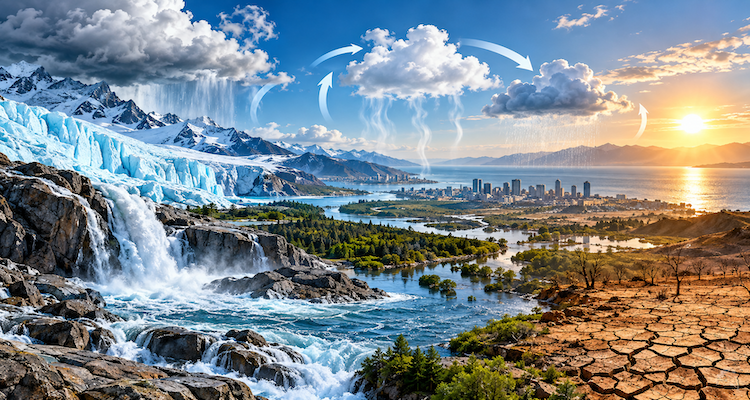
As temperatures shift and weather patterns become less predictable, many species may need to move into new areas to find suitable habitats. Protected spaces that once supported wildlife may become less viable over time.
Without connected corridors, animals can become trapped within shrinking or changing ecosystems.
Scientific research has also strengthened the case for connectivity. Conservationists increasingly recognize that isolated protected areas alone may not be sufficient for long-term biodiversity preservation.
Public awareness is another important driver. Images of animals safely crossing green bridges or migrating through restored corridors often resonate with audiences because they offer a hopeful conservation story in contrast to many environmental challenges.
Unlike some environmental debates that focus on sacrifice or restriction, wildlife highways present a solution-oriented vision that balances development and conservation.
The Hidden Insight Behind Wildlife Highways
Perhaps the most interesting aspect of this movement is that wildlife highways are changing how conservation itself is defined.
Traditional conservation often focused on protecting places.
The new approach focuses on protecting movement.
This distinction may seem subtle, but it represents a profound shift in thinking.
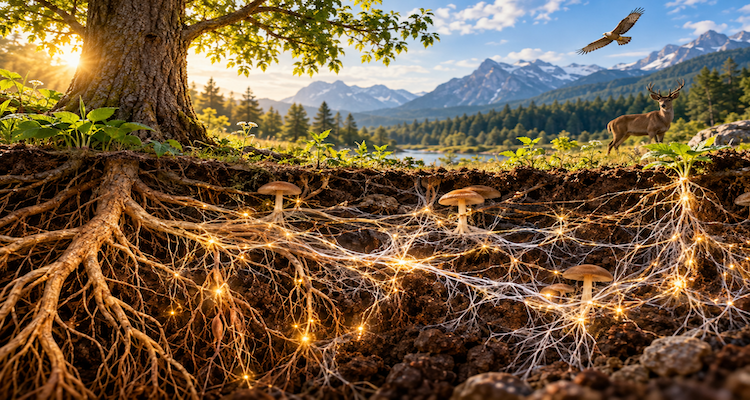
An ecosystem is not merely a collection of species living within a fixed boundary. It is a dynamic system shaped by migration, seasonal movement, genetic exchange, and ecological interactions that occur across large geographic areas.
In this view, movement becomes as important as habitat.
The concept mirrors broader trends in human society. Modern economies rely on networks rather than isolated locations. Digital systems thrive through connectivity. Increasingly, conservation is embracing a similar principle: resilience depends on connections.
Benefits Beyond Wildlife
The advantages of wildlife highways often extend beyond conservation goals.
Reducing collisions between vehicles and large animals can improve public safety and lower economic costs associated with accidents and infrastructure damage.
Connected ecosystems can also support healthier watersheds, improve ecosystem resilience, and strengthen biodiversity that benefits agriculture and local communities.
In some regions, wildlife crossings have become attractions in their own right, demonstrating how infrastructure can serve both environmental and social purposes.
These projects challenge the long-standing assumption that development and conservation must always exist in conflict.
Instead, they suggest that infrastructure can be designed with ecological systems in mind from the beginning.
Challenges and Limitations
Despite their promise, wildlife highways are not a universal solution.
Large-scale corridor projects often require significant funding, long-term planning, and cooperation among governments, landowners, conservation groups, and local communities.
The effectiveness of a corridor can also depend on factors such as location, species behavior, habitat quality, and ongoing management.
Some migration routes cross national borders, creating additional political and logistical challenges.
There is also the reality that not every fragmented landscape can be fully restored. Conservation decisions frequently involve trade-offs, competing priorities, and limited resources.
Nevertheless, many experts view connectivity projects as an increasingly important component of future conservation strategies.
What Happens Next
The coming decades may determine whether wildlife highways become a standard feature of infrastructure planning or remain exceptional projects.
As urbanization continues and climate pressures intensify, the need for connected landscapes is likely to become more apparent. Future transportation systems, energy developments, and urban expansions may increasingly incorporate ecological connectivity into their design.
What makes this moment different is that wildlife highways are no longer seen as niche conservation experiments. They are becoming part of a larger conversation about how human societies coexist with nature in an increasingly crowded world.
The roads, railways, and cities built during the last century transformed the planet’s geography. The wildlife highways emerging today may represent an effort to restore some of the connections that were lost along the way.
Their success will not be measured solely by the number of animals that cross them. It will be measured by whether they help create a future in which development and biodiversity can move forward together.
This content is published for informational or entertainment purposes. Facts, opinions, or references may evolve over time, and readers are encouraged to verify details from reliable sources.