









Why Some Rivers Are Becoming Night Ecosystems Instead of Day Ecosystems
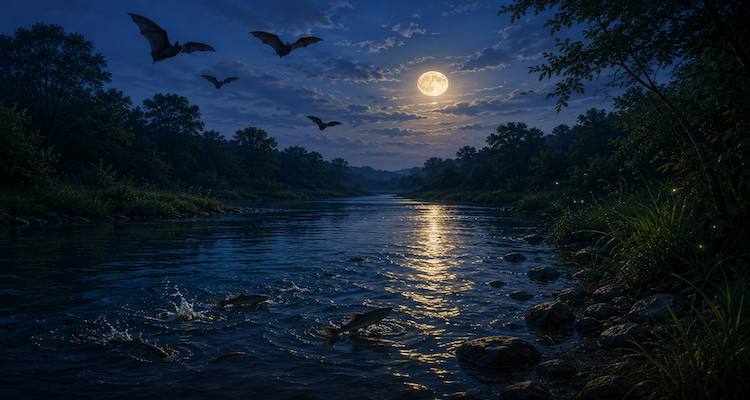
For generations, rivers have been viewed as vibrant daytime landscapes filled with fish feeding near the surface, birds hunting along the banks, insects buzzing overhead, and people fishing, boating, or simply enjoying the water. Yet in many parts of the world, scientists are noticing a subtle but significant shift. Increasingly, some rivers are becoming far more active after sunset than during daylight hours.
This transformation isn’t simply about creatures preferring the dark. It reflects broader environmental changes that are altering how freshwater ecosystems function. Rising temperatures, expanding cities, artificial lighting, pollution, and constant human activity are reshaping the daily rhythms of rivers. Instead of following the familiar cycle of daytime productivity and nighttime rest, some waterways are evolving into what researchers increasingly describe as “night ecosystems.”
The trend offers a revealing glimpse into how wildlife adapts under pressure and what those adaptations may tell us about the health of rivers that millions of people depend on.
When the River Comes Alive After Sunset
Many freshwater species have always displayed some degree of nocturnal behavior. Catfish, crayfish, certain insects, frogs, and bats naturally become active at night. What is changing today is the balance.
In rivers experiencing heavy daytime disturbance, a growing variety of fish, aquatic insects, amphibians, and even mammals appear to shift more of their feeding, breeding, and movement into the hours of darkness. Daylight increasingly becomes a period of avoidance rather than opportunity.
Researchers studying freshwater ecosystems have observed that this shift is often linked not to a single cause but to the combined influence of multiple environmental pressures. Instead of disappearing, wildlife is adjusting its schedule.
The river itself remains active but increasingly on a different timetable.
Heat Is Changing Daily Patterns
One of the strongest influences behind this transition is warming water.
As global temperatures rise, many rivers experience prolonged periods of elevated daytime temperatures during summer months. Warm water holds less dissolved oxygen, making it more stressful for fish and other aquatic organisms.
Nighttime usually offers cooler conditions and slightly improved oxygen levels, allowing many species to conserve energy during the day and become more active after sunset.
Cold-water fish species are particularly sensitive to these changes. Even species that once fed throughout the day may increasingly concentrate activity into cooler evening and nighttime hours when conditions become less physically demanding.
This behavioral flexibility may help wildlife survive in the short term, but it also signals that environmental conditions are becoming less favorable.
Human Presence Is Quietly Reshaping Wildlife Behavior
Temperature is only part of the story.
Many rivers flow through expanding urban areas where daytime activity has intensified dramatically. Recreational boating, kayaking, fishing, construction, tourism, vehicle traffic, and riverside development create nearly constant disturbance.
Wild animals often respond by avoiding humans rather than confronting them.
Across many ecosystems not just rivers wildlife has shown remarkable ability to adjust daily routines to reduce encounters with people. Rivers are becoming another example of this broader pattern.
Fish may seek deeper pools until dusk. Mammals such as otters may delay hunting until recreational users leave. Waterbirds may shift feeding times to quieter hours.
The result is a river that appears relatively calm during the day but becomes unexpectedly dynamic once darkness falls.
Artificial Light Creates Unexpected Challenges
Ironically, even nighttime is no longer truly dark.
Streetlights, bridges, waterfront developments, industrial facilities, and illuminated buildings create artificial light that reaches rivers far beyond city centers.
This phenomenon, known as light pollution, complicates the transition toward nocturnal ecosystems.
Some species become disoriented by constant illumination. Insects attracted to lights may alter food availability for fish and bats. Predators may gain unexpected advantages, while prey species lose the protection that natural darkness once provided.
Instead of restoring natural nighttime conditions, artificial lighting creates an entirely new environment one that many river organisms are still adapting to.
The outcome varies from one river to another, making local conditions increasingly important in understanding ecosystem health.
Food Webs Are Beginning to Shift
Changing activity patterns don’t affect only individual species.
Every river depends on interconnected food webs involving algae, aquatic plants, insects, fish, birds, reptiles, mammals, fungi, and microscopic organisms.
When one group changes its schedule, others often follow.
If aquatic insects emerge at different times, fish may adjust feeding behavior. If fish become nocturnal, birds that hunt during daylight may find fewer opportunities. Predators that rely on visual hunting could lose an advantage, while species adapted to darkness may expand their role within the ecosystem.
Over time, these seemingly small behavioral adjustments can reshape ecological relationships without necessarily changing which species are present.
The ecosystem remains intact—but operates according to a different daily rhythm.
What This Reveals About Nature’s Adaptability
Perhaps the most fascinating aspect of night ecosystems is what they reveal about resilience.
Wildlife is not passively responding to environmental change. Many species are demonstrating remarkable behavioral flexibility, adjusting routines in ways that increase their chances of survival.
Behavior often changes much faster than evolution.
Instead of waiting generations for biological adaptations, animals can modify feeding times, breeding schedules, migration patterns, and habitat use within relatively short periods.
This adaptability offers hope, but it also has limits.
If warming intensifies, pollution increases, habitats fragment, or river flows continue changing, behavioral adjustments alone may eventually become insufficient.
Adaptation should not be mistaken for immunity.
Why This Matters Beyond Wildlife
The emergence of night ecosystems has implications that extend beyond ecology.
Healthy rivers support drinking water supplies, agriculture, fisheries, tourism, recreation, and local economies. Changes in wildlife behavior can influence fish populations, insect abundance, biodiversity, and ecosystem stability all of which indirectly affect human communities.
The trend also highlights an important lesson for conservation.
Protecting rivers is no longer only about preserving physical habitats. It increasingly requires protecting natural rhythms, including periods of darkness, seasonal flow patterns, cool-water refuges, and quieter stretches where wildlife can function without constant disturbance.
In other words, time itself has become part of habitat conservation.
A Different Way of Seeing Rivers
For most people, rivers are places experienced during daylight. Yet many of today’s ecological stories unfold after sunset, hidden from casual observation.
Recognizing rivers as emerging night ecosystems changes how we think about environmental health. Instead of asking only whether wildlife is present, scientists are increasingly asking when wildlife can safely live its daily life.
That question reflects a broader shift occurring across nature. Animals are adapting not only to changing landscapes but also to changing human schedules, climates, and environments.
Some rivers may never fully return to their traditional daytime rhythms. Others could recover if environmental pressures are reduced and natural conditions restored. Either way, the rise of night ecosystems reminds us that nature is constantly responding to the world we create—and those responses often reveal environmental change long before it becomes obvious to us.
As rivers quietly transform under the cover of darkness, they offer both a warning and a lesson: ecosystems are remarkably adaptable, but even their resilience has boundaries.
This content is published for informational or entertainment purposes. Facts, opinions, or references may evolve over time, and readers are encouraged to verify details from reliable sources.