








Why “Authentic Travel” Is Becoming Harder to Define

The travel industry increasingly sells something that sounds simple: authenticity. Travelers are encouraged to seek local food, lesser-known neighborhoods, community experiences, traditional crafts and places that feel “real” rather than packaged for tourists. Yet the more travelers search for authenticity, the more complicated the idea becomes.
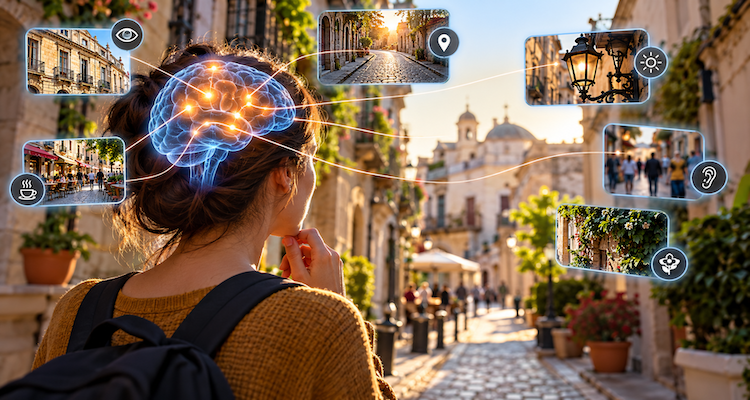
Part of the problem is that authenticity is no longer judged only by what exists at a destination. It is also shaped by social media, influencers, recommendation algorithms, tourism businesses, local communities and increasingly artificial intelligence. A place can be genuinely local and still become a tourist product. A commercial experience can still feel deeply meaningful. And an experience designed partly for visitors is not automatically fake.
That tension has existed in tourism research for decades. What is changing now is the speed at which digital platforms can identify, package and distribute whatever travelers perceive as authentic.
Key Takeaways
- Authenticity in tourism has never had one universally accepted definition.
- Social media can turn obscure local experiences into highly visible tourist attractions.
- An experience created for visitors is not necessarily culturally meaningless or “fake.”
- Travelers increasingly want local connection while relying heavily on digital platforms to find it.
- AI is beginning to influence how destinations, food and cultural experiences are represented before travelers arrive.
- A better measure of authentic travel may be how responsibly visitors engage with places and communities.
Authenticity Was Never as Simple as “Real vs. Fake”
The idea that travelers must choose between “authentic” experiences and manufactured tourist experiences is attractive, but tourism scholarship has long shown that the distinction is more complicated.
Researcher Erik Cohen argued in a landmark 1988 study that authenticity can be negotiable, rather than a fixed property of a cultural object or experience. Something initially created or modified for tourism can acquire new meanings over time.
Later research expanded the debate further. One influential approach distinguishes between authenticity attached to an object or cultural practice and existential authenticity the feeling of being more connected to oneself or others through travel, regardless of whether the setting itself meets a strict definition of “original.”
That matters because a family-run restaurant serving food adapted for visitors may still represent a genuine part of contemporary local life. A traditional festival may have changed because tourism became important to its economy without becoming culturally meaningless.
The question, therefore, is not simply:
“Is this experience authentic?”
It can be more useful to ask:
“Authentic according to whom, and authentic in what sense?”
The Traveler’s Search for the “Real” Can Change the Place
There is a paradox at the heart of modern travel.
Travelers increasingly want to escape standardized tourism. They look for places described as hidden, local, undiscovered, traditional or untouched.
But once thousands of people discover the same “hidden” place through the same platforms, its relationship with tourism changes.
This is not merely a theoretical possibility. Booking.com’s 2025 travel research found that 77% of surveyed travelers wanted authentic experiences representative of local culture, while 73% wanted the money they spend to return to local communities. The same research also reported strong interest in more sustainable travel choices.
Expedia’s 2025 research similarly found that 63% of surveyed consumers said they were likely to visit a destination that was less well-known and less crowded.
The problem is obvious: “less crowded” is becoming a marketable travel attribute.
Once a location is promoted as the alternative to overcrowded destinations, the alternative itself can attract more visitors.
That does not mean travelers should avoid lesser-known destinations. It means the label “hidden gem” should not automatically be interpreted as evidence of authenticity.
Social Media Has Changed What Becomes Discoverable
For generations, travelers relied on guidebooks, newspapers, word of mouth and specialist travel writers to discover destinations.
Now, a short video can take a neighborhood café, mountain trail, village market or local festival from relative obscurity to international visibility.
The consequence is that authenticity can become algorithmically amplified.
The places most likely to be seen are not necessarily the places with the strongest cultural significance. They may instead be the places that photograph well, generate emotional reactions or fit recognizable social-media formats.
Expedia’s research illustrates how closely travel inspiration and digital content are now connected. Its 2025 Unpack report examined travel behavior using first-party data and a survey of more than 25,000 travelers, while its later research found that video influenced travel decisions substantially more than static imagery among surveyed travelers.
This creates a subtle transformation.
Travelers may believe they are searching for something undiscovered when they are actually searching within an algorithmically curated definition of what “undiscovered” looks like.
Influencers Add Another Layer to the Problem
Travel influencers have complicated the meaning of authenticity even further.
An influencer can genuinely love a destination. But the moment a recommendation becomes sponsored content, affiliate marketing, a bookable itinerary or part of a creator’s commercial business, the experience exists simultaneously as personal expression and marketing.
Academic research into travel influencers has specifically examined authenticity as part of the ethical framework surrounding sponsored content.
That does not mean influencer recommendations are inherently unreliable.
It means travelers should distinguish between:
- a person’s genuine experience;
- a paid recommendation;
- a destination marketing campaign;
- algorithmically promoted content;
- and content designed primarily to generate bookings.
The visual language can look almost identical.
The economic relationship behind it may be very different.
Expedia has gone further in integrating creator recommendations into the booking process. Its Travel Shops allow users to discover and book travel recommendations curated by creators, tourism organizations and media brands.
This is convenient for travelers, but it also illustrates the larger shift: inspiration, influence and transaction are increasingly being combined in the same digital environment.
Local Communities Complicate the Definition Further
There is another assumption worth challenging: that commercialization automatically destroys authenticity.
It does not.
Tourism can create economic opportunities, support artisans and encourage communities to preserve or reinterpret cultural traditions. Research on tourism and cultural commodification has shown that local communities do not necessarily view commercialization in the same way as outside observers. In one long-term study in eastern Indonesia, researchers found that tourism could contribute to community pride, identity and empowerment rather than simply destroying cultural meaning.
That perspective is important.
A traveler may see a traditional craft being sold to tourists and conclude that it has become “commercialized” and therefore less authentic.
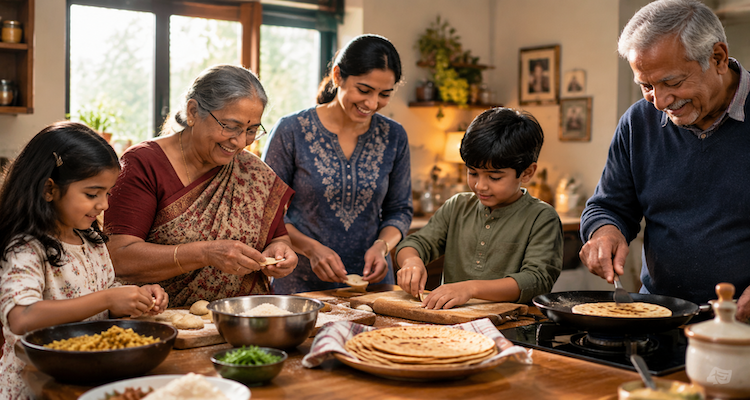
The artisan making and selling that craft may see something entirely different: a livelihood, a continuation of a family practice, an opportunity to teach younger generations, or a way to keep a tradition economically viable.
Authenticity, therefore, cannot be judged only from the visitor’s perspective.
UNESCO’s recent work in Agra provides a useful contemporary example. Its 2026 reporting on Taj Ganj describes efforts that place artisans, drivers and local families more centrally within heritage tourism, emphasizing that living heritage is sustained by people and their livelihoods, not simply monuments.
That suggests a more useful question:
Does tourism give local people agency over how their culture is represented, or does it simply turn their culture into something outsiders consume?
AI Could Make “Authentic” Even Harder to Recognize
The next complication is emerging from artificial intelligence.
Travelers increasingly use AI-assisted tools to discover destinations, construct itineraries and identify experiences. Booking.com’s 2025 research reported that 66% of surveyed travelers expected to use technology to make informed decisions and find authentic experiences, while 41% expressed interest in AI-curated trips.
AI can make travel planning dramatically easier.
But it introduces a new question:
What happens when the thing presented as authentic has itself been selected, described, ranked or visually represented by a machine?
The issue is no longer only whether the destination is genuine. It is also whether the digital representation accurately captures it.
That distinction is becoming particularly relevant for food and cultural tourism. A 2026 peer-reviewed study examining AI and synthetic food imagery found associations between AI-generated representations, perceptions of realism and the way travelers interpret food, place and authenticity.
This does not mean AI-generated travel content is necessarily deceptive.
But it does mean travelers may increasingly encounter representations of places before encountering the places themselves.
The photograph, itinerary, restaurant description and recommendation may all be digitally mediated.
The destination remains real. The version of it in the traveler’s imagination may not be.
So What Should “Authentic Travel” Mean Now?
A more useful definition may move away from the idea that authenticity means finding something untouched by tourism.
Almost every popular destination has been influenced by tourism in some way.
Instead, travelers can evaluate authenticity through several questions:
Is the experience connected to real local life?
Does it involve people, businesses, traditions, food, landscapes or activities that genuinely belong to the destination rather than simply reproducing a generic tourist concept?
Who controls the story?
Are local residents participating in how their culture is presented, or is the story primarily constructed for outsiders?
UNESCO’s sustainable-tourism guidance explicitly emphasizes giving host communities a voice in tourism processes that affect them.
Where does the money go?
A locally owned restaurant, guide service, workshop or accommodation does not automatically provide a more meaningful experience, but spending locally can create a more direct connection between tourism and community livelihoods.
Can the culture change?
A common misconception is that authentic culture must remain frozen in the past.
But communities change. Food evolves. Music changes. Businesses adapt. Younger generations reinterpret traditions.
Treating a culture as authentic only when it looks historical can itself become a distorted form of tourism.
Does the traveler behave like a visitor or a consumer?
Authenticity is not only something a traveler receives.
It is also shaped by how that traveler behaves.
Respecting local customs, avoiding intrusive photography, spreading visitors across less-pressured areas when appropriate, choosing locally owned businesses and understanding that communities are places where people live not attractions built exclusively for visitors can matter more than finding a supposedly secret location.
The New Meaning of Authentic Travel
The most interesting shift may be that authentic travel is becoming less about discovering places that have escaped tourism and more about understanding places as they actually exist.
That means accepting contradictions.
A neighborhood can be popular with tourists and still have a genuine community life. A family restaurant can serve visitors and remain deeply connected to local culture. A festival can evolve because of tourism without becoming meaningless. A guide can use social media to attract customers while providing an experience rooted in local knowledge.
Authenticity does not necessarily disappear when money, technology or tourism enter the picture.
But it can become harder to see.
The traveler therefore has a responsibility beyond simply asking whether something looks “real.” The better question is whether the experience represents a living place fairly, whether local people have agency, and whether the visitor’s presence contributes something rather than simply extracting an experience.
Conclusion
The phrase “authentic travel” is becoming harder to define because travel itself is becoming more interconnected, commercial, digital and participatory.
Social platforms can make obscure places famous. Influencers can combine personal storytelling with commercial recommendations. Tourism can transform traditions while also helping sustain them. AI can make discovering local experiences easier while simultaneously influencing how those experiences are represented.
There may never be a universal test for authenticity and tourism research suggests there does not need to be one.
For travelers, a better standard is not to search endlessly for something untouched.
It is to look for genuine relationships with places and people, understand who benefits from tourism, recognize how the experience has been shaped, and remain open to the fact that living cultures are allowed to change.
That may be a more honest definition of authentic travel for the digital age.
This content is published for informational or entertainment purposes. Facts, opinions, or references may evolve over time, and readers are encouraged to verify details from reliable sources.