





What Shiva’s Meditation Reveals About the Hindu Idea of Inner Stillness
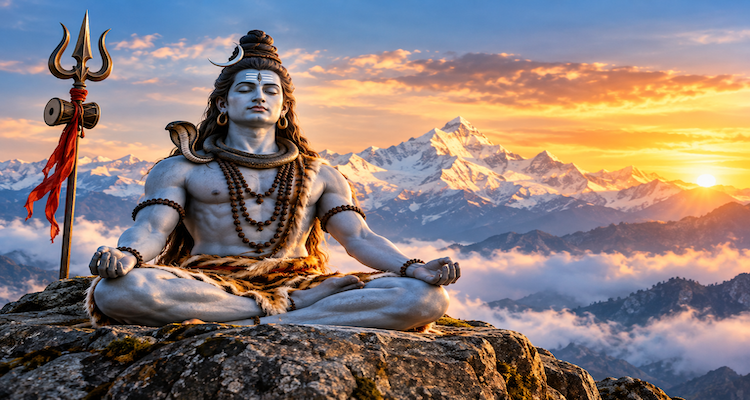
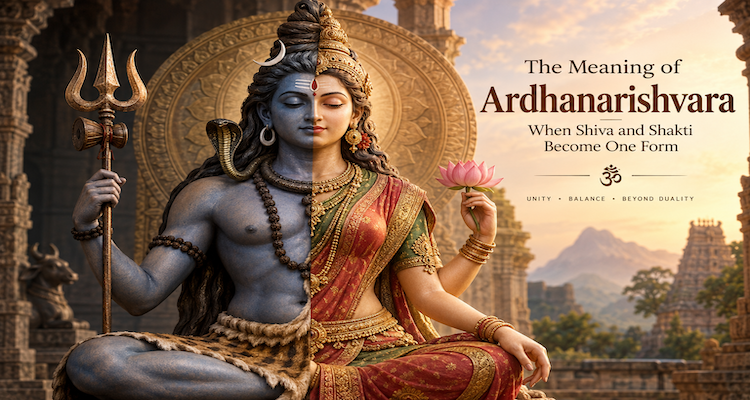
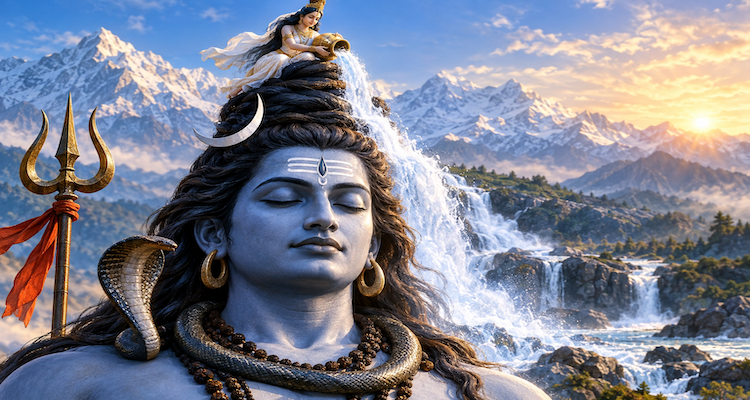
Shiva is often portrayed seated in meditation: eyes lowered or closed, legs crossed, body unmoving, matted hair gathered above his head. The image is so familiar that its deeper meaning can be easy to overlook. In Hindu traditions, however, the meditating Shiva is not simply a symbol of relaxation or escape from the world. He represents a more demanding idea: that stillness can be a form of disciplined awareness.
This distinction matters because Hindu thought does not generally treat meditation as merely an exercise in becoming calm. Classical Yoga developed meditation as a systematic discipline concerned with attention, consciousness and liberation, while the Upanishadic tradition explored the nature of the self and ultimate reality. Shiva’s recurring identity as an ascetic and yogic figure gives those ideas a powerful visual expression.
Key Takeaways
- Shiva’s meditative posture represents disciplined awareness rather than simple physical relaxation.
- Hindu traditions connect meditation with control of mental activity and deeper knowledge of the self.
- The Bhagavad Gita compares a disciplined mind to a lamp that does not flicker in a windless place.
- Shiva’s image combines ascetic withdrawal with a larger role in the cosmic and devotional imagination.
- Inner stillness does not necessarily mean withdrawing permanently from ordinary responsibilities.
- Different Hindu traditions interpret meditation differently, so Shiva should not be treated as representing one universal doctrine.
Shiva as the Great Yogi
Among Shiva’s many forms, the ascetic and yogic Shiva occupies a distinctive place. Museum collections and historical representations repeatedly portray him as a meditating figure, emphasizing his connection with austerity, yoga and spiritual discipline.
A particularly striking example is a 12th-century representation of Shiva as Mrityunjaya, held by The Metropolitan Museum of Art. Shiva is shown in a yogic posture with interlocked legs and resting hands. The museum notes that an Agama, the Uttarakamika, prescribes a tranquil representation of this form, including specific attributes associated with Shiva.
The symbolism is important. Shiva’s stillness is not the stillness of inactivity. He remains spiritually potent while appearing physically motionless.
That apparent contradiction is central to understanding the image.
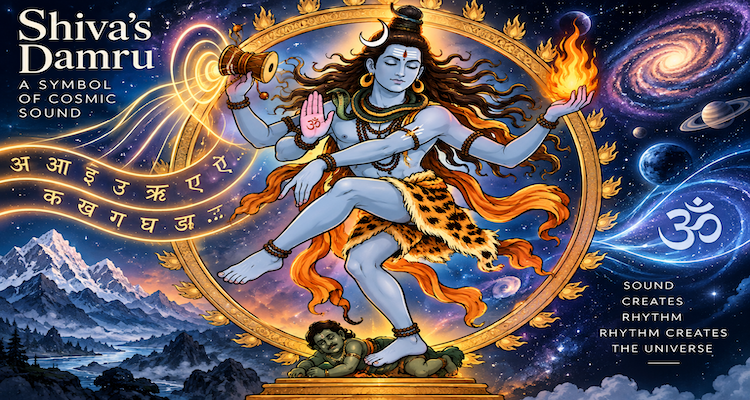
Shiva can be represented as the ascetic in meditation, but he can also appear as Nataraja, the cosmic dancer. In the famous Chola-period Nataraja sculpture at The Met, movement and balance exist together: Shiva’s dance expresses cosmic activity while the figure itself conveys remarkable equilibrium.
Seen together, these images suggest an important cultural idea: stillness and movement do not necessarily represent opposites. A person can act in the world without being completely governed by every impulse, fear or desire arising within the mind.
What “Inner Stillness” Means in Hindu Thought
The phrase “inner stillness” can sound like a modern wellness concept, but its roots are considerably older.
The Upanishads, composed over centuries in ancient India, contain some of the earliest philosophical discussions of concepts such as atman (self), brahman (ultimate reality), karma, liberation and yoga. Later Upanishadic texts also contain descriptions of practices involving control of the senses, breathing and bodily posture.
Classical Yoga developed these concerns into a more systematic discipline.
The Yoga tradition associated with Patañjali places considerable emphasis on concentration, meditation and the transformation of mental activity. The goal is not simply to create a pleasant emotional state. Rather, meditation becomes part of a larger philosophical path concerned with consciousness and liberation.
This provides useful context for the image of Shiva sitting motionless.
His stillness can be understood not as “doing nothing,” but as a visual representation of mastery over distraction.
The Mind as a Flickering Flame
One of the clearest classical images for mental steadiness appears not in a Shiva text but in the Bhagavad Gita.
In Chapter 6, verse 19, the Gita compares the disciplined mind of a yogi to a lamp placed in a windless location. The lamp does not flicker, providing an image of concentration and steadiness. The Gita Supersite at IIT Kanpur provides the Sanskrit verse alongside multiple traditional translations and commentaries.
The metaphor helps clarify what Hindu philosophical traditions can mean by stillness.
The objective is not necessarily to eliminate consciousness. It is to reduce the uncontrolled movement of attention.
Ordinary experience constantly pulls the mind outward: toward memories, plans, worries, desires, sensory impressions and reactions. Meditation traditions developed methods for dealing with this movement rather than simply accepting every thought as authoritative.
In that sense, stillness can be understood as a change in one’s relationship with mental activity.
A thought may arise without automatically becoming an instruction.
An emotion may appear without immediately becoming an action.
A desire may be noticed without necessarily being followed.
That distinction gives the image of Shiva sitting silently a deeper philosophical dimension.
Stillness Is Not the Same as Escape
It would be easy to interpret the meditating Shiva as an argument for abandoning ordinary life. Hindu traditions, however, contain multiple approaches to spiritual practice, and meditation cannot be reduced to permanent withdrawal.
The broader Yoga tradition developed alongside paths involving knowledge, devotion and action. The philosophical history of Yoga is therefore more complicated than the modern idea that spirituality simply means sitting quietly and avoiding worldly responsibilities.
Shiva himself embodies this complexity.
He is portrayed as the solitary ascetic, but he is also associated with Parvati, family life, cosmic power, destruction, creation and divine activity. The Metropolitan Museum describes Shiva as a great ascetic while also noting his domestic relationship with Parvati, which makes him accessible within devotional life.
This tension makes the meditating Shiva particularly interesting.
The lesson is not necessarily that life must stop before inner peace can begin.
It can instead be read as an invitation to develop an inner center that remains steadier while life continues around it.
Why Shiva’s Stillness Is Powerful as an Image
There is another reason the image has endured: it communicates an abstract philosophical idea without requiring a philosophical argument.
A written text can explain concentration, restraint and awareness. A sculpture can show them.
The body itself becomes part of the teaching.
Crossed legs suggest stability. Resting hands suggest containment rather than restless activity. Closed or lowered eyes suggest attention turned inward. Matted hair and ascetic attributes reinforce the image of someone who has stepped away from ordinary social conventions in pursuit of spiritual discipline.
The Metropolitan Museum’s collection includes several representations that emphasize Shiva’s yogic or ascetic identity. One 20th-century image, for example, depicts “Shiva in meditation” with a rudraksha rosary, cobra and matted hair, combining recognizable ascetic symbols with the visual language of devotional art.
The result is more than a portrait of a god sitting quietly.
It is an image of concentrated existence.
A Deeper Connection Between Silence and Awareness
The Hindu idea of stillness becomes particularly interesting when compared with the modern understanding of meditation.
Today, meditation is often discussed in terms of relaxation, stress reduction, productivity or emotional wellbeing. Those uses may be meaningful, but they do not exhaust the historical purposes of meditation in Indian traditions.
Classical Yoga was concerned with the nature of mind and consciousness and with liberation. The Upanishadic traditions likewise explored questions about the self and ultimate reality.
That difference changes how Shiva’s meditation can be understood.
If meditation is viewed only as relaxation, Shiva appears to be resting.
If meditation is viewed as a discipline of attention and self-knowledge, the same figure becomes something very different: a representation of awareness that is not constantly pulled outward by changing circumstances.
This is one reason the image remains culturally powerful even for people approaching it from outside formal religious practice.
The Limits of a Single Interpretation
There is an important qualification.
There is no single Hindu interpretation of Shiva’s meditation that can adequately represent every Hindu tradition. Hindu philosophical and devotional traditions have developed across long periods and contain substantial differences in theology, practice and interpretation.
The historical development of Yoga itself demonstrates this diversity. The Internet Encyclopedia of Philosophy notes that Yoga existed in multiple forms before and alongside the systematic formulation associated with Patañjali. Upanishadic, epic, devotional and philosophical traditions did not always organize meditation in exactly the same way.
Shiva’s image should therefore be understood as a rich symbol rather than a simple diagram with one universally agreed meaning.
For Shaiva traditions in particular, Shiva may carry theological meanings that go far beyond the psychological idea of a calm mind. For others, the meditating figure can serve as an image of ascetic discipline, contemplation or spiritual power.
The symbol is enduring precisely because it can operate across several layers at once.
What Shiva’s Meditation Can Mean Today
The contemporary value of the image does not require turning an ancient religious symbol into a modern self-help slogan.
A more careful interpretation is possible.
Shiva’s meditation asks a basic question: Can a person remain inwardly steady without becoming disconnected from life?
The answer suggested by the broader Hindu philosophical tradition is not simply silence for its own sake. It is disciplined attention.
That can have a practical meaning even outside a religious setting. Before reacting to an argument, a person can pause. Before following an impulse, a person can observe it. Before allowing constant external stimulation to determine attention, a person can deliberately create moments of quiet.
None of these modern practices should automatically be described as equivalent to the traditional spiritual goals of Yoga or Shaiva practice. They are contemporary applications inspired by an older idea.
The distinction matters.
Shiva’s meditation was not originally designed as a productivity technique.
Its deeper significance lies in the possibility that freedom begins, at least in part, when awareness is no longer completely controlled by every movement of the mind.
Conclusion
The meditating Shiva is powerful because his stillness is not empty.
Behind the unmoving posture lies a long Indian conversation about attention, consciousness, self-knowledge, discipline and liberation. The Upanishads explored the nature of the self and ultimate reality; Yoga developed systematic approaches to concentration and meditation; the Bhagavad Gita used the image of a steady lamp to describe the controlled mind; and centuries of Hindu art gave these ideas a visible form through the figure of Shiva the yogi.
The most useful way to read Shiva’s meditation, therefore, may not be as an instruction to withdraw from the world.
It is a reminder that outward activity and inward steadiness are different things.
The world can remain in motion. The question is whether the mind must move with every disturbance.
This content is published for informational or entertainment purposes. Facts, opinions, or references may evolve over time, and readers are encouraged to verify details from reliable sources.