






The Town Where the Sun Disappears for Months and Giant Mirrors Bring It Back
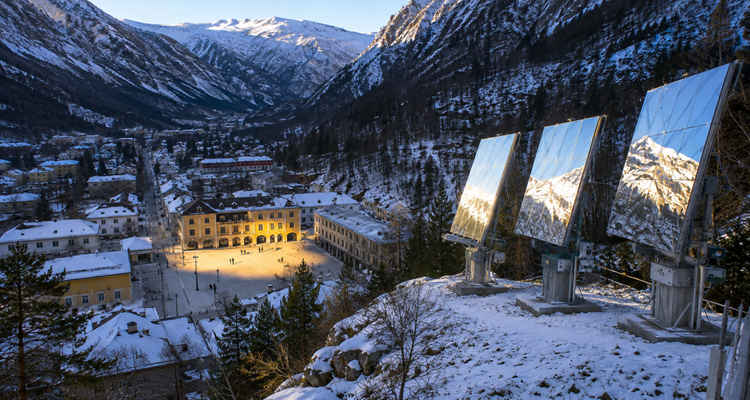
In Norway’s mountain town of Rjukan, a century-old dream became an engineering reality when three enormous mirrors redirected winter sunlight into the heart of the community.
Imagine stepping outside on a clear winter afternoon. The sky is bright, sunlight illuminates the surrounding mountain peaks, yet the streets remain in shadow. No matter how long you wait, the sun never rises high enough to shine directly on your neighbourhood.
In Rjukan, a small industrial town in Norway’s Telemark region, this is an annual reality. For roughly five months, the surrounding mountains stand between the town and the sun.
But in 2013, Rjukan changed its relationship with winter. Three enormous, computer-controlled mirrors were installed high on a mountainside to redirect sunlight into the central town square.
The project, known as Solspeilet, transformed a simple principle of physics into an extraordinary piece of public infrastructure. It also fulfilled an ambition that had remained unrealised for a hundred years.
Why Rjukan Loses Its Sunlight Every Winter
Rjukan occupies the floor of the narrow Vestfjord Valley, surrounded by steep mountains. Among them is Gaustatoppen, which rises to 1,883 metres above sea level.
During summer, the sun travels high enough across the sky for its rays to reach the valley floor. As autumn progresses, however, the sun’s apparent path becomes lower, allowing the mountains to shield the town from direct sunlight.
By October, much of Rjukan is in persistent shade. Direct sunshine gradually returns in March as the sun climbs higher in the sky.
This seasonal phenomenon results from two geographical and astronomical factors: Earth’s axial tilt and the shape of the surrounding landscape.
Earth’s tilt causes the Northern Hemisphere to receive sunlight at lower angles during winter. In Rjukan, the mountain ridges amplify this seasonal effect by creating a high natural barrier along the horizon.
Is Rjukan completely dark for months?
Despite its reputation, Rjukan does not experience months of uninterrupted darkness.
Unlike communities within the Arctic Circle that experience polar night, Rjukan still receives daylight during winter. Its problem is the absence of direct sunshine rather than the complete disappearance of daylight.
Sunlight continues to illuminate the sky and higher elevations, while the valley floor receives indirect, scattered light.
That distinction is precisely what makes its remarkable engineering solution possible. The sunlight is already nearby; it simply needs to be redirected.
A Dream That Began in 1913
The story of Rjukan’s sun mirrors begins with the town’s industrial history.
In the early twentieth century, Norwegian industrialist Sam Eyde recognised the potential of the area’s waterfalls for generating hydroelectric power. Industrial development brought workers, families and infrastructure into the valley, transforming it into a manufacturing community.
However, the geography that made industrial development possible also created an uncomfortable living environment during winter.
In 1913, a bookkeeper named Oscar Kittilsen proposed using a large mirror to reflect sunlight into the town. Eyde supported the ambition, but the technology available at the time was insufficient to make the project practical.
Instead, a different solution emerged.
In 1928, a cable car known as Krossobanen was built, allowing residents to travel above the valley and reach the winter sunshine.
The cable car helped people reach the sunlight. The original mirror proposal offered something fundamentally different: bringing sunlight to the people.
How an Artist Revived the Forgotten Idea
Nearly a century later, local artist Martin Andersen took a renewed interest in solving Rjukan’s sunlight problem.
Andersen revived the mirror proposal in 2005, at a time when automated tracking systems and precision-controlled reflective equipment had made the concept more achievable.
The project brought together artistic imagination, engineering knowledge, municipal support and industrial sponsorship.
On October 30, 2013, residents gathered in the town centre as reflected sunlight reached the square during the project’s inauguration.
The ambition first proposed in 1913 had finally become reality.
The installation cost approximately five million Norwegian kroner, according to contemporary reporting by Reuters.
How Rjukan’s Giant Sun Mirrors Work
The technology behind Solspeilet relies on devices called heliostats.
A heliostat is a movable mirror designed to reflect sunlight towards a selected target while compensating for the sun’s changing position throughout the day.
An ordinary stationary mirror would illuminate different locations as the sun moved across the sky. Rjukan’s mirrors automatically adjust their orientation to keep the reflected light directed towards the town square.
The underlying principle is the law of reflection: the angle at which light strikes a reflective surface equals the angle at which it leaves, measured relative to a line perpendicular to that surface.
By continually changing the mirror’s angle, engineers can maintain a relatively stable illuminated area despite the changing position of the sun.
Rjukan sun mirrors: Key facts
| Feature | Details |
|---|---|
| Project name | Solspeilet |
| Location | Rjukan, Telemark, Norway |
| Original proposal | 1913 |
| Installation inaugurated | 2013 |
| Number of mirrors | 3 |
| Individual mirror area | 17 m² |
| Combined mirror area | 51 m² |
| Installation elevation | 742 metres above sea level |
| Height above town square | Approximately 450 metres |
| Illuminated area | Approximately 600 m² |
| Project cost | NOK 5 million |
Sources: Visit Rjukan, Visit Norway and contemporary Reuters reporting.
Interestingly, the illuminated area is considerably larger than the combined surface of the three mirrors.
This does not mean the mirrors generate additional solar energy. The reflected illumination spreads across a larger surface, and the geometry of its arrival determines the shape and intensity of the light on the ground.
Why the Mirrors Cannot Illuminate the Entire Town
As impressive as the installation is, it does not eliminate Rjukan’s winter shadows.
The mirrors illuminate a designated section of the town square rather than every street, building and residential neighbourhood.
Their effectiveness also depends on atmospheric conditions. When thick clouds prevent direct sunlight from reaching the mirrors, there is little direct light available to redirect.
Expanding the system to illuminate a significantly larger area would require additional reflective surfaces, suitable installation locations, more maintenance and careful engineering.
There is also a fundamental difference between redirecting sunlight and changing a region’s climate. The mirrors cannot extend the astronomical length of the day or prevent winter temperatures.
The project’s achievement is therefore more specific: it makes a portion of naturally available sunlight accessible in a place where the landscape would otherwise prevent it from arriving.
When Sunlight Becomes a Public Resource
Perhaps the most interesting aspect of Rjukan’s project is not its size but its purpose.
Heliostats are commonly associated with solar energy systems, where mirrors direct sunlight towards equipment that collects thermal energy. Rjukan applies the same general principle to a different human need.
Instead of generating electricity, its mirrors serve a shared public space.
A patch of winter sunshine becomes something residents can experience together. People can meet, spend time outdoors or simply enjoy the unusual contrast between an illuminated square and the surrounding shaded valley.
Although natural light plays an important role in regulating human biological rhythms, Rjukan’s mirrors should not be considered a medical treatment. The sources documenting the installation do not establish measurable long-term health improvements among residents.
Its demonstrated achievement is providing access to reflected sunshine in a communal setting.
From an urban-design perspective, the project offers an interesting example of how technology can improve the experience of a public space without completely transforming its surroundings.
Rjukan Is Not the Only Town to Bring Back the Sun
Norway is not alone in experimenting with reflected winter sunlight.
In 2006, the Italian mountain village of Viganella installed a large mirror to address a similar problem. Situated in an Alpine valley, the community also experiences extended periods without direct winter sunshine.
Viganella’s installation preceded Rjukan’s by seven years, demonstrating that the Norwegian town was not the first community to implement this concept.
Both communities illustrate how the availability of sunlight depends on local geography as well as latitude.
Even places located relatively far south of the Arctic Circle can experience prolonged seasonal shade when surrounded by sufficiently high mountains.
Their solutions also demonstrate that sophisticated technology does not always require an entirely new scientific discovery. Sometimes, innovation comes from applying familiar physical principles to an overlooked everyday problem.
A Town That Celebrates the Return of the Sun
Long before its giant mirrors were installed, sunlight already held a special place in Rjukan’s cultural identity.
According to the local tourism authority, March 12 traditionally marks the return of direct sunlight to Fabrikkbrua, in the western part of the town.
As the season progresses, sunshine reaches more of the valley.
Rjukan also celebrates Solfesten, a community festival with a tradition dating back to 1925. The celebration recognises the natural return of sunshine following the long winter months.
The giant mirrors have not replaced that tradition. They have added another chapter to the community’s relationship with its unusual landscape.
For residents, the natural return of sunlight remains a seasonal milestone that no artificial installation can entirely reproduce.
Can Visitors Experience Rjukan’s Reflected Sunlight?
Travellers interested in unusual engineering projects can visit Rjukan’s central square during the months when the valley remains shaded.
A clear winter day offers the best opportunity to observe the contrast between the reflected illumination and the surrounding shadow, provided the installation is operating.
Visitors can also explore the mountainside where the mirrors are located. The local tourism authority describes the hiking route from town as challenging, making suitable footwear and attention to weather conditions important.
Anyone planning a visit should consult Visit Rjukan for local information and check operating conditions before travelling.
The experience depends on the weather, so seeing the reflected sunlight cannot be guaranteed.
An Extraordinary Solution to an Ordinary Human Need
Rjukan’s giant mirrors offer a reminder that engineering does not always need to pursue greater speed, higher productivity or increased energy generation. It can also improve the simple experience of living somewhere.
The mountains remain exactly where they were. Winter still arrives, the days become shorter, and much of the valley continues to lie in shadow.
What changed was the community’s ability to access something its landscape had long placed beyond reach.
A proposal from 1913, supported by modern technology a hundred years later, gave Rjukan a small but meaningful way to adapt to its environment.
The town could not change the path of the sun.
It could, however, change where some of its light landed.
This content is published for informational or entertainment purposes. Facts, opinions, or references may evolve over time, and readers are encouraged to verify details from reliable sources.
Related News
- The Villages Where You Can Walk Into Another Country Without Realising You’ve Crossed a Border
- The Countries Where Crossing a Street Can Mean Travelling Into Tomorrow
- The Airports Where Your Flight Can Land in a Different Country Than You Expected
- The Towns That Become Tourist Attractions for Something That No Longer Exists