








The Psychology of Lifelong Learning: Why Some Adults Keep Growing While Others Stop

There comes a point in many careers when experience alone is no longer enough. The professionals who continue to thrive are often not those with the most years behind them, but those who never stop learning. Meanwhile, others gradually rely on familiar routines, becoming less adaptable as industries, technologies, and workplaces evolve around them.
This difference is becoming increasingly visible across professions. Whether in healthcare, business, education, technology, or the creative industries, the ability to keep learning has become one of the strongest predictors of long-term relevance. Lifelong learning is no longer simply about earning additional qualifications, it reflects a mindset that shapes how people respond to change, uncertainty, and opportunity.
Understanding why some adults continue to grow while others stop reveals far more than differences in intelligence or education. It uncovers the psychology behind curiosity, confidence, identity, and the habits that influence personal and professional development throughout life.
Learning Doesn’t End With School But Many People Think It Does
Formal education naturally creates a finish line. Graduations, certificates, and degrees signal completion, reinforcing the idea that learning is something people eventually “finish.”
In reality, adulthood presents entirely different learning challenges. Careers change, industries evolve, technologies emerge, and personal priorities shift. The knowledge acquired years earlier gradually becomes less complete.
Yet many adults unknowingly carry a school-based definition of learning into adulthood. They associate learning with exams, grades, or classrooms rather than with continuous exploration and adaptation. Once formal education ends, their learning habits often slow down as well.
Others redefine learning as an everyday process. They read broadly, ask questions, experiment with new tools, seek feedback, and remain open to unfamiliar ideas. Their education never truly concludes because they no longer see learning as an event, it becomes part of how they live.
Curiosity Is More Powerful Than Intelligence
One of the biggest misconceptions about lifelong learning is that it depends primarily on intelligence. In practice, curiosity often matters more.
Curious individuals naturally search for explanations, patterns, and possibilities. Instead of asking whether they are capable of learning something new, they ask how it works or why it matters.
This subtle shift changes behavior dramatically.
Curiosity lowers the psychological barrier to learning because the focus moves away from performance and toward discovery. Mistakes become useful rather than embarrassing. Questions become opportunities rather than signs of weakness.
Many highly successful professionals maintain this beginner’s mindset throughout their careers. They remain comfortable admitting they do not know everything, a quality that often accelerates rather than limits their growth.
The Hidden Role of Identity
An overlooked psychological factor behind lifelong learning is identity.
People who view themselves as learners tend to keep learning regardless of age or profession. They do not study because someone requires it; they learn because it aligns with who they believe they are.
By contrast, those who strongly identify with being experts may unintentionally resist new knowledge. Accepting unfamiliar ideas can feel like admitting previous limitations, creating an internal conflict between protecting expertise and embracing growth.
Ironically, the most accomplished professionals are often those willing to revise their own assumptions.
Rather than protecting an image of always being right, they protect their ability to keep improving.
Comfort Can Quietly Replace Growth
Success sometimes creates an unexpected obstacle to learning.
After years of experience, routines become efficient. Familiar methods continue producing acceptable results. Over time, comfort replaces curiosity.
This gradual shift is rarely noticeable. People continue performing well enough while the world changes around them.
Entire industries have experienced this phenomenon. Organizations that once dominated their markets occasionally struggled not because they lacked talent but because they became overly dependent on established practices. Individuals can experience the same pattern in their careers.
Growth often requires intentionally stepping outside comfortable expertise before external change forces the adjustment.
The Workplace Is Rewarding Adaptability More Than Experience
Experience remains valuable, but today’s workplaces increasingly reward employees who combine experience with continuous learning.
Artificial intelligence, automation, digital collaboration tools, and changing customer expectations have shortened the lifespan of many professional skills. Technical knowledge alone no longer guarantees long-term career resilience.
Employers increasingly value adaptability, the ability to learn new systems, solve unfamiliar problems, and collaborate across changing environments.
This represents an important psychological shift.
Rather than asking, “What do you already know?” organizations increasingly ask, “How quickly can you learn what comes next?”
Employees who continue learning often become valuable not because they possess every answer but because they consistently acquire new ones.
Fear Often Disguises Itself as Disinterest
Many adults who stop learning are not actually uninterested in growth.
They may fear appearing inexperienced, making mistakes, or struggling with something younger colleagues seem to master easily.
Learning naturally places people in situations where they are temporarily less competent than before. That discomfort can be psychologically challenging, especially after years of professional success.
As a result, avoidance sometimes appears as indifference.
Recognizing this emotional barrier is important because overcoming it often requires changing attitudes toward failure rather than improving intellectual ability.
The willingness to feel temporarily uncomfortable frequently determines whether learning continues.
Digital Access Has Changed What Learning Looks Like
One of the most significant cultural shifts of the past decade is that learning is no longer limited by access.
Professional courses, educational videos, podcasts, online communities, digital libraries, and interactive tools have dramatically expanded opportunities for self-directed education.
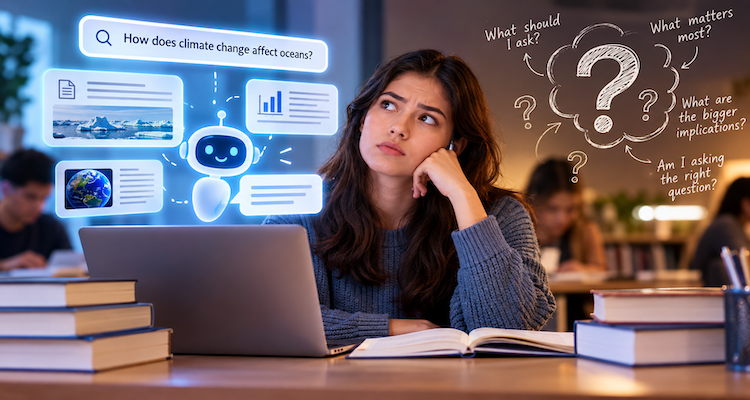
The challenge has shifted from finding information to selecting meaningful knowledge amid constant digital noise.
Successful lifelong learners increasingly develop filtering skills alongside learning skills. They evaluate sources carefully, seek practical application, and focus on depth rather than endless consumption.
Learning is becoming less about collecting information and more about transforming information into understanding.
Lifelong Learning Is Becoming a Competitive Advantage
An interesting shift is emerging across many professions.
Knowledge itself is becoming more widely available. What increasingly differentiates people is not access to information but the ability to continuously integrate new ideas into existing expertise.
This creates what psychologists sometimes describe as a compounding effect.
Each new skill makes future learning easier because individuals build richer mental frameworks for connecting concepts across different disciplines.
Someone who regularly learns about communication, technology, leadership, economics, and human behavior often develops stronger problem-solving abilities than someone who specializes narrowly without continued growth.
Over time, curiosity compounds much like experience does.
Why This Matters Beyond Career Success
The benefits of lifelong learning extend beyond professional achievement.
Continuous learning encourages cognitive flexibility, helping people adapt to personal transitions, changing communities, evolving technologies, and unexpected life events.
It can also enrich relationships by encouraging empathy and openness to different perspectives. People who remain curious often become better listeners because they approach conversations with genuine interest rather than certainty.
Perhaps most importantly, lifelong learning reinforces a sense of agency.
Instead of viewing change as something that happens to them, lifelong learners view change as something they can navigate by acquiring new knowledge and skills.
That mindset becomes increasingly valuable in a world where uncertainty is no longer the exception but the norm.
Growth Is Less About Age Than Attitude
The psychology of lifelong learning ultimately challenges one of society’s oldest assumptions, that personal development naturally slows with age.
Growth is not determined by birthdays or degrees. It is shaped by habits, beliefs, and the willingness to remain intellectually curious despite uncertainty.
Adults who continue learning rarely possess some extraordinary advantage unavailable to others. More often, they consistently choose curiosity over certainty, experimentation over comfort, and improvement over perfection.
As workplaces evolve and industries continue transforming, lifelong learning is becoming less of an optional personal goal and more of a defining characteristic of resilient individuals. The people who keep growing are not simply acquiring more knowledge, they are continuously expanding their capacity to adapt, contribute, and thrive.
The information presented in this article is based on publicly available sources, reports, and factual material available at the time of publication. While efforts are made to ensure accuracy, details may change as new information emerges. The content is provided for general informational purposes only, and readers are advised to verify facts independently where necessary.