







Karma Is Not Cosmic Reward: The Original Meaning Is Far More Powerful
Karma is one of the most widely recognized ideas in spirituality, and one of the most misunderstood.
In popular culture, karma is often treated as a cosmic justice system. Someone behaves badly, something unfortunate happens to them later, and observers nod knowingly: “That’s karma.” The concept has become shorthand for delayed punishment or reward, a spiritual version of cause and effect that eventually balances the scales.
Yet this popular interpretation misses something much deeper. The original idea of karma was never primarily about the universe keeping score. It was about understanding how actions shape character, consciousness, habits, and ultimately the direction of a person’s life.
That distinction matters more than many people realize. At a time when millions are searching for meaning, resilience, and personal responsibility amid constant distraction, the traditional understanding of karma offers a perspective that feels surprisingly relevant—not because it predicts the future, but because it explains how the future is often built.
How Karma Became a Popular Catchphrase
The modern use of karma is simple and emotionally satisfying. Good actions bring good outcomes. Bad actions bring bad outcomes.
This interpretation appeals to a universal human desire: the belief that fairness exists, even when life appears unfair. It reassures people that harmful behavior will eventually be corrected and kindness will eventually be rewarded.
Social media has amplified this version of karma. Viral videos showing instant consequences, public failures, or dramatic reversals are frequently labeled as examples of karma. The term has become a cultural shortcut for poetic justice.
The problem is that life rarely operates with such neat symmetry.
Many good people experience hardship. Many dishonest people appear successful. If karma is understood only as immediate reward and punishment, reality often seems to contradict the theory.
The original teachings approached the issue differently.
The Deeper Meaning of Karma
The Sanskrit word karma literally means action.
In traditions such as Hinduism, Buddhism, Jainism, and several schools of Indian philosophy, karma refers not merely to what people do, but to how actions create consequences that shape future experience.
The key insight is subtle but profound: every action leaves an imprint.
Thoughts influence habits. Habits influence character. Character influences decisions. Decisions influence life outcomes.
In this view, karma is not a supernatural bookkeeping system. It is a process through which actions gradually shape the individual.
A person who repeatedly practices compassion may strengthen qualities of empathy and patience. Someone who repeatedly acts from anger may reinforce patterns that make anger more likely in the future.
The consequence is not always external. Often, it is internal.
That is what makes the original concept so powerful.
Why This Idea Feels Surprisingly Modern
One reason interest in karma continues to grow is that many aspects of the traditional concept align with modern observations about behavior.
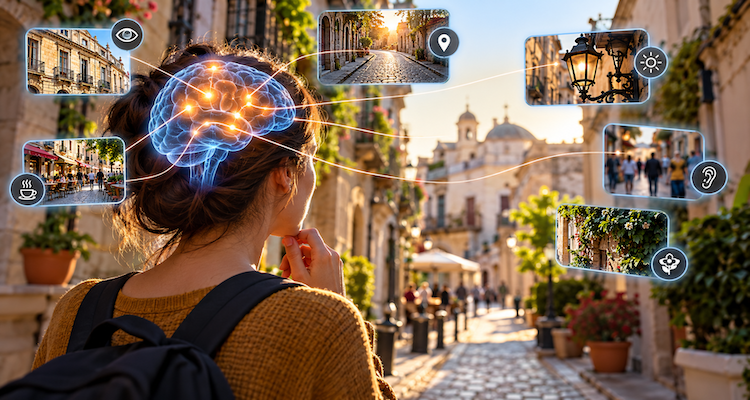
Psychologists often discuss how repeated actions create habits. Neuroscientists study how repeated behaviors strengthen neural pathways. Behavioral experts emphasize that small daily choices accumulate into larger life patterns.
While these fields operate independently from spiritual traditions, they highlight a similar principle: repeated actions shape who we become.
Seen through this lens, karma becomes less about waiting for the universe to act and more about recognizing that every choice is already having an effect.
A person who constantly seeks outrage online may gradually become more reactive. Someone who regularly practices gratitude may become more attentive to positive experiences.
The transformation happens quietly, often long before visible results appear.
The Shift From Fate to Responsibility
Perhaps the greatest misunderstanding of karma is the belief that it encourages passive acceptance.
Critics sometimes assume that karma teaches people to accept suffering because everything is predetermined by past actions.
Many traditional interpretations suggest the opposite.
Karma is often presented as a framework of responsibility rather than fatalism. While past actions may influence present circumstances, current actions still matter. Every decision becomes an opportunity to shape future outcomes.
This perspective places significant emphasis on personal agency.
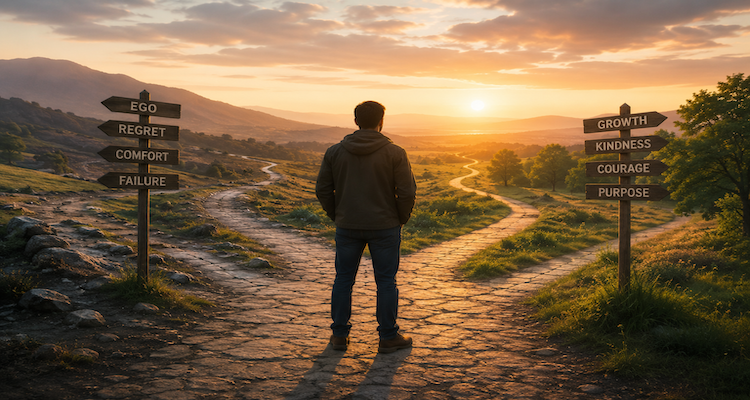
Instead of asking, “Why is this happening to me?” the question becomes, “How should I respond?”
That shift can be transformative.
It moves attention away from blame and toward action. It encourages individuals to focus on what can still be changed rather than becoming trapped by what has already occurred.
The Hidden Insight Most People Miss
The most overlooked aspect of karma may be that its primary purpose was never prediction.
Many people approach karma as a way to forecast future rewards or punishments. Traditional teachings often treat it as a tool for self-awareness.
The question is not whether someone else will eventually get what they deserve.
The question is what our own actions are doing to us right now.
This difference changes everything.
When karma becomes a framework for observing the relationship between actions and inner development, it becomes immediately practical. It stops being a theory about distant outcomes and becomes a guide for daily living.
Every interaction matters.
Every habit matters.
Every repeated thought pattern matters.
The focus shifts from judging others to understanding oneself.
Why Karma Resonates in a Digital Age
The renewed interest in karma may reveal something broader about contemporary culture.
People are increasingly aware that seemingly small actions can have long-term consequences. A social media post can affect a career years later. Digital habits can influence mental health. Daily consumption patterns can shape attention, relationships, and well-being.
The digital world constantly demonstrates that actions leave traces.
In that sense, karma feels less like an ancient religious idea and more like a timeless observation about human behavior.
What people repeatedly do online and offline gradually becomes part of who they are.
The concept also offers a counterbalance to a culture obsessed with instant results. Karma emphasizes process over immediate outcomes. It suggests that meaningful change often emerges through consistent actions rather than dramatic moments.
That message may be especially valuable in an era defined by speed, comparison, and constant stimulation.
Beyond Reward and Punishment
The enduring power of karma lies in its depth.
Reduced to a slogan, it becomes little more than spiritual entertainment, a way to explain why someone else’s bad luck seems deserved.
Understood more fully, it becomes a framework for examining how actions shape identity, relationships, and experience.
It encourages accountability without cynicism. It promotes responsibility without blame. And it reminds people that the consequences of actions often begin long before external results appear.
The original idea of karma was never simply about what happens to us.
It was about what we are becoming.
That distinction may explain why the concept has survived for centuries. While circumstances change, the fundamental challenge remains the same: every day, through countless choices, people are shaping the person they will be tomorrow.
And according to the deeper understanding of karma, that process is already underway.
This content is published for informational or entertainment purposes. Facts, opinions, or references may evolve over time, and readers are encouraged to verify details from reliable sources.
Related News
- Why Mark Zuckerberg Visited Kainchi Dham: The Neem Karoli Baba Connection Behind a Silicon Valley Story
- Kainchi Dham: How a Himalayan Ashram Became a Global Spiritual Landmark
- How Religious Architecture Continues to Shape Human Emotions Long After Belief Fades
- The New Search for Silence and Why It Is Becoming a Spiritual Movement