









AI Companions Are Reshaping Human Relationships in Ways We’re Only Beginning to Understand
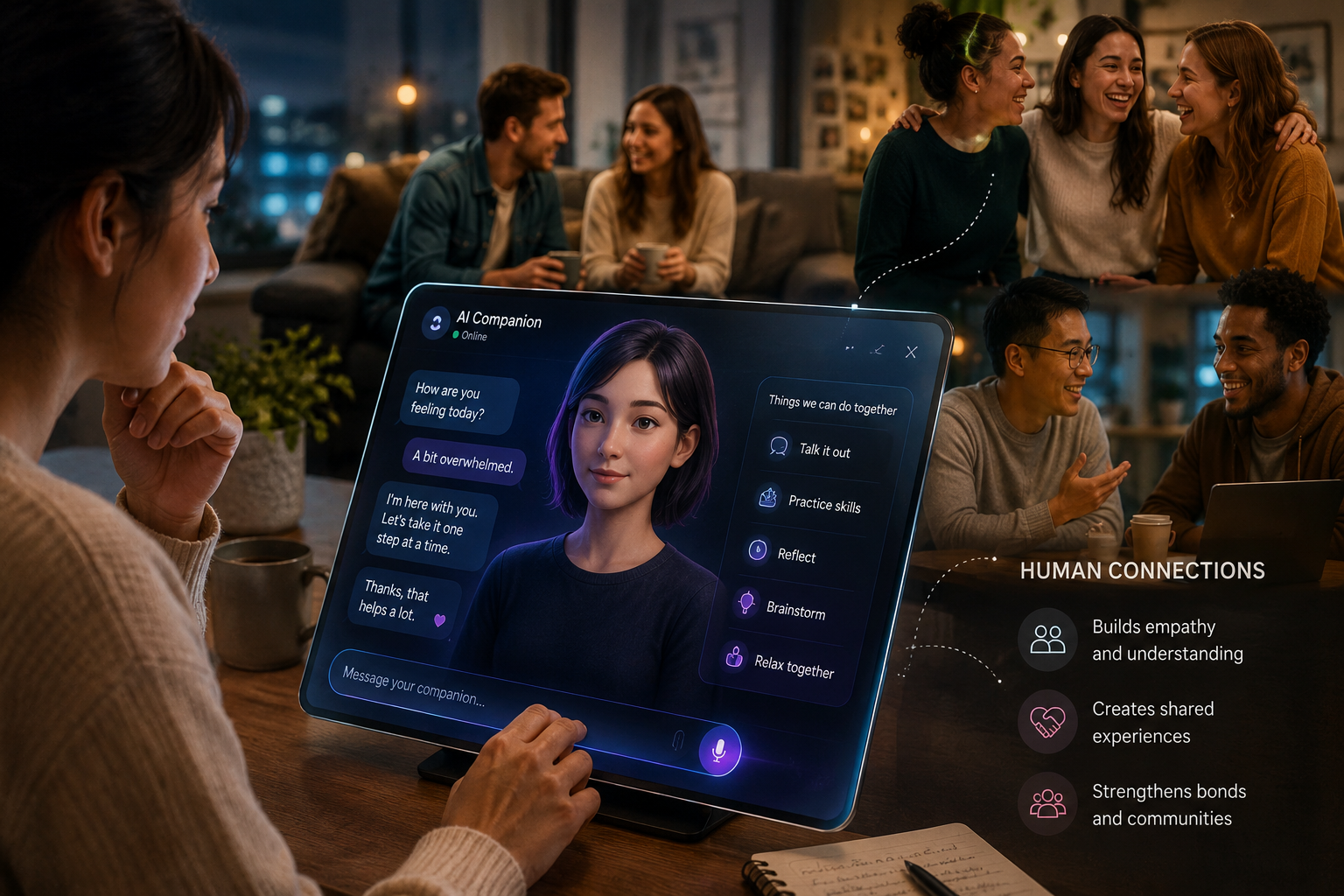
A quiet social shift is unfolding behind smartphone screens. Millions of people now spend time talking not just to friends, family members, or colleagues, but to artificial intelligence companions designed to listen, respond, remember preferences, and provide emotional support.
What once sounded like science fiction has become an increasingly ordinary part of digital life. AI companion platforms, conversational chatbots, and personalized virtual assistants are attracting users seeking everything from casual conversation to deeper emotional connection. The technology is advancing quickly, but the more interesting story may not be about artificial intelligence itself. It is about what these relationships reveal about human needs.
The rise of AI companions raises a question that extends far beyond technology: if people can form meaningful emotional bonds with software, what does that mean for human relationships?
More Than a Technology Trend
Most discussions about AI companions focus on technical capabilities. Can they hold conversations? Do they understand emotions? How realistic are they becoming?
Those questions matter, but they miss a larger cultural development.
AI companions are gaining popularity at a time when loneliness, social fragmentation, and digital isolation are becoming common concerns across many societies. People have more ways to connect than ever before, yet many report feeling disconnected from meaningful relationships.
An AI companion offers something that human relationships often cannot guarantee: immediate availability. There are no scheduling conflicts, social pressures, misunderstandings, or fears of judgment. The interaction is always accessible and often tailored to the user’s preferences.
For some users, that convenience is appealing. For others, it fills a gap created by increasingly busy lifestyles and shrinking social circles.
The growing acceptance of AI companionship suggests that people may not simply be adopting a new technology. They may be responding to a broader change in how connection is experienced in the digital age.
Why Interest Is Growing So Quickly
Several forces are converging at the same time.
Advances in generative AI have dramatically improved conversational quality. Modern systems can maintain context, adapt their tone, and engage in longer, more natural interactions than earlier chatbots.
At the same time, people have become comfortable building relationships through screens. Social media, online gaming communities, remote work, and digital messaging have already transformed how friendships and relationships develop. AI companions represent the next step in that progression.
There is also a practical factor. Human relationships require mutual effort. They involve compromise, unpredictability, and emotional labor. AI companions are designed to reduce friction. They adapt to users rather than expecting users to adapt to them.
That distinction may help explain why interest is expanding beyond technology enthusiasts and into mainstream audiences.
The Hidden Shift: From Information Tools to Emotional Tools
One of the most important developments is often overlooked.
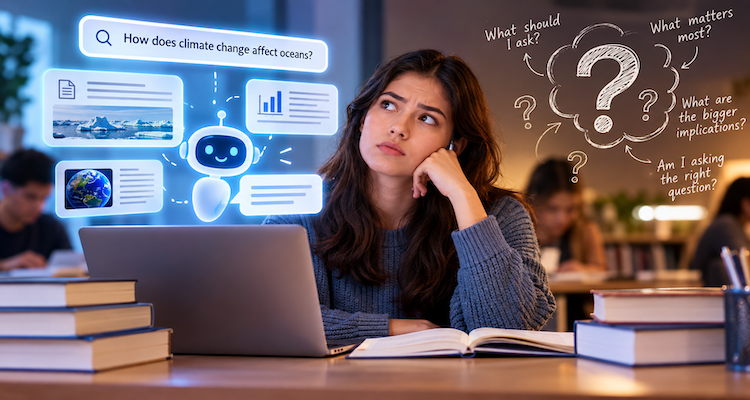
For years, digital technologies were primarily valued for helping people access information. Search engines answered questions. Apps completed tasks. Social platforms connected users with other people.
AI companions represent a different category altogether. They are increasingly being used for emotional experiences rather than informational ones.
People may use them to discuss personal challenges, practice difficult conversations, explore ideas, reduce feelings of isolation, or simply feel heard after a stressful day.
This marks a significant evolution in how humans interact with technology.
The most valuable digital products of the past helped people find information. The most influential AI products of the future may help people process emotions.
That possibility has implications far beyond the technology industry. It could influence education, mental wellness services, customer experiences, entertainment, and even workplace communication.
What AI Can Provide and What It Cannot
The growing normalization of AI companionship does not mean artificial relationships are replacing human ones.
Human relationships remain fundamentally different because they involve genuine reciprocity. Friends, partners, family members, and colleagues have their own perspectives, needs, emotions, and experiences. Meaningful relationships emerge partly from navigating those complexities.
AI companions do not experience emotions, possess independent desires, or share real-life experiences. Their responses are generated through patterns and predictions rather than personal understanding.
Yet the distinction is not always obvious from the user’s perspective.
People often respond emotionally to anything that appears attentive, empathetic, and responsive. Humans have long formed attachments to fictional characters, pets, brands, and digital communities. AI companions may be another example of this broader psychological tendency.
The challenge is not whether users know they are interacting with software. The challenge is understanding how repeated emotional engagement with AI may influence expectations for real-world relationships.
If people become accustomed to interactions that are endlessly patient, highly personalized, and largely conflict-free, they may begin comparing human relationships to a standard that no human can realistically meet.
A New Social Skill May Be Emerging
An unexpected consequence of AI companionship may be the emergence of a new form of digital literacy.
For decades, people learned how to navigate social media. Today, they are learning how to interact with intelligent systems that can simulate conversation, empathy, and attention.
Future generations may need skills that previous generations never considered:
How should people emotionally engage with AI?
When is an AI companion helpful, and when might it become a substitute for human connection?
How can users benefit from these tools without becoming overly dependent on them?
These questions are likely to become increasingly important as AI becomes integrated into everyday life.
The conversation may eventually shift from whether AI companions are good or bad to whether people are using them intentionally and responsibly.
The Business and Cultural Impact
The normalization of AI companionship is also creating new opportunities and challenges for businesses.
Companies are exploring AI-driven customer support, personalized coaching, educational assistants, wellness applications, and entertainment experiences. Many organizations see emotionally intelligent AI as a potential competitive advantage.
At the same time, questions around privacy, transparency, and ethical design are becoming more significant.
When users share personal thoughts, emotional struggles, or relationship concerns with AI systems, expectations around trust increase dramatically. Organizations developing these products will face growing pressure to demonstrate responsible data practices and clear communication about what AI can and cannot do.
Culturally, the trend may reshape expectations about companionship itself.
Previous generations largely viewed relationships as exclusively human experiences. Future generations may grow up seeing AI interaction as a normal part of everyday social life, much like social media became normalized over the past two decades.
What Happens Next?
AI companions are unlikely to eliminate the human need for genuine relationships. Humans are social beings whose lives are shaped by shared experiences, mutual care, and real-world communities.
What may change is the role technology plays between moments of human connection.
AI companions could become conversational partners, emotional support tools, learning assistants, creative collaborators, and social practice spaces. For some people, they may complement existing relationships. For others, they may fill temporary gaps during periods of loneliness or transition.
The deeper story is not that people are choosing machines over humans.
It is that society is entering an era where emotional interaction is no longer limited to human-to-human relationships. That shift forces a reconsideration of what connection means, what people seek from relationships, and how technology increasingly shapes both.
The future of AI companionship will ultimately depend less on the sophistication of algorithms and more on how humans choose to integrate these tools into their lives. The most important question is not whether AI can simulate connection. It is whether people can use that simulation in ways that strengthen, rather than weaken, their relationships with one another.
The information presented in this article is based on publicly available sources, reports, and factual material available at the time of publication. While efforts are made to ensure accuracy, details may change as new information emerges. The content is provided for general informational purposes only, and readers are advised to verify facts independently where necessary.