










Why Haunted Highway Stories Feel Disturbingly Real
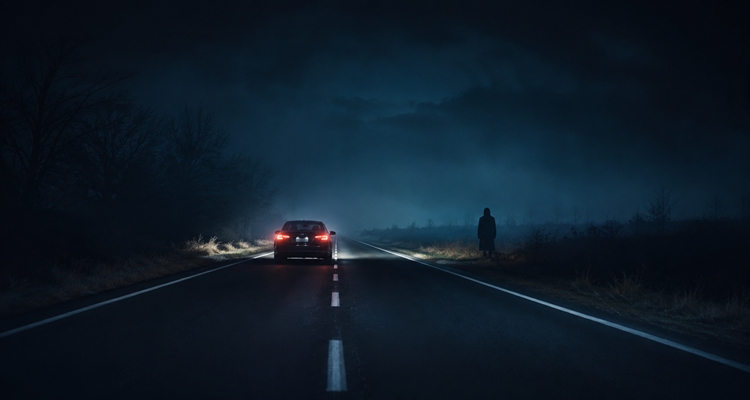
A driver on an empty road sees someone standing under a flickering streetlight. They stop for a moment, offer a ride, and glance away for only a few seconds. When they look back, the passenger is gone.
Versions of this story appear everywhere. Mountain roads in Asia. Desert highways in the United States. Rain-soaked routes in Europe. Rural stretches in Latin America. The details change slightly, but the structure remains strangely familiar. That repetition is what keeps haunted highway stories alive long after midnight conversations end.
People do not just report fear. They report the same fear.
Unlike ghost stories tied to old mansions or abandoned hospitals, highway encounters feel harder to dismiss because roads are part of ordinary life. Millions of people drive late at night while exhausted, distracted, emotionally overwhelmed, or isolated. The setting is modern and recognizable. A dashboard glows softly. GPS directions echo through the car. A gas station sits miles away. Then something happens that feels just outside normal explanation.
That combination of realism and uncertainty has turned haunted highway stories into one of the most enduring forms of modern folklore.
The Same Encounters Keep Reappearing
Across cultures, several patterns repeat with surprising consistency.
One of the most common is the phantom hitchhiker. Drivers describe picking up a quiet passenger who disappears before reaching the destination. Sometimes the figure warns the driver about danger ahead. Other times, the passenger leaves behind an object or directs the driver to a location connected to an old accident.
Another recurring experience involves “shadow figures” standing near roadsides. Witnesses often describe seeing someone staring directly at the vehicle before vanishing into darkness. Some drivers report sudden temperature changes inside the car, unexplained radio interference, or intense feelings of dread immediately afterward.
Then there are the disappearing roads. Travelers claim to drive through stretches of highway where distances feel distorted. A ten-minute drive becomes an hour. GPS systems lose signal in areas that should have full coverage. Landmarks appear repeatedly as if the road itself is looping.
These stories spread because they feel oddly structured, almost as if unrelated people are describing the same nightmare from different parts of the world.
Why Night Driving Changes Human Perception
Part of the phenomenon may have less to do with the supernatural and more to do with the human brain under stress.
Long-distance driving places people into a highly focused but mentally vulnerable state. Darkness limits peripheral vision. Repetitive road movement creates fatigue. Silence amplifies internal thoughts. Headlights isolate objects in fragments rather than complete scenes.
Psychologists have long observed that tired minds can misinterpret visual information, especially during monotonous tasks. Shadows appear human. Reflections feel animated. Brief glimpses become complete narratives once the brain attempts to “fill in” missing details.
But rational explanations alone do not fully erase the emotional power of these stories. In many cases, witnesses insist the experience felt too vivid, too coherent, or too specific to be simple exhaustion.
That tension between psychology and mystery is exactly why haunted highway accounts continue to thrive.
GPS Glitches and Digital Fear
Older road legends once relied on maps, roadside diners, and isolated motels. Modern versions increasingly involve technology.
Drivers now describe navigation apps redirecting them onto abandoned roads. Some report receiving impossible arrival times or seeing blank areas where roads should exist. Others claim their phones lost signal at the exact moment strange events occurred.
These details matter because they reflect a broader cultural shift. People trust digital systems deeply. GPS technology is supposed to reduce uncertainty. When it fails unexpectedly, even briefly, the emotional effect becomes stronger than a traditional ghost story.
A broken flashlight in the past created anxiety. Today, a malfunctioning smartphone can create the same feeling.
This is one reason haunted highway content performs so well online. The stories combine ancient fears with modern dependence on technology. They are no longer just supernatural tales; they are stories about losing control in systems people rely on every day.
The Internet Turned Local Legends Global
Before online platforms, most road legends stayed regional. A haunted bridge or cursed highway might remain known only within one town for generations.
Now, social media platforms, podcasts, video channels, and online forums allow these stories to travel instantly across countries and languages. A driver in India may hear a highway legend originally shared in Canada. Someone in Brazil may recognize details from a Japanese roadside encounter.
This global circulation has created an unusual effect: people begin comparing stories and noticing similarities.
That comparison strengthens belief.
When strangers from different cultures describe nearly identical experiences, disappearing passengers, silent children near roadsides, unexplained detours, or cars appearing suddenly in rearview mirrors, the stories start feeling less like isolated fiction and more like fragments of a shared human experience.
Whether those similarities come from psychology, storytelling traditions, or something unexplained, the emotional result is the same. Readers become unsettled because the patterns repeat too often.
Why These Stories Keep Going Viral
Haunted highway stories succeed online because they sit between realism and imagination.
A haunted castle feels distant from everyday life. A dark road does not.
Most adults have experienced late-night driving at least once. Many know the strange mental state that develops during long silent journeys. That familiarity creates immediate immersion. Readers do not need complex world, building because they already understand the setting emotionally.
There is also a social aspect to these stories. Unlike traditional horror movies, haunted highway accounts invite participation. People respond with their own encounters. Families pass down warnings about certain roads. Truck drivers exchange stories at rest stops. Ride-share drivers share unexplained experiences after midnight shifts.
In a digital culture saturated with polished entertainment, firsthand-style storytelling feels more authentic. Even skeptical readers often continue listening because they recognize the emotional realism behind the fear.
The Roads Reflect Modern Anxiety
The most interesting insight behind the haunted highway phenomenon may be what these stories reveal about modern life itself.
Roads symbolize movement, independence, and progress. But they also represent isolation. Many people spend hours alone in vehicles, disconnected from others while navigating unfamiliar environments guided mostly by screens.
Haunted highway stories transform that loneliness into narrative form.
The “ghost” is often less important than the emotional setting surrounding it: exhaustion, uncertainty, disconnection, silence, and vulnerability. The encounters become symbolic expressions of modern anxieties people rarely discuss directly.
That may explain why the stories continue evolving rather than disappearing. As technology changes, the legends adapt. Ghostly hitchhikers become strange rideshare passengers. Lost travelers become drivers trapped by malfunctioning navigation systems. The fear remains the same even when the details change.
The Mystery That Refuses to Fade
No definitive explanation fully solves the haunted highway phenomenon because it exists at the intersection of folklore, psychology, memory, and culture.
Some stories likely emerge from exhaustion and misinterpretation. Others grow through repetition and exaggeration. A few may remain genuinely difficult to explain.
But the enduring power of these encounters comes from something deeper than proof.
People are unsettled when unrelated strangers describe the same impossible thing.
And somewhere tonight, on a quiet road lit only by headlights, another driver may experience something they will spend years trying to explain.
This content is published for informational or entertainment purposes. Facts, opinions, or references may evolve over time, and readers are encouraged to verify details from reliable sources.