








Neem Karoli Baba: The Extraordinary Life, Miracles, and Timeless Legacy of Maharaj-ji
Spirituality and Religion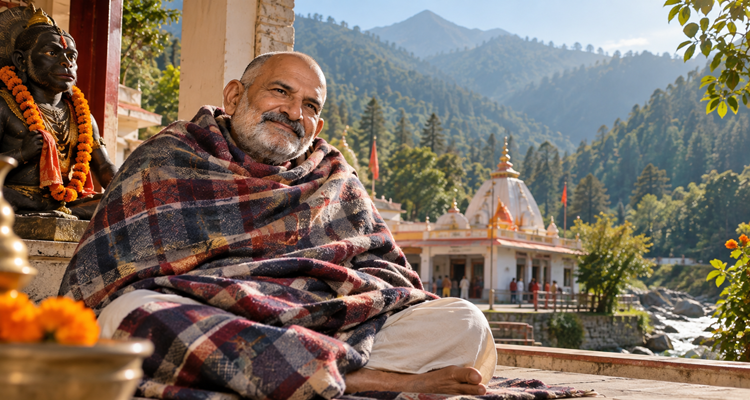
Neem Karoli Baba, affectionately known to devotees as Maharaj-ji, remains one of the most intriguing spiritual figures to emerge from 20th-century India. He left behind no major philosophical treatise and did not build a conventional institution around himself. Yet decades after his death, his name continues to draw pilgrims to Kainchi Dham in Uttarakhand, while his influence travels far beyond India through the writings and lives of people such as Ram Dass and Krishna Das.
Part of the fascination comes from the stories of miracles associated with him. Devotees have described extraordinary encounters, unexplained knowledge, healings, and seemingly impossible events. Those stories are important to understanding Maharaj-ji’s spiritual legacy, but they belong to the realm of devotional testimony rather than independently established scientific fact. That distinction makes his story more interesting, not less: his enduring influence can be examined through history, personal testimony, service, and the remarkable cultural journey of his teachings.
Key Takeaways
- Neem Karoli Baba was a Hindu saint whose life became closely associated with devotion, Hanuman, service and remembrance of God.
- Kainchi Dham in Uttarakhand became the spiritual center most closely identified with Maharaj-ji during his later years.
- Many miracle stories survive through devotees’ recollections and should be understood as spiritual testimony rather than scientifically verified events.
- Ram Dass played a major role in carrying teachings associated with Maharaj-ji from India into Western spiritual culture.
- Steve Jobs visited Kainchi Dham in 1974, but he did not meet Neem Karoli Baba, who had died the previous year.
- Maharaj-ji’s most enduring legacy may lie less in miracle stories than in the practical ethic of love, service, truth and remembrance.
Who Was Neem Karoli Baba?
Neem Karoli Baba’s early life is surrounded by some uncertainty, including variations in accounts of his birth and family history. He is generally identified as Lakshman Narayan Sharma, born around 1900 in Akbarpur in present-day Uttar Pradesh. He became a wandering ascetic and was known by different names during different periods of his life.
Later, he became widely known as Neem Karoli Baba or Neeb Karori Baba, while followers commonly called him Maharaj-ji.
He was deeply devoted to Hanuman and became associated with bhakti, a devotional path emphasizing love and surrender toward the divine. His remembered teachings were generally simple rather than philosophical. The emphasis was on loving others, serving others, telling the truth, and remembering God.
That simplicity is an important part of understanding his appeal. Maharaj-ji did not leave behind a systematic school of philosophy comparable to some major Indian thinkers. Much of what survives comes instead through stories, memories, and the lives of people who encountered him.
Kainchi Dham and the Making of a Sacred Place
Today, the name Neem Karoli Baba is inseparable from Kainchi Dham, a temple and ashram complex in the Kumaon hills of Uttarakhand.
The ashram developed around Maharaj-ji’s connection with the area and a Hanuman temple. The Kainchi center was established in 1964 and became particularly important during the final decade of his life.
The setting itself has become part of the spiritual imagination surrounding Maharaj-ji: mountains, forested hills, and the Kosi River create an environment far removed from the noise of India’s major cities.
But Kainchi Dham’s significance is not simply architectural.
For devotees, the place represents continuity. Maharaj-ji is no longer physically present, yet the practices associated with him continue through prayer, service, communal gatherings, and remembrance.
That may explain why a relatively small Himalayan site became internationally recognizable without the traditional machinery of a global religious institution.
The Miracle Stories – Faith, Memory and the Limits of Verification
Stories of miracles are central to Neem Karoli Baba’s reputation.
Devotees have recounted incidents involving unusual knowledge, apparent healings, impossible journeys, predictions and other events they interpreted as evidence of extraordinary spiritual powers.
Some of these accounts were preserved through books and oral traditions associated with people who knew Maharaj-ji. Ram Dass himself wrote about experiences that he regarded as deeply mysterious and spiritually transformative.
But there is an important editorial distinction.
A devotee’s testimony can be historically valuable without being scientific proof of a supernatural event.
The available material does not provide a scientific basis for treating miracle stories as established physical facts. They are better understood as part of the oral and devotional tradition surrounding Maharaj-ji.
This distinction also prevents the story from being reduced to either extreme. It is unnecessary to declare every account literally supernatural, but it is equally unnecessary to dismiss the importance those experiences had for the people who reported them.
For believers, the stories may represent grace. For historians, they are testimonies that require context. For readers interested in spirituality, they offer a window into how encounters with charismatic religious figures can reshape people’s understanding of reality.
Ram Dass and the Journey From India to the West
Perhaps the most important reason Neem Karoli Baba became internationally known was Ram Dass, born Richard Alpert.
Alpert had been a Harvard psychology professor and had become known for his work with Timothy Leary before traveling to India in 1967. There he encountered Neem Karoli Baba, an experience that profoundly changed the direction of his life. Maharaj-ji gave him the name Ram Dass, commonly translated as “servant of God.”
Ram Dass later published Be Here Now in 1971.
The book became a landmark in the spread of Indian spiritual ideas, meditation and yoga among Western audiences. The Love Serve Remember Foundation describes it as a counterculture classic, while its continuing publication and associated teachings have kept Maharaj-ji’s influence alive for new generations.
This is arguably one of the most consequential parts of Neem Karoli Baba’s legacy.
He did not personally tour America delivering lectures. Instead, one of his Western disciples returned home and translated his experience into books, teachings and a lifelong spiritual practice.
The result was a cultural bridge.
What Did Maharaj-ji Actually Teach?
The remarkable thing about Neem Karoli Baba’s remembered teachings is how ordinary many of them sound.
Love everyone.
Serve everyone.
Tell the truth.
Remember God.
The Love Serve Remember Foundation continues to identify these principles as central to the tradition associated with Maharaj-ji.
There is a practical dimension here that can easily be overlooked.
“Serve everyone” does not necessarily mean performing spectacular acts of charity. In Ram Dass’s explanation of the teaching, service depends upon understanding what another person actually needs. Feeding someone who is hungry may be service; doing something else for someone in a different situation may be service.
That interpretation turns spirituality away from an abstract search for mystical experiences and toward everyday behavior.
It asks a surprisingly difficult question:
How do you treat another person when there is nothing to gain from them?
That question may be more important to Maharaj-ji’s legacy than any individual miracle story.
Why Steve Jobs and Mark Zuckerberg Became Part of the Story
Maharaj-ji’s story eventually crossed into the world of technology.
Steve Jobs traveled to India in 1974 during a period of personal spiritual searching and visited Kainchi Dham. But an important fact is frequently lost in retellings: Jobs never met Neem Karoli Baba. Maharaj-ji had died in September 1973, before Jobs arrived.
That correction matters because popular internet stories sometimes compress the timeline into a misleading claim that Jobs personally met the guru.
The later connection with Mark Zuckerberg is also part of the modern mythology surrounding Kainchi Dham. In 2015, Zuckerberg told Prime Minister Narendra Modi that Jobs had recommended visiting the ashram during a difficult period for Facebook. Contemporary reporting documented the account.
These stories have helped introduce Kainchi Dham to audiences far beyond traditional spiritual circles.
But they should not be turned into a claim that Maharaj-ji somehow directly created Silicon Valley’s technology revolution. The evidence supports a more modest and more interesting conclusion: his spiritual reputation intersected with the lives of influential technology figures during periods when they were searching for perspective or meaning.
The Less Obvious Legacy of Neem Karoli Baba
The most interesting part of Maharaj-ji’s legacy may not be the miracles at all.
It is what happened after people returned home.
Ram Dass transformed his encounter with Maharaj-ji into decades of teaching. Other devotees carried bhakti practices, chanting, meditation and service into new communities. Organizations such as the Love Serve Remember Foundation continue preserving and sharing these teachings.
This creates a different way of understanding spiritual influence.
A teacher’s legacy does not necessarily depend on how many books they wrote or how large their institution became. Sometimes it survives through behavior: a person serves someone, another person learns compassion, another begins a practice, and the teaching moves forward without requiring a single central authority.
In that sense, Neem Karoli Baba’s greatest legacy may be transmission through people rather than through doctrine.
Why Neem Karoli Baba Still Matters
Maharaj-ji died in 1973, yet his influence remains remarkably durable.
The reason is partly spiritual devotion, partly cultural history, and partly the continuing human search for meaning.
Modern life offers extraordinary connectivity but also distraction, anxiety, and fragmentation. Maharaj-ji’s remembered message is almost radically simple by comparison: love people, serve them, tell the truth, and remember what is sacred.
Whether someone accepts the miracle stories literally is a matter of faith.
The broader historical legacy is easier to establish.
A relatively little-known Indian saint became the guru of a Harvard-trained American who went on to influence generations of Western spiritual seekers. His ashram became an international pilgrimage destination. His teachings entered conversations about meditation, service, and consciousness far beyond the Himalayan setting in which they were first received.
That is an extraordinary legacy in its own right.
Conclusion
Neem Karoli Baba’s life sits at the intersection of history, faith, personal testimony, and modern cultural change.
The miracle stories surrounding Maharaj-ji remain meaningful to devotees, but they should be distinguished from independently verified historical or scientific evidence. His more demonstrable legacy lies elsewhere: in Kainchi Dham, in the lives of his disciples, in Ram Dass’s writings, and in the continuing practice of service and devotion associated with his teachings.
Perhaps that is why his message has survived.
It does not require a person to accept every story about him.
It asks something much simpler and much harder:
Love everyone. Serve everyone. Tell the truth. Remember God.
The views and opinions expressed in this article are those of the author and are intended for informational and educational purposes only. While every effort is made to ensure accuracy, Wiobs does not guarantee the completeness, reliability, or timeliness of the information presented. Readers are encouraged to verify facts independently and use their own judgment before making decisions based on this content.
Stay Connected with Wiobs
Explore more insights on technology, artificial intelligence, science, business, and innovation. Follow Wiobs and never miss an update.