








The Village That Remembered a Person the World Forgot
On a foggy evening in March 1942, a young Belgian pilot flew a Spitfire across southern England on what should have been a routine delivery flight. Instead, the aircraft disappeared into the mist and struck Lewesdon Hill near the Dorset village of Broadwindsor.
His name was Jean Verdun Marie Aimé De Cloedt.
For decades, the village knew that a wartime aircraft had crashed into the hillside. Some residents knew fragments of the story. A propeller blade survived in a local museum. A gap in the trees marked the path of the aircraft. But the identity of the pilot had faded from local memory.
Then, many years later, a local farmer began asking questions.
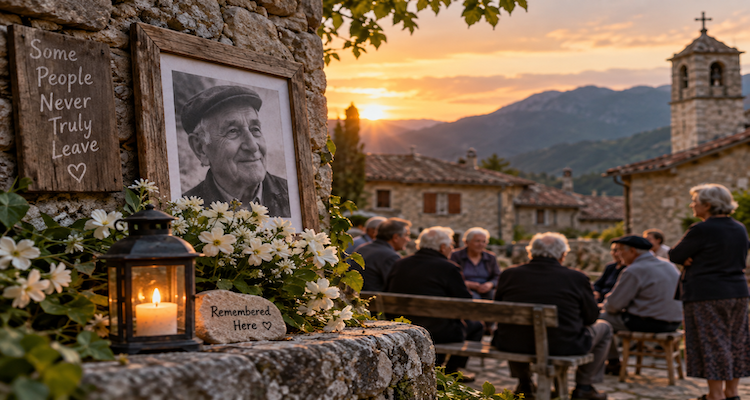
His research eventually restored a name, a photograph and a family connection to a wartime death that had largely disappeared from public memory. In March 2022, 80 years after the crash, Broadwindsor and the National Trust unveiled a memorial to De Cloedt on Lewesdon Hill, with his great-niece present for the ceremony.
Key Takeaways
- Jean De Cloedt was a Belgian pilot serving with the RAF Volunteer Reserve when he died in Dorset in 1942.
- His Spitfire was being delivered as a replacement aircraft when it crashed into Lewesdon Hill in poor visibility.
- Broadwindsor retained physical traces of the crash even after the pilot’s identity disappeared from local memory.
- Local research by Andrew Frampton helped reconnect the crash site with De Cloedt’s name and family.
- A permanent memorial was unveiled on Lewesdon Hill in 2022, eight decades after the crash.
- The story shows how local memory, archives and family research can recover overlooked pieces of wartime history.
A Flight That Never Reached Devon
Jean De Cloedt was born in London on 31 May 1916 to Belgian parents. Records from the Belgian War Dead Register identify London as his birthplace and Broadwindsor, Dorset, as the place of his death. He was unmarried.
Before joining the British war effort, De Cloedt had links to Belgian military aviation. Research preserved by the National Trust records that he had worked as an engineer with the Belgian Aeronautique regiment in Ostend before coming to Britain and joining the Belgian section of the Royal Air Force Volunteer Reserve. He trained at RAF Sealand near Chester.
His career did not develop in the way a wartime pilot might have expected. According to the historical research recorded by the National Trust, he was unable to join an operational squadron and was instead assigned to duties involving the delivery of new and repaired aircraft.
That assignment put him in the cockpit of a Supermarine Spitfire on 15 March 1942.
The aircraft was Spitfire Vb BL463, known as Berar 1. It had been manufactured at Castle Bromwich and was being delivered from RAF Burtonwood to a Polish squadron operating from the south-west of England. Aircrew Remembered records De Cloedt as a 25-year-old Pilot Officer and identifies the flight as a delivery mission.
The journey ended at Lewesdon Hill.
The Fog Over Broadwindsor
The weather was a crucial part of the story.
Contemporary local accounts and later research describe thick fog and poor visibility across the region. The National Trust’s heritage record states that the crash occurred on the north side of Lewesdon Hill during a windy and foggy night.
At approximately 6:15 in the evening, people in Broadwindsor heard an aircraft engine spluttering overhead.
Three members of the local Home Guard Jack Frampton, John Studley and Jack Wakely went towards the hill to investigate. They did not know what they would find. Britain was at war, and the possibility of encountering an enemy aircraft or an enemy airman could not simply be dismissed.
Instead, they found the wreckage of the Spitfire and the dead pilot.
The crash was not widely reported at the time. According to the local history reconstructed decades later, information about the incident was kept quiet, partly because authorities did not want to damage civilian morale.
The result was unusual: a major wartime event occurred in the landscape, yet the story gradually became detached from the identity of the person at its centre.
What the Village Remembered
Memory did not disappear completely.
People remembered the crash site. They remembered the aircraft cutting through the trees. A wooden cross was reportedly placed there, and flowers were left annually for years before the marker eventually disappeared beneath leaves and vegetation.
Another physical reminder survived in a more unexpected place.
The day after the crash, local farmer and Home Guard member Dudley Tolley recovered one of the aircraft’s wooden propeller blades. According to the National Trust heritage record, the propeller was kept for decades and is now displayed at Beaminster Museum.
So the village had preserved pieces of the event without preserving its complete story.
That distinction matters.
Historical memory is often not lost all at once. Sometimes names disappear while places remain. Objects survive while the circumstances surrounding them become uncertain. A landscape can retain evidence long after the people who witnessed an event have died.
Lewesdon Hill was carrying that incomplete memory for decades.
The Research That Restored a Name
The story changed during the COVID-19 pandemic.
Andrew Frampton, a local farmer whose grandfather had been one of the Home Guard members who reached the crash site, began investigating the family story while spending time at home. According to Marshwood Vale, watching the television series The World at War prompted him to return to the question of the aircraft crash.
The investigation moved beyond family memory.
Researcher Aldon Ferguson subsequently helped trace the aircraft and pilot, eventually identifying Jean De Cloedt and locating a photograph of him among fellow trainees. Aircrew Remembered records that the photograph came from Course No. 61 at No. 5 Service Flying Training School.
The discovery changed the nature of the story.
The hillside was no longer simply the location of an unidentified wartime crash. It was the final resting place of a specific young Belgian pilot whose life could now be reconstructed, at least in part.
Further research also established that De Cloedt’s remains had initially been buried at Brookwood Cemetery in Surrey before being repatriated to Brussels in October 1949. The Belgian War Dead Register now records his burial at the Belgian Airmen’s Field of Honour in Brussels.
A Family Connection Across 80 Years
The research eventually reached Belgium.
De Cloedt’s relatives were contacted, and his great-niece, Benjamine De Cloedt, attended the memorial ceremony in Broadwindsor in March 2022. The event brought together local residents, descendants of the Home Guard members who had first reached the crash site, historians, representatives of the Royal Air Force Association and children from the local school.
For the family, the ceremony created a direct connection between the person remembered privately in Belgium and the landscape where he died.
For the village, it completed a story that had existed for generations in fragments.
The National Trust, which owns Lewesdon Hill, worked with local researchers to establish an information memorial at the site. The National Trust’s own heritage record formally identifies the location as a Second World War Spitfire crash site and records the connection with De Cloedt.
What We Still Cannot Know
There is an important limit to the story.
The precise cause of the crash has not been conclusively established in the sources examined for this article.
The aircraft was flying in difficult weather, and later researchers have considered the possibility that De Cloedt became disoriented or descended through the fog too early. Another possibility raised in local accounts is mechanical trouble. There is also speculation that the pilot may have been trying to avoid the village before striking the hillside.
None of these explanations should be presented as established fact.
The National Trust confirms the crash and its circumstances but does not establish a definitive cause. Aircrew research similarly discusses the difficult visibility and possible navigation circumstances while acknowledging the uncertainty.
That uncertainty is part of responsible historical reporting. Eighty years after an accident, surviving records may tell us what happened without allowing us to reconstruct precisely what the pilot saw or decided in the final moments.
Why Remembering One Person Matters
The story of Jean De Cloedt is not significant because his name is famous.
It is significant precisely because it was not.
The Second World War generated millions of individual stories, many of which entered national histories through famous battles, commanders and political decisions. Others remained attached to a particular field, village, cemetery or family.
Broadwindsor preserved one of those smaller histories.
The village did not possess a complete archive of De Cloedt’s life. Instead, it had fragments: an old family story, a crash site, surviving aircraft material and memories passed between generations. Research connected those fragments with documentary evidence and eventually with living relatives.
That process offers a useful lesson about historical memory. Preserving the past is not always about discovering something entirely unknown. Sometimes it means identifying the person behind something a community has remembered for years.
From Forgotten Crash to Memorial
On 15 March 2022, exactly 80 years after the crash, a memorial ceremony was held on Lewesdon Hill.
De Cloedt’s great-niece unveiled the memorial, while local residents, descendants of witnesses, historians, veterans’ representatives and schoolchildren gathered to mark the anniversary. After the ceremony, participants walked towards the crash site itself.
The memorial does more than mark a wartime accident.
It gives the landscape a name.
Visitors can now encounter the story of Jean De Cloedt rather than simply a reference to an unidentified aircraft crash. The National Trust heritage record provides a permanent institutional record of the site, while the local community has preserved its own account of how the pilot’s identity was recovered.
A forgotten story has therefore acquired several forms of memory: family memory in Belgium, community memory in Broadwindsor, archival memory in historical records and physical memory in the landscape itself.
Conclusion
Jean De Cloedt was not a famous wartime commander. He did not become known through a celebrated battle or a major historical decision. He was a young Belgian pilot carrying out an ordinary but dangerous wartime assignment when fog and circumstance brought his flight to an end on a Dorset hillside.
For decades, Broadwindsor remembered the crash without fully remembering the man.
Then someone asked a simple question: Who was the pilot?
The answer required family memory, local investigation, historical research and the willingness to follow small clues. What emerged was the story of a Belgian volunteer who had crossed borders to serve alongside Britain during the Second World War and whose final journey ended far from the country of his birth.
The memorial on Lewesdon Hill cannot change what happened in 1942. But it changes what happens to the memory of that event.
A name that had almost disappeared now has a place on the landscape.
And sometimes, that is how history survives not because the world remembers everyone, but because somewhere, someone decides that one person should not be forgotten.
This content is published for informational or entertainment purposes. Facts, opinions, or references may evolve over time, and readers are encouraged to verify details from reliable sources.